Description
Product Introduction
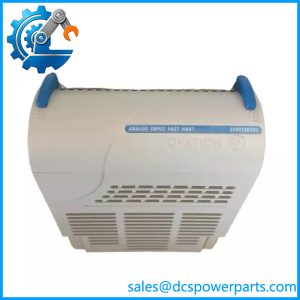
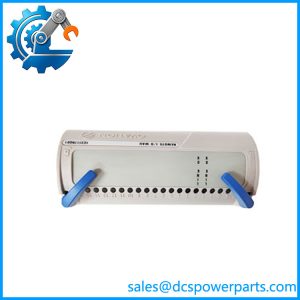
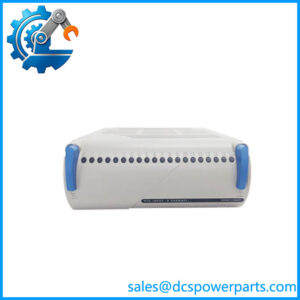
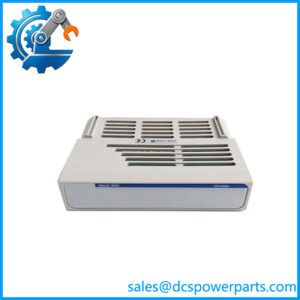
When a plant trips unexpectedly, knowing that a digital input changed state is not always enough. Engineers need to establish the order of events around the trip. The Emerson 1C31233G01 is a compact 16-channel Sequence-of-Events digital input EMOD for Ovation DCS systems, designed for single-ended 24/48 VDC input applications.
This module is used for monitoring discrete field states where event order matters, such as breaker status, interlocks, and equipment transitions. Before replacing it, verify the input wiring arrangement and companion personality-module configuration. The G01 designation is significant: the G02 and G03 variants support different input arrangements and should not be treated as interchangeable without checking the system documentation.
Key Technical Specifications
| Parameter | Specification |
|---|---|
| Model | 1C31233G01 |
| Manufacturer | Emerson / Westinghouse |
| System platform | Ovation DCS |
| Module type | Compact SOE digital input EMOD |
| Number of channels | 16 |
| Input voltage class | 24/48 VDC |
| Input configuration | Single-ended |
| Event monitoring | Sequence-of-Events recording |
| Minimum propagation delay for contact state change | 3.75 ms |
| Maximum propagation delay for contact state change | 4.25 ms at 24/48 VDC, per reference manual |
| Main logic-supply power | 1.44 W typical; 1.8 W maximum |
| Operating temperature | 0°C to 60°C |
| Storage temperature | −40°C to 85°C |
| Humidity | 0–95%, non-condensing |
| Channel wiring | Verify field-card and personality-module documentation |
| Condition | Confirm for the specific unit |
The Ovation I/O Reference Manual lists the 16-channel configuration and timing specifications for the compact SOE family. The propagation-delay values above are module response figures, not a guarantee of end-to-end event timestamp accuracy across the complete control system.
Application Scenarios & Pain Points
- Breaker and switchgear monitoring: Record digital state transitions used to reconstruct the sequence surrounding a trip or switching event.
- Turbine and generator interlocks: Capture discrete status changes from protection, permissive, and equipment-control circuits.
- Process trip investigation: Help engineers determine which field states changed before or after an alarm or shutdown.
- Legacy Ovation maintenance: Replace a failed SOE input module while preserving the established channel mapping and field-wiring configuration.
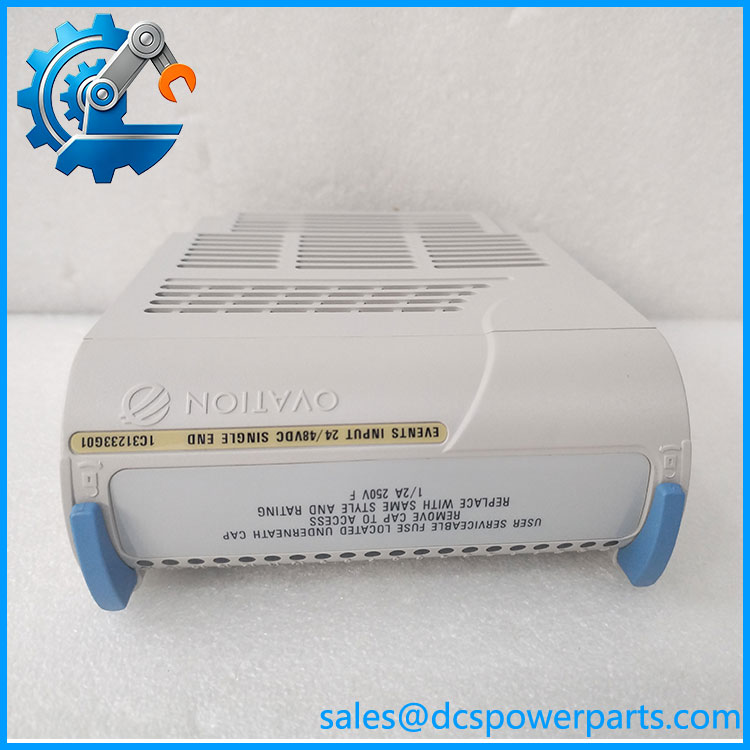
1C31233G01
Related Products
These Ovation components are related to the SOE and digital input family, but their electrical configurations differ.
- 1C31233G02 — Compact SOE digital input EMOD for 24/48 VDC differential inputs.
- 1C31233G03 — Compact SOE digital input EMOD for 125 VDC differential inputs.
- 1C31233G04 — Compact SOE contact-input variant with 48 V wetting.
- 1C31232G01 — Compact 24/48 VDC single-ended digital input EMOD without the same SOE designation.
- 1C31232G02 — Compact digital input EMOD for differential input applications.
- 1C31238H01 — Cavity insert used with specified compact input-module configurations.
- 5X00034G01 — Fused personality module used in specified compact digital input configurations.
- 1C31157G01 — SOE digital input electronics module for a different Ovation hardware configuration.
Confirm the module and personality-module pairing using the cabinet drawings and installed hardware documentation. Similar channel counts do not establish equivalent input circuitry or event behavior.
The Engineer’s Guide: Field Pitfalls to Avoid
Pitfall 1 — Substituting a differential-input variant for a single-ended module
The 1C31233G01 is specified for single-ended 24/48 VDC inputs. The G02 variant is associated with differential inputs, so replacing one with the other may require a different wiring arrangement. Check the field drawings before ordering.
Pitfall 2 — Assuming propagation delay equals total SOE timestamp accuracy
The reference manual lists a 3.75–4.25 ms propagation-delay range for the specified 24/48 VDC input condition. That is not the same as total timestamp uncertainty across field wiring, module processing, controller handling, and system time synchronization. Use the appropriate system specification when investigating closely spaced events.
Pitfall 3 — Overlooking the wiring interface and fuse configuration
Compact Ovation input modules can use different cavity inserts or personality modules, including fused configurations. Confirm the actual companion hardware and whether the application uses single-ended common-return wiring before installing a replacement.
Q1: What is the Emerson 1C31233G01 used for?
It is a 16-channel compact SOE digital input module for Ovation DCS installations. It monitors discrete input transitions so engineers can reconstruct event sequences during equipment trips and process disturbances.
Q2: What input voltage does it support?
The G01 configuration is specified for 24/48 VDC single-ended digital inputs. Verify the actual field voltage and wiring arrangement before commissioning.
Q3: How many channels does it have?
The reference manual specifies 16 channels for the compact SOE digital input family. Confirm the configured channel assignments in the plant’s I/O database.
Q4: Can the G01 be replaced with the G02 or G03?
Do not assume direct interchangeability. The G02 is specified for 24/48 VDC differential input, while the G03 is associated with 125 VDC differential input. The input voltage and wiring configuration must match the application.
Q5: Does the module capture events instantaneously?
No physical input module has zero propagation delay. The reference manual gives a 3.75–4.25 ms propagation-delay range for the specified 24/48 VDC contact-change condition. Total system timing behavior must be evaluated separately.
Q6: What should I verify before purchasing a replacement?
Check the complete part number, input voltage, single-ended wiring, companion interface hardware, installed Ovation configuration, and unit condition. Request actual-unit photographs and available functional-test records.
Q7: What should be confirmed for refurbished stock?
Ask which input channels were tested, whether the SOE input behavior was checked, and whether the test covered the relevant voltage configuration. Obtain written confirmation of warranty and dispatch timing; a visual inspection alone does not establish functional performance.