Description
Key Technical Specifications
| Parameter | Value |
|---|---|
| Manufacturer | Bently Nevada |
| Series | 3500 |
| Monitor Type | 3500/32 |
| Part Number | 125720-01 |
| Product Type | 4-Channel Relay I/O Module |
| Relay Outputs | 4 |
| Module Format | Full-height |
| Rack Location | Any suitable slot to the right of the Rack Interface Module |
| Relay Type | SPDT relay contacts configured as DPDT |
| Alarm Logic | AND / OR programmable Alarm Drive Logic |
| Logic Inputs | Alarm states from monitor channels in the rack |
| Configuration Software | 3500 Rack Configuration Software |
| Typical Power Consumption | 6 W |
| Operating Temperature | -30 to +65 °C |
| Storage Temperature | -40 to +85 °C |
| Relative Humidity | Up to 95%, non-condensing |
| Dimensions | Approx. 241 × 24.4 × 99.1 mm |
| TMR Application | Use 3500/34 TMR Relay Module instead |
| 3500 Rack Interface | Requires compatible 3500 rack architecture |
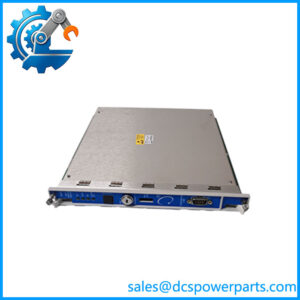
The original 3500/32 documentation specifies a full-height four-channel relay module with independently programmable relay outputs. Each output has Alarm Drive Logic that can use AND/OR logic based on alarms from any monitor channel or combination of channels in the rack.
The current Bently Nevada 3500 architecture uses relay modules as optional components alongside the rack, power supplies, transient data interface, monitor modules, and I/O modules.
Product Introduction
Bently Nevada 3500/32 125720-01
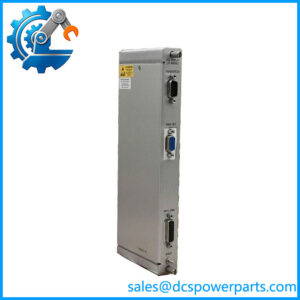
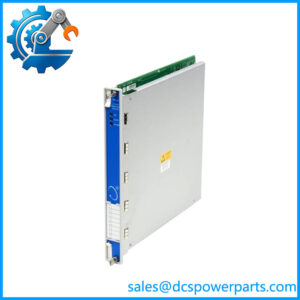
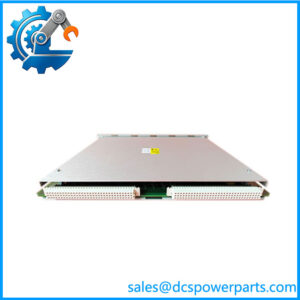
The Bently Nevada 3500/32 125720-01 is a four-channel relay I/O module for the 3500 Machinery Protection System. It receives alarm logic from the monitoring modules installed in the rack and provides four independently programmable relay outputs for annunciation, equipment control, voting, and machinery-protection logic.
The important feature is the local alarm-drive logic. The relay outputs can be configured using AND/OR combinations of monitor alarms rather than simply reproducing one channel’s status. That makes the module useful for plant-specific alarm and trip schemes, although the exact logic should always be verified against the approved protection cause-and-effect documentation.
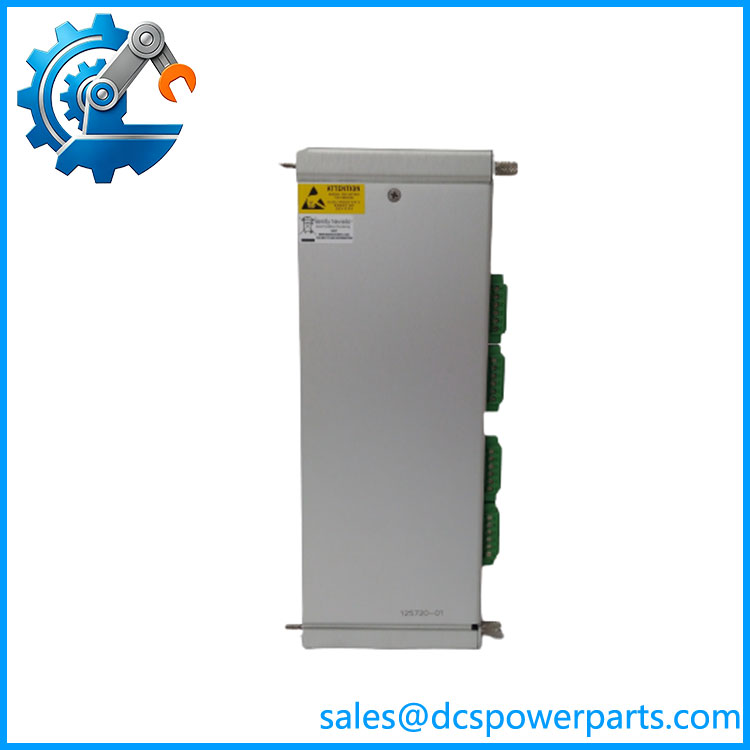
125720-01
Application Scenarios & Field Pitfalls
Engineering Pain Point
A vibration monitor can correctly detect an alarm while the plant still sees no corresponding external relay action. That is where the 3500/32 becomes important. A failed relay contact, incorrect logic configuration, bad I/O termination, or wrong relay module can leave the monitoring rack reporting an alarm while the DCS, annunciator, or shutdown circuit receives the wrong state.
Typical Applications
- Steam Turbines — Relay outputs for high vibration, thrust-position, overspeed-related auxiliary logic, and machinery shutdown interfaces.
- Gas Turbines — Alarm and protection relay outputs associated with vibration and position monitoring.
- Centrifugal Compressors — External alarm/trip signaling based on shaft vibration and axial-position conditions.
- Pumps and Critical Rotating Equipment — Discrete alarm outputs to DCS, ESD, annunciator, or equipment-control circuits.
The 3500 System is intended for continuous online machinery protection and is designed around API 670-oriented machinery protection architectures.
Technical Pitfalls to Avoid
- Do not confuse 125720-01 with 125712-01.
Both are associated with the 3500/32 relay function, but the part numbers represent different hardware assemblies. The 125720-01 is specifically identified as the Spare 4-Channel Relay I/O Module, while 125712-01 is listed separately as the spare relay module. - Do not use the standard 3500/32 for TMR applications.
Bently Nevada specifies the 3500/34 TMR Relay Module for Triple Modular Redundant applications. The standard 3500/32 should not be substituted into a TMR protection architecture. - Verify the actual relay logic.
The four outputs are programmable. Never assume Channel 1 = Alarm 1, Channel 2 = Alarm 2, and so forth. The application may use voting or combinations of multiple monitor alarms. - Check the external circuit before blaming the module.
A relay output problem can originate in the field wiring, terminal block, downstream DCS input, ESD circuit, fuse, or interposing relay. - Check relay contact loading.
The relay contacts have defined switching limitations. Do not connect a high-current load directly simply because the relay appears physically suitable. Use an interposing relay when the field circuit requires it. - Verify fail-safe philosophy.
Some machinery protection circuits are engineered so that loss of power or a particular relay state produces a trip. Others use different logic. The correct wiring depends on the plant’s cause-and-effect design. - Back up the rack configuration.
Relay logic is configured through the 3500 Rack Configuration Software. A replacement module should be checked against the approved configuration rather than relying on assumptions about the previous module. - Check the rack and TDI compatibility.
The broader 3500 system architecture requires a compatible Transient Data Interface and monitor configuration. The relay module does not operate as a standalone PLC output card. - Test both energized and de-energized states.
For protection circuits, checking only the normal running state is inadequate. Verify the relay state during alarm, reset, loss-of-power, and relevant shutdown-test conditions according to the plant procedure.
Related Products
- Bently Nevada 3500/32 125712-01 — Spare 4-Channel Relay Module associated with the 3500/32 family. It should be distinguished from the 125720-01 relay I/O assembly during procurement.
- Bently Nevada 3500/32M — Updated 4-channel relay module architecture. It performs the same general relay-output function but belongs to the newer 3500/32M generation. The current Bently Nevada datasheet identifies the 3500/32M as a 4-Channel Relay Module.
- Bently Nevada 3500/34 — TMR Relay Module designed specifically for Triple Modular Redundant applications. It is the appropriate architecture where three-channel redundant relay logic is required rather than the standard 3500/32.
- Bently Nevada 3500/22M — Transient Data Interface Module. It provides the rack-level interface and data-management functions required by the 3500 architecture and is not a substitute for the relay module.
- Bently Nevada 3500/40M — Proximitor Monitor for proximity-transducer measurements such as radial vibration, thrust position, differential expansion, and eccentricity. Its alarm states can be used by relay logic in the 3500 rack.
- Bently Nevada 3500/42M — Proximity Seismic Monitor providing four-channel vibration/position monitoring. Its alarm outputs can feed the rack-level relay architecture.
- Bently Nevada 3500/50M — Tachometer Module used for speed, zero-speed, overspeed, and rotational-speed-related measurements. Its alarm states can also participate in rack relay logic.
- Bently Nevada 3500/61 — Temperature Monitor used for temperature measurements and alarm generation. It can complement a 3500/32 when temperature alarms need to be incorporated into external relay logic.
- Bently Nevada 3500/05 — Instrument Rack that houses the 3500/32 and other 3500 modules. Rack size, power supplies, and module positioning must be considered when expanding or replacing hardware.
- Bently Nevada 3500/15 — Power Supply module for the 3500 rack. A relay-module fault should not be diagnosed independently of rack power quality and supply redundancy.
Procurement note: 3500/32 125720-01 is a four-channel relay I/O module, not a vibration-monitoring input card. Its job is to take alarm logic generated elsewhere in the 3500 rack and provide relay contacts to external equipment.For replacement, verify the exact 125720-01 assembly, relay contact requirements, configured logic, agency approval, rack hardware, and whether the installation is standard or TMR. For TMR protection, use the 3500/34 architecture rather than treating 3500/32 as a drop-in equivalent.