Description
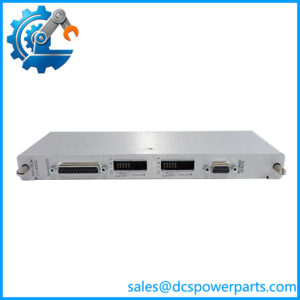
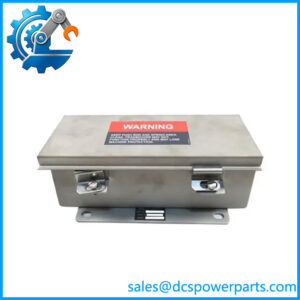
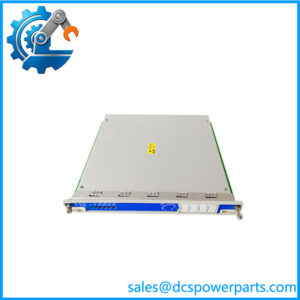
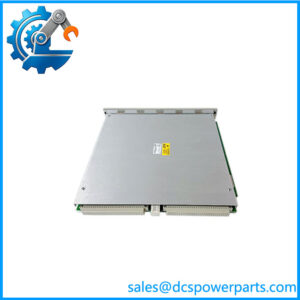
Bently Nevada 1900/55 | Fan Monitor | Four-Channel Machinery Protection
Key Technical Specifications
| Parameter | Specification |
|---|---|
| Product Model | 1900/55 |
| Manufacturer | Bently Nevada |
| Product Type | Fan Monitor / Machinery Protection Monitor |
| Monitoring Channels | 4 |
| Primary Measurement | Vibration |
| Typical Application | Industrial fans and low-speed rotating machinery |
| Recommended Transducer | 190501 Velomitor CT |
| Frequency Range | Approximately 1.5–1000 Hz ±3 dB |
| Analog Outputs | 4 × 4–20 mA |
| Alarm/Trip | Programmable relay functions |
| Installation | Standalone monitor or Trendmaster 2000 integration |
| Replacement Path | Bently Nevada 1900/65A |
The 1900/55 was designed specifically around low-frequency fan vibration monitoring. Published technical information gives a nominal monitoring range of approximately 1.5 to 1000 Hz ±3 dB, making it suited to machinery such as fans operating at roughly 90 RPM and above when used with the appropriate transducer.
A plant specification for Bently Nevada equipment also documents the 1900/55 as a vibration velocity measurement system, with individual 4–20 mA outputs hardwired to the DCS and alarm/trip contacts hardwired to the ESD system.
Product Introduction
The Bently Nevada 1900/55 is a four-channel Fan Monitor intended for continuous vibration monitoring and basic machinery protection. It was commonly applied to cooling-tower fans, industrial blowers, air-handling equipment, and other rotating machines where low-frequency vibration is a useful indicator of imbalance, looseness, misalignment, bearing problems, or mechanical deterioration.
The monitor can operate as a standalone protection device or as part of a Trendmaster 2000 architecture through its Transducer Interface Module functionality. Its individual analog outputs can be connected to a DCS for trending, while alarm and trip contacts can be incorporated into a plant ESD or machinery-protection circuit.
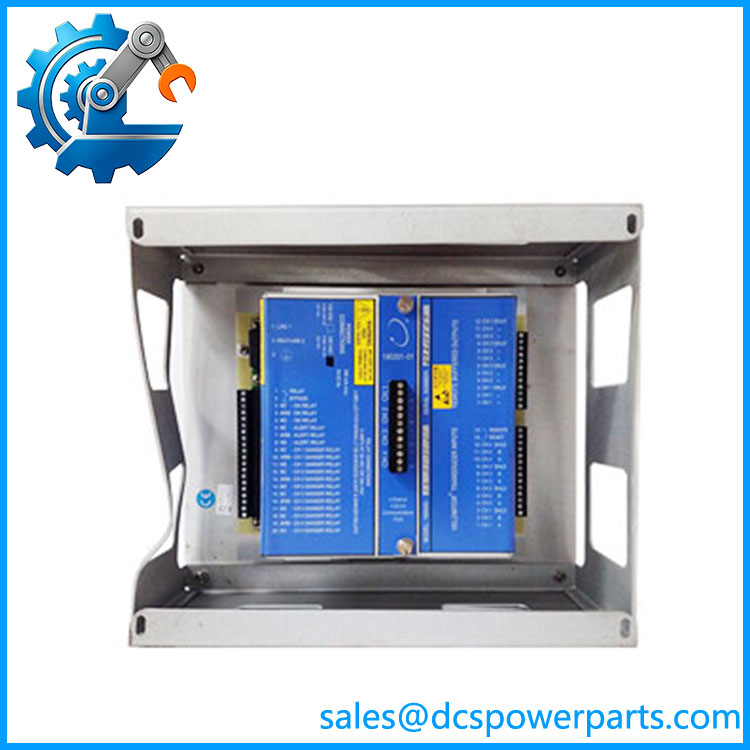
1900/55
Application Scenarios & Field Pitfalls — Engineer’s Perspective
Engineering Pain Point
The 1900/55 is often described simply as a “vibration module,” but that undersells its role. It is a dedicated fan/machinery monitor with measurement, alarm, and protection functions, so replacement requires checking both the measurement chain and the plant trip architecture.
Typical Applications
- Cooling-Tower Fans — continuous monitoring of fan vibration and mechanical condition.
- Industrial Blowers — low-frequency vibration monitoring on large rotating fan assemblies.
- Air-Handling Equipment — condition monitoring where vibration velocity is the principal machine-health parameter.
- Auxiliary Rotating Machinery — standalone protection or DCS-integrated vibration monitoring.
- Trendmaster 2000 Systems — integration through the monitor’s transducer interface architecture.
Technical Pitfalls to Avoid
- Do not treat every 1900/55 configuration as identical.
Complete configuration numbers such as 1900/55-02-01-01-01 or 1900/55-0Z-01-01-01 appear in field documentation and supplier records. Match the complete configuration against the installed unit rather than ordering only from the family number. - Check the transducer before replacing the monitor.
The 1900/55 is particularly associated with the 190501 Velomitor CT and other compatible vibration transducers. A functioning monitor cannot compensate for an incorrect sensor type, damaged cable, poor mounting, or unsuitable frequency response. - Verify the alarm/trip wiring separately from the DCS signal.
The 4–20 mA outputs provide measurement information, while alarm/trip contacts can form part of the machinery-protection or ESD circuit. A replacement should be tested against the actual plant cause-and-effect logic rather than only checking the analog output. - Do not overlook the 1900/65A migration path.
Bently Nevada documentation explicitly describes the 1900/65A as an upgrade or replacement for the 1900/55. For a long-term maintenance strategy, evaluate whether replacing an obsolete 1900/55 with another legacy unit is preferable to migration to the 1900/65A. - Verify power configuration from the nameplate.
Online listings conflict substantially on the 1900/55 supply voltage, with some incorrectly publishing 220 V or other generic values. Do not energize a replacement from a supplier description alone; use the complete configuration code, nameplate, wiring diagram, and applicable manual.
Related Products
- 1900/65A — current-generation general-purpose equipment monitor that can replace or emulate 1900/55 functionality in suitable applications.
- 1900/25 — Bently Nevada velocity monitor for machinery vibration applications; different monitoring function from the dedicated 1900/55 fan monitor.
- 190501 Velomitor CT — vibration transducer commonly associated with the 1900/55.
- Trendmaster 2000 — monitoring architecture with which the 1900/55 can interface through its transducer-interface functionality.
- 3500 Series Vibration Monitoring System — broader Bently Nevada machinery-protection platform used where a more extensive rack-based monitoring architecture is required.
- 3500/42E — vibration monitor for the 3500 platform; not a direct plug-in replacement for the 1900/55.
Procurement Note
For a Bently Nevada 1900/55, specify the complete configuration number, not simply “1900/55.” Confirm the transducer type, measurement range, analog-output wiring, relay cause-and-effect, supply arrangement, and Trendmaster/DCS interface before replacement.
For surplus equipment, inspect the front-panel display, relay contacts, terminal blocks, internal power section, sensor wiring, and configuration settings. A basic power-up test is not sufficient to demonstrate correct vibration scaling or alarm/trip operation.
The key maintenance point is that 1900/55 is a legacy Bently Nevada Fan Monitor, not a generic analog-input card. Baker Hughes documentation confirms the 1900/65A as the designated upgrade/replacement path, so the choice between another 1900/55 and a 1900/65A should be made at the system level, including field wiring and protection logic.