Description
Key Technical Specifications
| Parameter | Specification |
|---|---|
| Manufacturer | ABB |
| Model | SCYC55830 |
| Associated part number | 58063282A |
| Product type | Reported as tachometer terminal / interface board |
| Application | Industrial drive feedback interface; ACS 5000 association reported |
| Core function | Tachometer or encoder signal interfacing, subject to verification |
| Input signal type | Exact supported signal types not verified |
| Supply voltage | Not independently verified |
| Frequency range | Not independently verified for this exact board |
| Communication interface | Not independently verified |
| Mounting | Confirm against the original drive assembly |
| Operating temperature | Confirm using the applicable ABB documentation |
| Condition | Confirm for the individual unit |
Technical note: Published descriptions contain conflicting product classifications and specifications. Do not assume that generic figures for supply voltage, pulse frequency, measurement accuracy, or communication protocols apply to SCYC55830 without the matching technical documentation.
Application Scenarios & Pain Points
In a high-power drive installation, unreliable speed feedback can affect process stability, fault diagnosis, and the ability to return equipment to service. The key is distinguishing an interface-board failure from a sensor or wiring fault.
Typical applications
- Large motor drives: Where the documented installation uses tachometer feedback, the interface board may form part of the signal path between the speed sensor and drive controls.
- Closed-loop speed regulation: Feedback signals support speed monitoring and regulation when the drive is configured for the corresponding sensor type.
- Drive maintenance and retrofit work: Confirm the original board’s function and revision before selecting a spare for an existing cabinet.
- Emergency fault investigation: Inspect sensor wiring, connectors, and signal integrity before attributing an intermittent speed-feedback alarm to the board alone.
Field note
If a drive reports an intermittent speed-feedback fault, record the alarm history and inspect the sensor cable and connector before replacing the interface board. A damaged cable or poor connection can produce symptoms similar to an internal electronics fault. After replacement, validate the feedback signal and drive response using the manufacturer’s approved commissioning procedure.
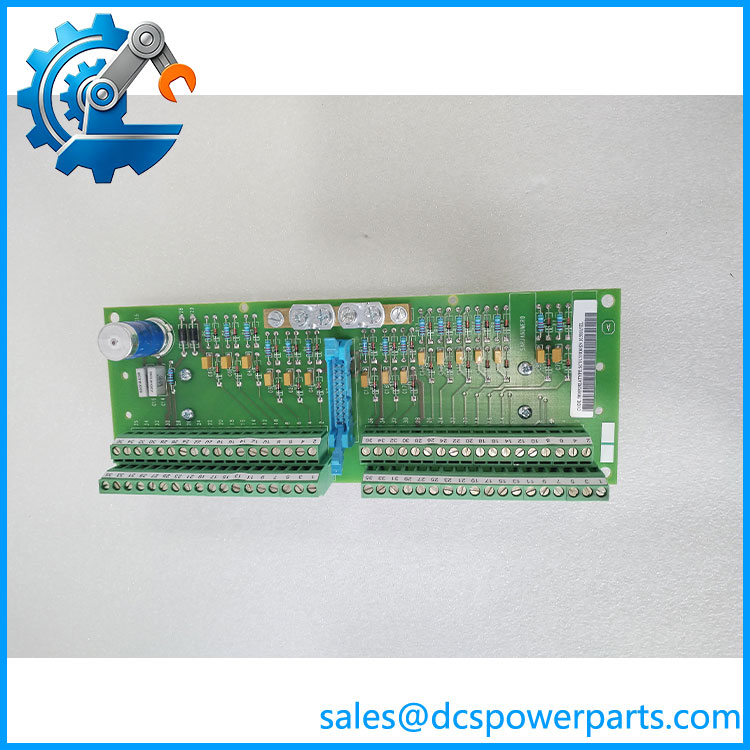
SCYC55830
Related Products
The following are related equipment categories and model references for identification purposes. They are not confirmed direct replacements for SCYC55830.
- SCYC55830 (58063282A) — Tachometer Interface Board: The target component. Confirm its exact designation and installation location against the original assembly.
- ABB ACS 5000 — Medium-Voltage Drive Family: A reported application context for the board. Drive-family association alone does not prove compatibility with every configuration.
- ABB Tachometer — Speed Sensor: Provides rotational-speed feedback to compatible drive systems. The sensor’s electrical output must match the interface requirements.
- ABB Encoder — Position and Speed Feedback Device: An alternative feedback-device category. Encoder signals and tachometer signals are not automatically interchangeable.
- ABB Drive Control Board — Control Electronics: Processes drive commands and feedback according to the installed control architecture. Its function differs from that of a dedicated feedback interface board.
- ABB Trigger-Pulse Board — Gate-Control Interface: A distinct functional category associated with power-electronics control. Do not confuse it with a tachometer interface without documentation confirming the board’s actual function.
- ABB Drive Power Supply Board — Auxiliary Power: Supplies designated electronic circuits. It serves a different purpose from a speed-feedback interface.
For a procurement-grade cross-reference, use the original drive model, assembly number, and board label to identify approved companion and replacement part numbers.
The Engineer’s Guide: Field Pitfalls to Avoid
Warning 1 — Confusing a tachometer interface with a trigger-pulse board
Supplier descriptions for SCYC55830 are inconsistent. These functions are materially different, so a generic product title is not sufficient for identification.
- Read the complete board label and any secondary part number.
- Compare the board against the installed assembly drawing.
- Confirm the functional designation before approving the purchase order.
Warning 2 — Mismatching the feedback signal
A replacement interface must support the actual sensor type and signal characteristics used by the drive.
- Identify whether the installed sensor is a tachogenerator, pulse encoder, or another feedback device.
- Verify the signal range, polarity, frequency requirements, and wiring.
- Do not rely on an unverified voltage or frequency specification.
Warning 3 — Ignoring revision and installation differences
Boards with similar designations may differ in hardware revision or intended assembly.
- Compare the complete part number and revision markings.
- Inspect connector condition and PCB surfaces for corrosion, damage, or previous repairs.
- Use ESD protection and follow the approved isolation procedure before handling the board.
Frequently Asked Questions (FAQ)
1. What is the ABB SCYC55830 58063282A used for?
Supplier references describe it as a tachometer terminal or converter tachometer interface board, with an association to ABB ACS 5000 drive systems. Its reported role is to interface speed-feedback signals with the drive control system.
Because other listings assign different functions to the same model, verify the original assembly documentation before relying on this description.
2. Is compatible with every ABB ACS 5000 drive?
No universal compatibility claim is justified from the model number alone. Confirm the specific drive configuration, original assembly designation, board revision, connector layout, and feedback-device requirements.
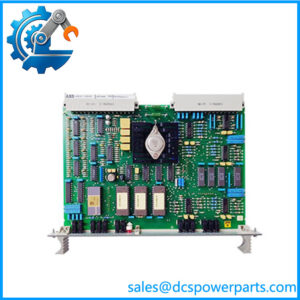
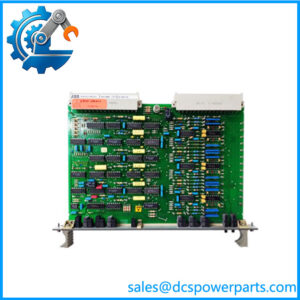
If the original board is available, clear photographs of its label and connectors can help establish the correct identification before purchase.
3. Can accept both tachometer and encoder signals?
That capability has not been independently verified for this exact board. Tachometers and encoders can produce different electrical signal types, and their interface requirements depend on the sensor and drive configuration.
Check the applicable ABB documentation for supported input types, signal ranges, and connection diagrams before substituting one feedback arrangement for another.
4. How do I determine whether the board or the speed sensor has failed?
Start with the recorded drive alarms and the sensor’s wiring diagram. Inspect connectors, cable shielding, grounding, and visible damage. Where the approved service procedure permits, verify the feedback signal with suitable test equipment.
A missing or unstable signal does not automatically prove that the interface board is defective. Sensor failure, cable damage, and configuration problems can produce similar symptoms.
5. How should I verify the condition of a replacement ?
Request photographs of the actual unit’s label, board markings, connectors, and PCB surfaces. For refurbished stock, ask for the test scope and results, including whether the relevant interface function was tested.
A clean appearance or a successful power-on check alone does not establish that the board processes the required feedback signal correctly.
6. Is the hot-swappable?
Hot-swap support has not been verified for this board. Do not remove or install it under power unless the service documentation for the exact host assembly explicitly authorizes that procedure.
Follow the manufacturer’s isolation and discharge instructions, especially when the board is installed inside a medium-voltage drive cabinet.
7. How can I confirm stock, warranty, and delivery time?
Ask the supplier to confirm the complete model and part number, physical stock status, condition, warranty period, test documentation, and expected dispatch date in writing.
For an urgent drive repair, distinguish available inventory from stock that still needs to be sourced or tested. Confirming the exact board identity before shipment is more useful than relying on a generic availability statement.