Description
Key Technical Specifications
| Parameter | Value |
|---|---|
| Manufacturer | ABB |
| Product Family | Relion 670 |
| Model | REB670 |
| Product ID | 1MRK002820-AC |
| Product Version | Version 1.2 |
| Product Type | Busbar Protection IED |
| Primary Function | Busbar differential protection |
| Protected Equipment | Busbars, T-connections, meshed busbar sections |
| Busbar Configurations | Single bus, double bus, transfer bus, double-breaker, one-and-a-half breaker |
| Differential Protection | Phase-selective busbar differential protection |
| Zone Selection | Dynamic zone selection using disconnector position |
| Fault Types | Phase-to-phase and phase-to-ground internal faults |
| Communication | Configuration-dependent; Relion 670 platform supports IEC 61850 and other substation protocols |
| Engineering Platform | ABB PCM600 |
| Application Range | Medium-voltage through high-voltage/electrical substations, depending on system configuration |
| Installation | Panel/rack installation according to hardware configuration |
ABB identifies 1MRK002820-AC specifically as REB670 Version 1.2, with the catalog description Busbar protection.
The REB670 platform is designed for selective, fast differential protection of busbars and complex busbar arrangements. Its dynamic zone-selection function uses the switchgear/disconnector topology to determine the active protection zone.
Important: Do not infer the complete I/O, communication, auxiliary-power, or protection-function configuration from “REB670” alone. ABB supplied the 670 platform in multiple hardware and application configurations.
Product Introduction
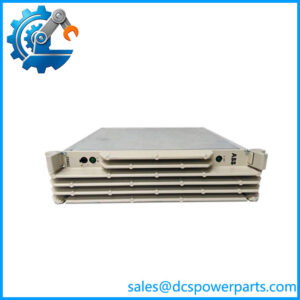
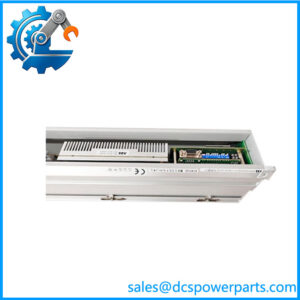
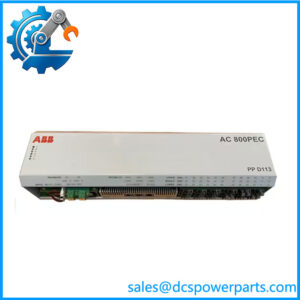
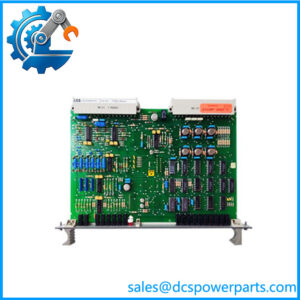
ABB REB670 1MRK002820-AC
The ABB REB670 1MRK002820-AC is a Relion 670 Series busbar protection IED intended for differential protection of busbars, T-connections, and meshed busbar sections. It supports complex substation arrangements including single and double busbars, transfer buses, double-breaker configurations, and one-and-a-half-breaker schemes.
The important engineering feature is selectivity. The relay uses busbar current relationships and switching topology to identify the affected protection zone, allowing the appropriate breakers to be tripped for an internal bus fault without unnecessarily disconnecting healthy sections. That makes the particularly relevant to transmission and high-value industrial substations.
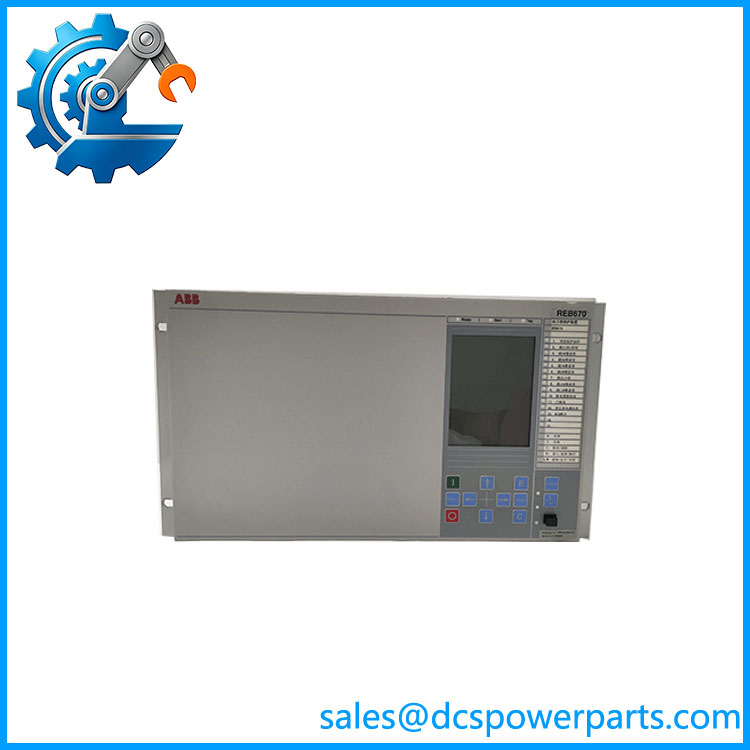
REB670
Application Scenarios & Field Pitfalls
Engineering Pain Point
A busbar fault is one of those events where speed matters, but indiscriminate tripping is almost as bad as slow protection. A protection system that trips an entire switchboard for a localized bus fault can create a much larger outage than necessary. The addresses this through zone-based differential protection, but the scheme is only as good as its CT wiring, breaker/disconnector status information, and protection configuration.
Typical Applications
- Transmission Substations — Selective protection of single, double, and sectionalized busbar arrangements.
- Power Generation — Generator switchyards and high-voltage switchgear requiring fast busbar fault clearance.
- Industrial Power Systems — Critical MV/HV substations serving refineries, chemical plants, steel facilities, and large process loads.
- Utility Distribution — Complex substations with multiple bus sections, transfer buses, or double-breaker arrangements.
Technical Pitfalls to Avoid
- Do not treat the as a simple overcurrent relay.
Its primary job is busbar differential protection. The protection zone is determined from current measurements and the configured switchgear topology. A wrong topology representation can produce the wrong trip decision. - CT polarity and wiring are critical.
Differential protection depends on correctly measured current entering and leaving the protected zone. A reversed CT or incorrect secondary connection can create artificial differential current. Verify every CT circuit against the approved protection drawings before commissioning. - Check disconnector-status inputs.
Dynamic zone selection depends on the switchgear configuration. If a disconnector indication is missing, inverted, or incorrectly mapped, the relay may interpret the physical bus arrangement incorrectly. - Do not replace a relay solely by matching the model number.
The 1MRK002820-AC designation identifies a specific product version, but project-specific configuration still matters. Compare hardware, I/O, communication interfaces, firmware, and the existing PCM600 project before installation. - Verify the actual protection-zone architecture.
Double-bus and one-and-a-half-breaker substations require substantially more careful zone logic than a simple single-bus arrangement. Do not reuse a configuration from a different topology without engineering review. - Check the communication design separately from the protection design.
IEC 61850, station-bus communications, GOOSE, and other interfaces depend on the installed configuration. Communication failure should not be confused with a failure of the core differential protection function. - Do not omit secondary-injection testing.
A successful power-up test proves very little. Busbar differential schemes should be tested through the complete current-input, zone-selection, logic, trip-output, and breaker-interface chain before being placed into service. - Respect CT secondary safety procedures.
Never open an energized CT secondary circuit. Isolate and short CT circuits using the approved substation procedure before disconnecting protection equipment.
Related Products
- ABB RET670 — Transformer protection IED from the same Relion 670 family. It protects transformers rather than busbars and is commonly used alongside in transformer bays.
- ABB REL670 — Transmission-line protection IED. It provides line protection functions and can operate as part of a broader substation protection scheme alongside .
- ABB RED670 — Line differential protection IED. It is intended for differential protection of transmission lines, while is focused on busbar and related bus-zone protection.
- ABB REC670 — Bay control IED for switchgear control, interlocking, monitoring, and automation. It can complement where protection and bay-control functions are separated.
- ABB REG670 — Generator protection IED. It addresses generator and generator-transformer protection and can be installed alongside in generating-station switchyards.
- ABB REF670 — Feeder protection IED in the Relion 670 family. It is appropriate for feeder protection rather than primary busbar differential protection.
- ABB PCM600 — Engineering and configuration environment used with compatible ABB protection and control IEDs. It is particularly important when maintaining or replacing a because the relay’s application configuration must be preserved and validated.
- ABB REB500 — Earlier-generation busbar protection platform. It may appear in legacy substations being maintained or migrated, but its architecture and engineering approach differ from .
- ABB Relion 670 Series — The broader IED family containing application-specific devices such as , RET670, REL670, REC670, and REG670. The common platform does not make these devices interchangeable.