Description
Product Overview
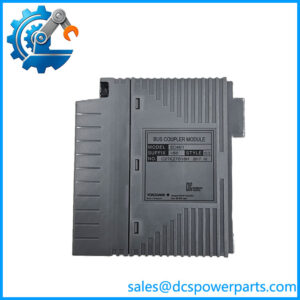
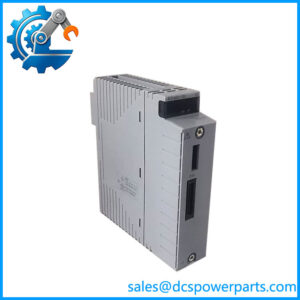
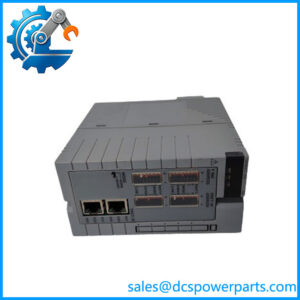
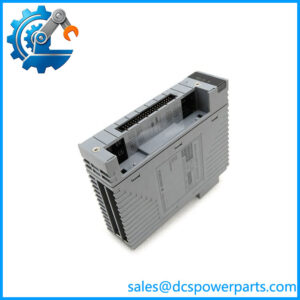
The Yokogawa SCP451-11 is a processor module for the ProSafe-RS Safety Instrumented System (SIS). Its role is substantially different from a standard CENTUM VP process-control CPU: it executes safety application logic and participates in the safety-control architecture used for shutdown and protective functions. Yokogawa’s own certification documentation identifies SCP451-11 as a ProSafe-RS Safety Controller, with certified configurations tied specifically to Vnet/IP firmware and system-software versions.
Within the ProSafe-RS architecture, Yokogawa SCP451-11 functions as the processing element of the Safety Control Unit. Processor modules perform the control-algorithm calculations, while the surrounding system provides the I/O and communication infrastructure. Product references identify SCP451-11 as the Vnet/IP processor family, distinguishing it from earlier V net-oriented processor models.
The firmware qualification deserves particular attention. Yokogawa’s published certification material lists SCP451-11 with Vnet/IP Firmware R23 under System Software R4.01.00 in one certified configuration, while an earlier certificate lists SCP451-11 with Vnet/IP Firmware R19 under System Software R3.02.10. This means a replacement should never be approved solely from the model number. Hardware revision, firmware, ProSafe-RS system version, application configuration, and redundancy arrangement all need to match the existing installation.
Product Introduction
A safety CPU replacement is not simply a matter of installing a board with the same catalog number. executes ProSafe-RS safety logic and communicates through the Vnet/IP control network, making software and firmware compatibility part of the hardware replacement decision.
For a ProSafe-RS legacy replacement, check the installed firmware and system software before ordering. Yokogawa certification records demonstrate that has been qualified with different firmware/software combinations, including R19 and R23 configurations.
Key Technical Specifications
| Parameter | Value |
|---|---|
| Manufacturer | Yokogawa Electric Corporation |
| Model | |
| Product Type | ProSafe-RS Processor Module / Safety CPU |
| System | ProSafe-RS |
| Application | Safety Instrumented System (SIS) |
| Network Architecture | Vnet/IP |
| Processor Role | Safety application and control-algorithm execution |
| Control Function | Safety logic processing |
| Firmware | Configuration-dependent |
| Certified Firmware Example | Vnet/IP Firmware R23 |
| Earlier Certified Firmware | Vnet/IP Firmware R19 |
| Certified System Software Example | R4.01.00 with Firmware R23 |
| Earlier System Software Example | R3.02.10 with Firmware R19 |
| Dimensions | Approximately 2.5 × 20.3 × 15.2 cm |
| Weight | Approximately 0.7 kg |
| Style | S1 variants are documented |
| Redundancy | System-level redundant configurations are supported; verify exact architecture |
| Condition | New Surplus, subject to inspection and testing |
The firmware/software combinations above are taken from Yokogawa/exida certification records rather than generic reseller specifications.
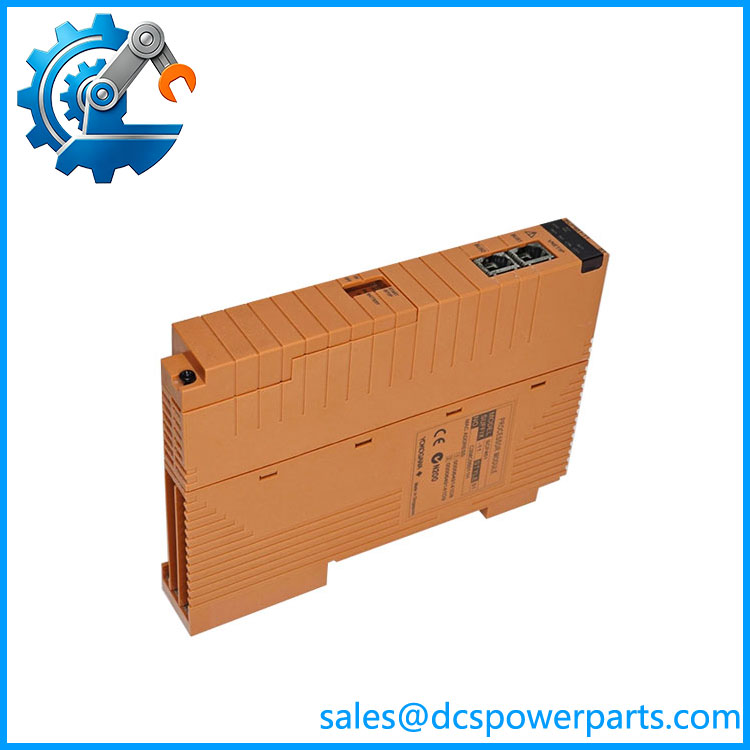
SCP451-11
Related Products
- SCP461-11 — Another Vnet/IP processor model in the ProSafe-RS family. It is closely related but should not be treated as an automatic replacement for ; the system configuration must be checked.
- — Style S1 version of the processor module. Verify the exact suffix/style marking when replacing installed hardware.
- SCP461-51 — Related Vnet/IP processor family reference. Hardware style and application configuration differ, so direct substitution requires engineering confirmation.
- SCP451-51 — Related SCP451 processor reference. It belongs to the same general processor family but has a different style designation.
- SCP401-51 — V net processor reference. It belongs to the older V net architecture and should not be confused with the Vnet/IP .
- ProSafe-RS Safety Control Unit — The system-level platform in which operates. The processor module depends on the surrounding safety-control architecture rather than functioning as an independent PLC.
- CENTUM VP — Yokogawa DCS environment that can coexist with ProSafe-RS in integrated plant architectures. The remains a safety-system processor, not a conventional CENTUM VP process-control CPU.
Frequently Asked Questions
What is Yokogawa used for?
The is a ProSafe-RS processor module used to execute safety-control application logic. Yokogawa’s certification documentation identifies it specifically as a ProSafe-RS Safety Controller with Vnet/IP firmware.
It belongs on the SIS side of a plant architecture rather than being treated as a standard process-control CPU.
Is compatible with CENTUM VP?
ProSafe-RS can be integrated with CENTUM VP architectures, but itself is a ProSafe-RS safety processor.
The distinction matters during replacement: the firmware, safety application, and ProSafe-RS system configuration must be verified independently from the CENTUM VP configuration.
Can I hot-swap the ?
Do not assume it can be hot-swapped.
This is safety-system processor hardware. Whether online replacement is permitted depends on the exact ProSafe-RS architecture, redundancy arrangement, maintenance procedure, and installed system version.
For a field replacement, first determine whether the installed system has a redundant processor arrangement and whether Yokogawa’s applicable procedure explicitly authorizes module replacement while the safety system remains operational.
Does support firmware R23?
Yes, R23 is explicitly documented for in a Yokogawa/exida certification record. That certificate identifies the configuration as : Vnet/IP Firmware R23 with System Software R4.01.00.
An earlier certification record lists with Vnet/IP Firmware R19 and System Software R3.02.10.
So the important question is not simply “Does support R23?” but “Which firmware and system-software combination does my installed ProSafe-RS system require?”
Will replacing erase my safety logic?
The processor executes the safety application, so this should be treated as a configuration-sensitive CPU replacement.
Before replacement:
- Back up the ProSafe-RS project/application.
- Record the existing processor hardware revision.
- Record Vnet/IP firmware and system-software versions.
- Document the redundancy arrangement.
- Verify the replacement processor’s firmware state.
- Follow the approved safety-system commissioning procedure.
Do not assume that a physically identical spare contains the correct application image.
Is a redundant CPU?
The module itself should not be described as an independently redundant device. Redundancy is implemented as part of the ProSafe-RS system architecture. A current technical discussion also distinguishes processor redundancy from system-level redundant FIO configurations.
Before replacing one processor in a redundant installation, verify which module is active, which is standby, and what transfer/reintegration procedure applies to the installed ProSafe-RS version.
How should I verify a New Surplus ?
For a safety CPU, incoming inspection should include:
- complete model marking
- Style code, such as S1
- Hardware revision
- Vnet/IP firmware version
- System-software compatibility
- Serial/manufacturing identification
- Connector and backplane condition
- Evidence of previous installation
- Power-up/diagnostic test results
- Ability to load or restore the required safety application