Description
Yokogawa CP471-01 S1
Product Introduction
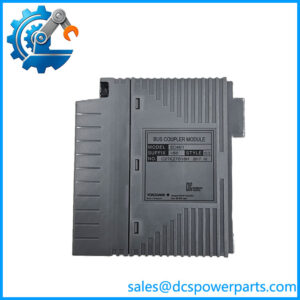
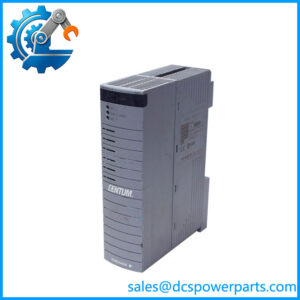
In a CENTUM VP field control station, the processor module is where the control execution architecture actually starts. Yokogawa CP471-01 S1 is a CP471 processor module designed for Yokogawa field control units, providing the processing function required by the FCS rather than acting as a general-purpose PLC CPU. Yokogawa specifies CP471 for AFV30, AFV40, A2FV50, and A2FV70 field control unit families, with two CP471 modules supported in a dual-redundant configuration on applicable duplexed FCUs.
The Yokogawa CP471-01 S1 is particularly relevant to CENTUM VP maintenance and modernization work because compatibility depends on more than the physical processor module. Yokogawa specifies Control Function for FCS R6.05 or later and an EC401 ESB bus coupler with style code S3 or later for installations. The -01 configuration is associated with the ISA Standard G3 option, so the complete ordering designation should be preserved during procurement.
Key Technical Specifications
| Parameter | Specification |
|---|---|
| Manufacturer | Yokogawa Electric Corporation |
| Model | -01 |
| Style | S1 |
| Product Type | Processor Module |
| System | CENTUM VP |
| System Role | Field Control Unit processor |
| Applicable FCU Families | AFV30, AFV40, A2FV50, A2FV70 |
| Redundant Operation | Dual-redundant configuration supported |
| Software Requirement | Control Function for FCS R6.05 or later |
| ESB Bus Coupler | EC401, style code S3 or later |
| Suffix Configuration | -01 with ISA Standard G3 option |
| Weight | Approx. 700 g |
| Installation | Dedicated CENTUM field control unit |
| Replacement Context | CP461 replacement path under Yokogawa-defined conditions |
Yokogawa’s own general specification is the controlling reference for the architecture and compatibility requirements.
Major Features and Advantages
Dedicated CENTUM VP FCS Processing
is purpose-built for the processing requirements of Yokogawa’s CENTUM field control units. It should therefore be evaluated as part of the complete FCS architecture, not as an isolated CPU board.
This distinction matters during procurement. A generic description such as “DCS processor” does not establish compatibility. The applicable FCU model, ESB bus coupler, software revision, redundancy arrangement, and module suffix all have to agree.
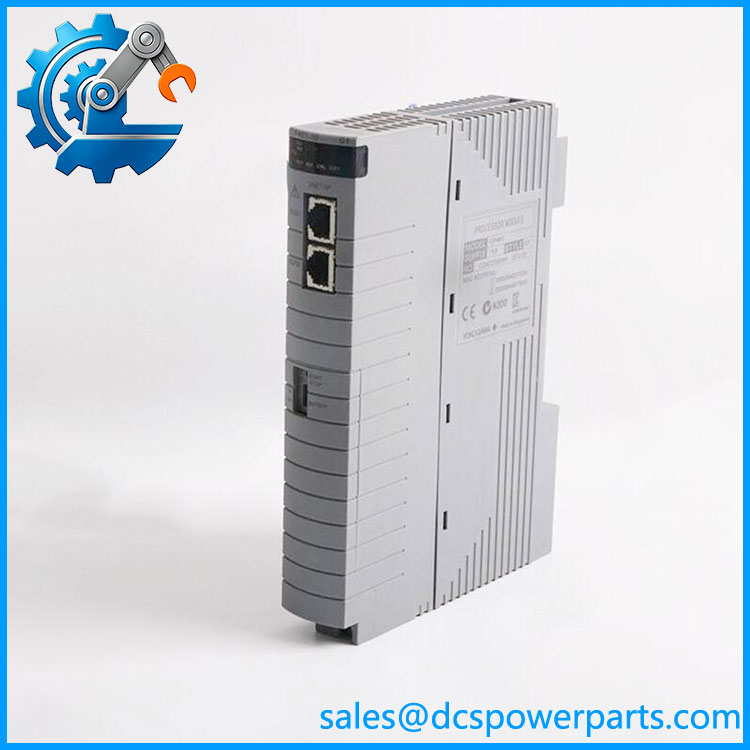
CP471-01 S1
Dual-Redundant Configuration
Yokogawa documents the use of two modules in a dual-redundant configuration on a duplexed field control unit. This arrangement allows the processor architecture to support high-availability control operation.
For an operating plant, this is one reason to verify the installed FCU architecture before ordering a replacement. The question is not simply whether one will physically fit; it is whether the existing processor pair, base unit, bus coupler, and software configuration form a supported combination.
G3 Configuration
The model uses a suffix structure that distinguishes explosion-protection and environmental configurations. Yokogawa’s specification identifies:
-00— no explosion protection, basic type-01— no explosion protection, ISA Standard G3 option-10— explosion-protection configuration, basic type-11— explosion-protection configuration with G3 option
The CP471-01 S1 therefore should not be quoted simply as an unspecified processor. The -01 configuration carries the G3 option.
Defined FCU Compatibility
Yokogawa specifies compatibility with AFV30, AFV40, A2FV50, and A2FV70 field control units, subject to the particular FCU suffix and installation conditions.
This is especially important when replacing older CP461 hardware. Yokogawa provides a CP461-to- replacement path, but the conversion has specific software, bus-coupler, and service requirements.
CP461 Replacement Path
Yokogawa explicitly documents replacement of an existing CP461 with . However, the procedure is not simply “remove CP461 and install .” Yokogawa specifies that the Control Function for FCS must be R6.05 or later, the associated EC401 must be style code S3 or later, and certain -to- replacement work must be performed by an authorized Yokogawa service engineer.
That is a significant procurement detail for legacy CENTUM systems.
Application Scenarios & Field Considerations
he S1 is primarily encountered in installed Yokogawa CENTUM VP FCS architectures.
- CENTUM VP field control stations: Provides the processor function for compatible FCUs.
- Duplexed FCS configurations: Two modules can be used in the documented redundant architecture.
- Legacy modernization: can form part of a documented replacement program when the software and bus architecture meet Yokogawa’s requirements.
- G3 plant environments: The -01 configuration provides the specified ISA Standard G3 option.
A practical maintenance scenario is a plant with an older FCS where the processor has become the limiting spare. Before purchasing, compare the installed FCU model and nameplate, existing CP processor, EC401 style code, and CENTUM VP software level. A visually identical module does not eliminate those dependencies.
Related Products
- Yokogawa -00 — basic configuration without the G3 option.
- Yokogawa -10 — explosion-protection configuration.
- Yokogawa -11 — explosion-protection plus G3 configuration.
- Yokogawa — previous-generation processor associated with the documented -to- migration path.
- Yokogawa EC401 — ESB bus coupler used with ; Yokogawa specifies style code S3 or later.
- Yokogawa AFV30 — compatible CENTUM field control unit family.
- Yokogawa AFV40 — compatible CENTUM field control unit family.
- Yokogawa A2FV50 — compatible field control unit family.
- Yokogawa A2FV70 — compatible field control unit family.
These are related architecture components, not blanket direct substitutes. Yokogawa’s compatibility tables should be checked against the exact FCU suffix and installed system revision.
Engineer’s Guide — Field Pitfalls to Avoid
1. Do not se with every variant
The -01 designation has a specific configuration. -00, -01, -10, and -11 are not simply cosmetic variations. The protection and G3 options differ.
2. Check the FCU model before ordering
is not a universal Yokogawa rack CPU. Verify whether the installed equipment is AFV30, AFV40, A2FV50, A2FV70, or another architecture.
3. Check the EC401 style code
For operation, Yokogawa specifies an ESB bus coupler with style code S3 or later. An older coupler can turn what appears to be a straightforward processor replacement into a system-compatibility problem.
4. Verify the CENTUM VP software level
Yokogawa specifies R6.05 or later for operation. Do not accept a quotation that treats compatibility as purely a hardware issue.
5. Be careful with migration
Yokogawa documents as a replacement path for , but it also specifies restrictions on how the conversion is performed. In particular, and should not simply be mixed within the same dual-redundant processor pair.
6. Verify the actual S1 designation
“S1” appears frequently in spare-parts descriptions, while Yokogawa’s formal documentation expresses the processor configuration through the model and suffix structure. Match the physical nameplate and Yokogawa ordering information rather than assuming every seller’s use of “S1” represents an identical revision.
FAQ
What is Ywa S1?
It is a CENTUM VP Field Control Unit processor module. is designed for compatible Yokogawa field control units including AFV30, AFV40, A2FV50, and A2FV70.
Is S1 a PLC CPU?
Not in the conventional standalone PLC sense. It is a dedicated CENTUM VP FCS processor module designed to operate within Yokogawa’s field control unit architecture.
Can replace ?
Yokogawa documents a -to- replacement path, but specific requirements apply. Control Function for FCS must be R6.05 or later, and the associated ESB bus coupler must have style code S3 or later. Yokogawa also specifies restrictions on the replacement procedure.
What does the “-01” suffix mean?
For the model, Yokogawa identifies -01 as the configuration with the ISA Standard G3 option and without explosion protection.
Can two modules operate redundantly?
Yes. Yokogawa specifies that two modules can be used in a dual-redundant configuration on a duplexed field control unit.
Which Yokogawa FCUs support ?
The documented -compatible families include , , , and , with compatibility depending on the exact FCU suffix and configuration.
What should procurement verify beforeng S1?
Verify the complete identification, installed FCU model and suffix, style code, CENTUM VP software revision, redundancy arrangement, physical connector condition, revision markings, and the G3 requirement. If the unit is used or refurbished, verify its actual condition rather than relying on a generic “new” or “tested” listing.
Procurement Takeaway
Ywa S1 is a CENTUM VP FCS processor module with the -01 G3 configuration. The critical procurement issue is system compatibility: Yokogawa specifies the applicable FCU families, CENTUM VP R6.05-or-later software requirement, and S3-or-later ESB bus coupler requirement.
For a processor replacement, match the complete hardware designation and the surrounding FCS architecture. If the application involves replacing hardware, treat it as a controlled migration rather than a simple plug-in spare exchange.