Description
Yokogawa CP451-51
Product Overview
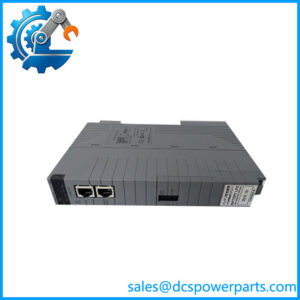
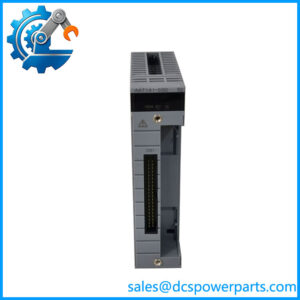
The Yokogawa CP451-51 is a processor module used in Yokogawa CENTUM VP distributed control system architectures based on the AFV300 and AFV400 Field Control Units. Its primary responsibility is execution of the control-processing workload within the FCS rather than direct field signal conditioning. In practical terms, this is the computational element that works with the FCS hardware and associated I/O architecture to execute configured process-control functions. Public Yokogawa-related ordering references identify CP451-51 as the CP451 processor module for AFV300/AFV400 systems and identify it as a replacement for the earlier CP451-11.
The CP451-51 is specifically identified with the -51 ordering configuration: the 5 denotes the standard type without explosion protection, while the 1 denotes the ISA Standard G3 option. That distinction matters when matching an installed FCS because similar-looking variants can carry different environmental or application options. The available exact-model documentation confirms the processor-module role and configuration coding, but public sources do not provide sufficiently reliable evidence for assigning a particular CPU clock speed, memory capacity, or internal firmware revision to every -51 unit.
For maintenance of an existing Yokogawa DCS, the Yokogawa -51 should therefore be treated as a system-specific FCS processor rather than a generic PLC CPU. The FCS hardware generation, CENTUM VP system release, control application, redundancy arrangement, and installed module revision all matter. A replacement that physically fits the controller rack is not automatically a valid engineering substitute.
Product Introduction
Control failures in a DCS processor are rarely solved by matching dimensions alone. The belongs to the AFV300/AFV400 processor architecture, and its role is tied directly to the associated Yokogawa FCS hardware and CENTUM VP engineering environment.
For a Yokogawa CENTUM VP legacy processor replacement, the important checks are the complete part number, FCS model, hardware revision, software compatibility, redundancy arrangement, and application backup—not an unverified CPU or memory specification copied from a reseller listing.
Key Technical Specifications
| Parameter | Specification |
|---|---|
| Product Model | -51 |
| Manufacturer | Yokogawa Electric Corporation |
| Product Type | Processor Module |
| Processor Family | |
| System | Yokogawa CENTUM VP |
| Compatible FCS | AFV300 / AFV400 |
| Primary Function | FCS control processing |
| Configuration Type | Standard type, no explosion protection |
| Environmental Option | ISA Standard G3 |
| Replacement For | -11 |
| Installation | AFV300/AFV400 Field Control Unit |
| Module Weight | Approx. 1 kg |
| Firmware | Version must be verified from the installed module/system |
| Control Application | CENTUM VP engineering configuration dependent |
‘s exact processor architecture, memory size, communication implementation, power characteristics, and environmental limits should be taken from the applicable Yokogawa hardware manual for the installed FCS generation rather than inferred from unrelated1 variants. Public secondary references agree on the AFV300/AFV400 application,1-11 replacement status, G3 option, and approximately 1 kg module weight.
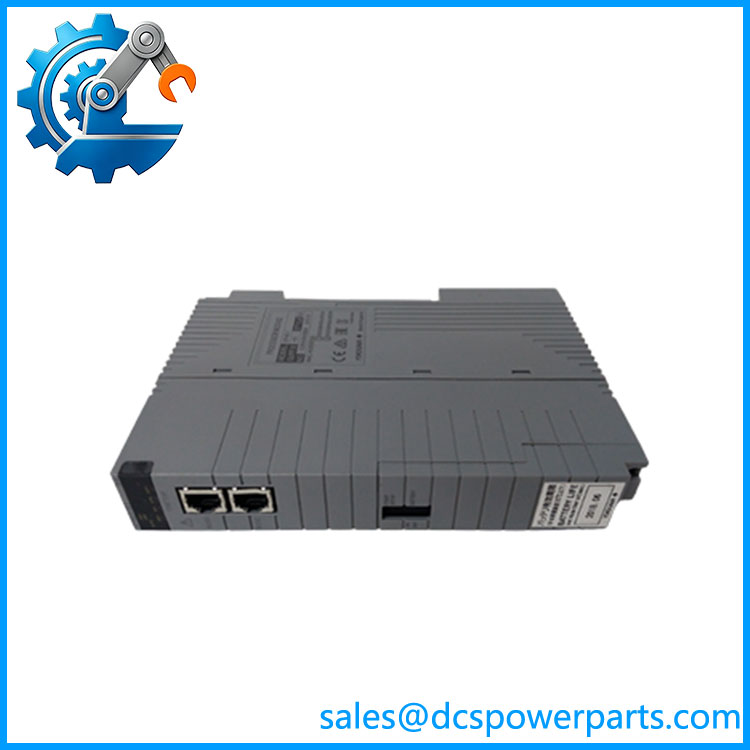
CP451-51
Major Features / Practical Advantages
/ FCS Integration
The most important characteristic of the is its system position. It is specified for Yokogawa and Field Control Units. That places it inside the FCS processing architecture rather than at the individual transmitter or actuator interface level.
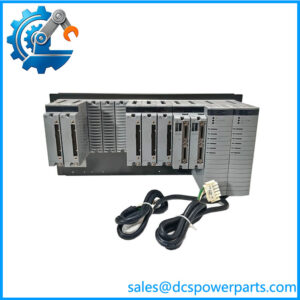
For plant maintenance, this means the processor must be evaluated together with the controller base, I/O configuration, communication architecture, and CENTUM VP application.
Successor to -11
Yokoga is documented by multiple catalog references as a replacement for the processor module.
That makes the part particularly relevant to legacy-system maintenance. It should not, however, be interpreted as proof that every -11 installation can be upgraded without checking the CENTUM VP release and controller configuration.
ISA Standard G3 Option
The ordering information identifies the -51 configuration as the standard type without explosion protection combined with the ISA Standard G3 option.
G3 is an environmental classification detail, not a statement that the module itself is explosion-proof. This distinction is important when equipment is being specified for an industrial plant with classified areas.
Processor-Level DCS Function
executes the control-processing workload associated with its Field Control Unit. It should therefore be distinguished from Yokogawa analog-input, analog-output, digital-input, digital-output, and communication modules.
A processor replacement also has a different commissioning risk profile from an I/O replacement because application execution and controller state are involved.
Legacy Replacement Utility
Existing CENTUM VP installations can remain in service for many years, making processor availability an important maintenance consideration. is specifically identified as a replacement for the earlier -11.
For critical plants, maintaining a tested spare can reduce the exposure associated with an unexpected FCS processor failure.
Conservative Specification Matters
Several online listings assign detailed CPU, memory, Ethernet, control-loop, and power specifications to, but those values are inconsistent across sources. For procurement, repeating an impressive-looking number without a Yokogawa source is poor engineering practice.
The exact identity, FCS compatibility, option code, hardware revision, and system software compatibility can be established with reasonable confidence; unsupported internal specifications should be confirmed from the unit’s documentation or Yokogawa service records.
Related Products
- — Earlier processor module identified as the predecessor/replacement reference.
- — Another processor configuration; exact option and FCS compatibility should be checked before considering substitution.
- -related configuration referenced in secondary catalogs; the complete suffix and system documentation should be checked before treating it as equivalent.
- — Yokogawa Field Control Unit platform for which the processor family is specified.
- — Related Yokogawa Field Control Unit platform supported by the processor family.
- CENTUM VP — Yokogawa distributed control system environment in which the processor is used.
- CP461 — Higher-generation Yokogawa CENTUM VP processor family; not automatically interchangeable with hardware.
- CP471 — Another CENTUM VP processor family used in later-generation FCS architectures; system generation must be checked before substitution.
- Yokogawa FCS I/O modules — Field interface modules that work with the processor through the applicable / architecture.
FAQ
What is the Yoko?
It is a processor module for Yokogawa / Field Control Units, used within CENTUM VP distributed control systems.
a PLC CPU?
Not in the conventional standalone PLC sense. It is a processor module specifically designed for Yokogawa’s DCS Field Control Unit architecture.
What does the “-51” suffix mean?
Available ordering references identify 5 as the standard type with no explosion protection and 1 as the ISA Standard G3 option.
a replaceme11?
Yes. Multiple product references identify as a replac51-11. The installed FCS model and CENTUM VP system release should still be verified before performing the replacement.
Can I hot-swap?
Do not assume hot replacement solely from the processor-module format. Whether an online replacement is permitted depends on the specific / configuration, redundancy arrangement, system procedure, and applicable Yokogawa documentation.
For a live process plant, follow the site’s approved FCS maintenance procedure rather than removing a processor based on a generic “hot-swap” claim.
support firmware v3.1?
The part number alone does not establish a particular firmware revision. Firmware compatibility should be checked against the installed CENTUM VP release and the ac hardware revision.
Does have a built-in Ethernet interface?
Do not assume a specific Ethernet implementation from the catalog number alone. Some online descriptions assign detailed network specification, but the exact communication architecture should be verified against the applicable / documentation and system generation.
What should I check before purchasi replacement?
Verify:
- Complete part number .
- Existing or FCS model.
- hardware revision.
- CENTUM VP system release.
- Installed firmware revision.
- Redundant/non-redundant controller arrangement.
- Existing control application and backup.
- G3 environmental option.
- Physical connector and backplane condition.
- Power-up and diagnostic test results.
Procurement Note
The Yoko is a processor-level DCS spare, so configuration verification is more important than simply confirming that the module is physically identical to the failed unit. The available ordering references consistently identify it as an / processor, a replacement for , with the standard/no-explosion-protection configuration and ISA Standard G3 option.
For New Surplus or previously installed equipment, request a clear nameplate photograph showing , hardware revision information, and any available firmware/system-version records. Check the connector condition and inspect the module for storage-related contamination or corrosion, particularly because the G3 designation relates to environmental protection and should not be confused with hazardous-area certification.
Before installing a replacement, preserve the existing FCS configuration and application data. Confirm whether the controller operates as a redundant pair and follow the Yokogawa procedure for processor replacement. A processor that boots successfully is not sufficient evidence of compatibility if the CENTUM VP release, application database, or redundant-controller configuration differs.
One final procurement warning: several commercial pages publish deta specifications that are not consistent with one another. I would not use those figures for engineering calculations without the applicable Yokogawa hardware manual. For this part, accurate identification and system compatibility are more defensible than filling a specification table with unverified numbers.