Description
Technical Specifications
| Parameter | Specification |
|---|---|
| Manufacturer | Yokogawa Electric Corporation |
| Product Model | CP451-10 S2 |
| Product Type | Field Control Station processor module |
| Host FCU | AFV10S / AFV10D, subject to compatibility checks |
| Processor | VR5432, 133 MHz, as reported in model-specific technical listings |
| Main Memory | 32 MB, as reported in model-specific technical listings |
| Control System | CENTUM VP / compatible CENTUM FCS environment |
| Controller Network | Vnet/IP environment; confirm the installed system configuration |
| Redundant Operation | Two compatible processor modules in supported duplex configurations |
| Battery Backup | Battery-backed memory; reported maximum backup duration is up to 72 hours under specified conditions |
| Memory Backup Recharge | Reported minimum recharge time: 48 hours |
| Maximum ESB Node Units | Up to 9 per FCU, subject to configuration |
| Maximum Node Units | Reported up to 14 per FCU, subject to system configuration |
| Installation | Compatible FCU processor slot |
| Style Requirement | Confirm S2 marking and application-specific style requirements |
The processor speed, memory, battery figures, and node limits above are reported in model-specific technical listings. Confirm them against the applicable Yokogawa hardware documentation for the installed system revision before using them for engineering or replacement approval.
Compatibility note: The S2 style designation is important when matching a replacement processor. Do not assume that another CP451 suffix or a visually similar CPU is directly interchangeable. Check the full nameplate, FCU model, paired processor, control-system software, and firmware requirements before ordering.
Product Overview
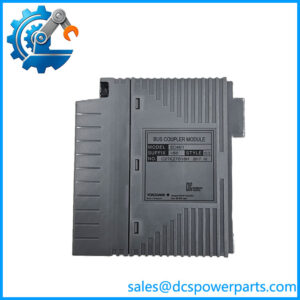
The Yokogawa CP451-10 S2 is a processor module for compatible Field Control Units (FCUs) in Yokogawa CENTUM distributed control systems. It performs the central processing role within the field control station, executing configured control applications and coordinating communication with the control-system network and associated I/O infrastructure. It is not an individual signal-conditioning module or a standalone general-purpose PLC CPU.
The CP451 family is associated with the AFV10S single FCU and AFV10D duplex FCU configurations. In a duplex installation, processor compatibility and the active/standby arrangement must be preserved during maintenance. The controller’s system software, firmware, network configuration, and associated interface modules also affect whether a replacement can be commissioned successfully. A matching model number is an essential first check, but it does not independently establish system compatibility.
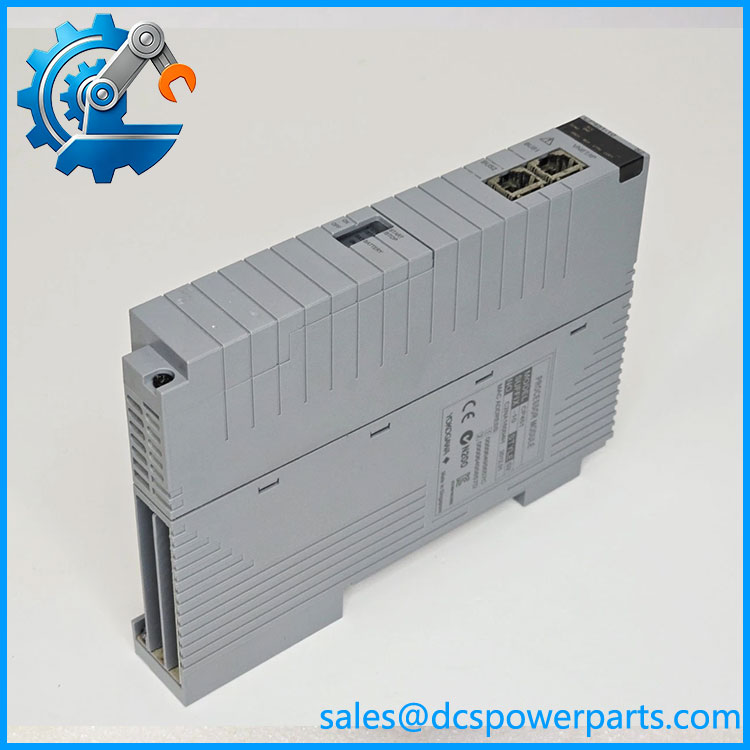
CP451-10 S2
Model-specific listings identify the CP451-10 S2 with a VR5432 processor operating at 133 MHz and 32 MB of main memory. They also report battery-backed memory and a backup duration of up to 72 hours under specified conditions. These values should be checked against the applicable manufacturer documentation and the actual unit before being used as acceptance criteria. Battery condition, storage history, and the time a module has been unpowered can affect maintenance planning.
For procurement, the most important details are the complete CP451-10 designation, S2 style, host FCU model, redundancy arrangement, and installed CENTUM version. Where the existing controller is part of a running process, replacement planning should also account for configuration retention, network identity, and the site’s approved processor-exchange procedure. These checks help avoid commissioning delays caused by a processor that appears correct but does not match the installed system.
Major Features and Advantages
Central field-control processing
The -10 S2 provides the processor function for a compatible CENTUM field control station. It executes the configured control application and supports the controller’s role in the overall DCS architecture. Its suitability depends on the FCU family and the system version for which the station was engineered.
Support for single and duplex FCU arrangements
The family is documented for AFV10S single and AFV10D duplex configurations. A duplex arrangement uses compatible processor modules according to the supported system design. During replacement, confirm the partner processor’s identity and status, the active/standby arrangement, and the applicable maintenance procedure before disturbing either processor.
Controller network integration
The processor participates in the CENTUM controller network environment. Network identity, firmware compatibility, and communication configuration must be preserved in accordance with the approved service procedure. Do not assume that replacing the hardware alone resolves a network fault; investigate the controller, communication path, configuration, and associated hardware when diagnostics indicate a broader issue.
Battery-backed memory considerations
Model-specific technical listings report battery-backed memory with a maximum backup duration of up to 72 hours under specified conditions. This figure should not be treated as a guarantee for an aged or previously stored module. Before a planned shutdown or replacement, verify the applicable backup requirements and determine whether the station configuration is recoverable from approved system backups. Never rely on the processor battery as the only means of preserving critical control-system data.
Replacement without unnecessary system redesign
When an installed processor has failed, a correctly matched spare can help maintain the existing controller architecture. The benefit depends on confirming the module style, host FCU, software and firmware compatibility, and redundancy requirements. A newer or superficially similar variant should not be treated as a direct replacement until the manufacturer documentation or responsible system integrator confirms equivalence.
Applications
The Yokogawa -10 S2 is used in compatible process-control installations where a CENTUM field control station executes control strategies and coordinates communications with its configured I/O system. Such systems can support continuous process monitoring, regulatory control, interlocking logic, and sequence operations, depending on the installed application and associated hardware.
In a maintenance scenario, the processor may be held as a critical spare for an AFV10-series FCU. Before replacing a failed unit, the controls team should determine whether the reported fault originates in the processor itself, its power supply, the controller network, a connected interface module, or the station configuration. A CPU alarm or loss of communication does not by itself prove that the processor is defective.
For a duplex FCU, the processor’s role must be considered alongside the partner module and the station’s operating state. The maintenance plan should identify the active processor, confirm the standby processor’s health, and establish how the system will behave during the approved exchange procedure. Never assume that removing a processor from a redundant station is risk-free without checking the actual configuration and site procedure.
The module is also relevant when restoring older CENTUM installations where the original processor configuration must be maintained. In these cases, the existing software environment, hardware style, network settings, and database version can be just as important as the physical part number. If a proposed replacement differs in suffix or style, engineering approval should precede installation.
For spare-parts planning, S2 should be cataloged separately from other processor families and suffix variants. Record the installed FCU type, the complete processor label, the firmware and software environment, and any redundancy requirements. This information gives procurement a clearer basis for selecting a replacement and reduces the chance of receiving a module that cannot be used in the intended station.
Related Products
| Model | Relationship |
|---|---|
| Base processor model; verify the complete suffix and style | |
| -50 | Related family variant; interchangeability must be confirmed |
| AFV10S | Single Field Control Unit associated with the family |
| AFV10D | Duplex Field Control Unit associated with the family |
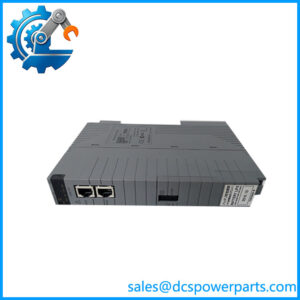
| EC401 | ESB bus coupler module used in compatible FCU architectures |
| EC402 | Related ESB bus coupler module; confirm system compatibility |
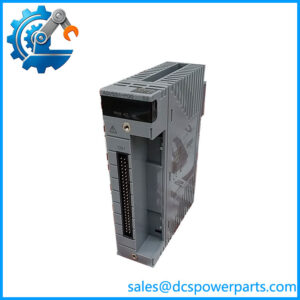
| SB401 | ESB bus interface slave module for compatible node hardware |
| PW484 | Yokogawa system power-supply module family; exact FCU applicability must be checked |
These products are related by controller family or system architecture. They are not direct substitutes for S2 processor.
Installation and Maintenance
Before installing S2, verify the complete nameplate, including model, suffix, and style. Confirm the host FCU is an applicable AFV10S or AFV10D configuration and check the required controller software and firmware revisions. For a duplex station, record the partner processor’s identity and operating state before starting work.
Follow the site’s approved shutdown, isolation, and processor-replacement procedures. Do not remove a processor from an operating station merely because the FCU has a redundant configuration. Confirm the approved exchange sequence, required maintenance authorization, and process-state precautions with the responsible controls engineer.
Review the station’s configuration backup and recovery plan before removing hardware. Where battery-backed memory is involved, follow the applicable Yokogawa guidance for power-off duration and memory retention. Do not assume a stored or refurbished processor retains a usable application configuration or that its battery remains within specification.
Inspect the module’s connectors and external condition for damage, corrosion, or signs of improper storage. After installation, follow the approved recovery procedure and verify processor recognition, controller diagnostics, network communication, I/O-node status, and the required active/standby state. Confirm application execution and process feedback before returning the affected equipment to normal service.
Document the replaced serial number, complete model designation, firmware details where available, battery-related checks, diagnostic results, and any configuration changes. Any firmware update, processor pairing, or network-identity adjustment should follow the approved procedure rather than an improvised field workaround.
Product Assurance
For the Yoko S2, product assurance begins with exact identity and compatibility verification. Request clear photographs of the nameplate, style marking, connectors, and overall condition. Compare these details with the installed processor and the FCU’s hardware records before approving the unit for shipment.
The condition of the specific unit should be stated separately from its technical description. New surplus, used, and refurbished processors can have different storage histories, battery conditions, and available test evidence. A clean exterior or matching label does not establish that the processor has passed functional testing or is ready for immediate commissioning.
Where testing is offered, request documentation identifying the tests performed, the test environment, the results, and any limitations. For a critical spare, also confirm warranty coverage, return terms, packaging, and the expected delivery lead time. If a different suffix or style is proposed, require documented compatibility confirmation before accepting it as an equivalent replacement.
Final acceptance should be based on the complete model designation, FCU compatibility, style and firmware requirements, physical condition, and available test records. These checks are particularly important for legacy DCS hardware, where an incorrect processor variant can turn a planned maintenance activity into an extended control-system outage.