Description
Product Overview
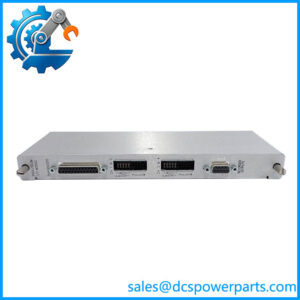
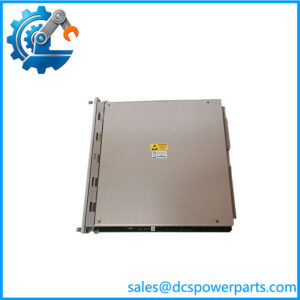
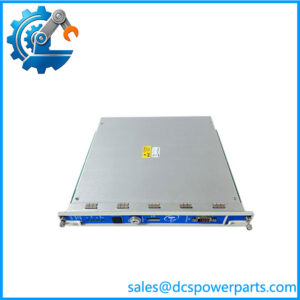
145988-02 is the front monitor card of the 3500/65, the sixteen-channel temperature monitor in Bently Nevada’s 3500 machinery protection system. It occupies one full-height front slot and one full-height rear slot, and it is the module that replaced the practice of stacking six-channel cards across a turbine deck: sixteen independent thermal points — bearing metal, stator winding, exhaust, interstage, seal oil, lube header — now land in a single slot of the same rack that carries the vibration and position monitors.
The architecture explains why this matters beyond cabinet space. Each channel is an independent front end with its own conditioning, its own sensor excitation and its own alarm comparison, running against user-programmable Alert and Danger setpoints that can drive the 3500 relay modules directly. Protection does not depend on the transient data interface being alive, on System 1 being connected or on the network being healthy: the monitor compares and alarms on its own, which is the property that makes a temperature card part of a protection system rather than an indication device.
The type accepts resistance temperature detectors and isolated-tip thermocouples in any mix, channel by channel, selected in the 3500 Rack Configuration Software rather than by jumper or hardware variant. Three-wire and four-wire RTDs are both supported, and the standard platinum curve at α = 0.00385 is the recommended choice because it is the worldwide industrial reference. The module needs no field calibration; the full-scale range for each channel is set in software, and the factory calibration holds.
Two constraints are worth stating plainly, because they decide whether a spare will actually work. The front card must match the rear terminal module — the I/O type is ordered separately as internal terminations or external terminations, and a monitor paired with the wrong rear module produces an I/O mismatch event and no valid measurement. And the accuracy figure is ±3 °C at 25 °C, which is the right specification for a protection function designed to catch a bearing running away, not for a laboratory reference.
Technical Specifications
| Parameter | Value |
|---|---|
| Model | 3500/65, monitor assembly 145988-02 |
| Manufacturer | Bently Nevada (Baker Hughes) |
| Product type | 16-channel temperature monitor, front card with rear I/O terminal module |
| Input channels | 1 to 16, RTD or isolated-tip thermocouple, mixed per channel in software |
| Sensor types | Type E, J, K and T isolated-tip TC; 100 Ω Pt 3- and 4-wire (α 0.00385 / 0.00392); 120 Ω Ni; 10 Ω Cu |
| Measurement ranges | TC: E −100 to +1000 °C, J 0 to +760 °C, K 0 to +1370 °C, T −160 to +400 °C; Pt100 to +850 °C |
| Resolution and accuracy | 1 °C or 1 °F resolution; ±3 °C at +25 °C, no field calibration required |
| Input impedance | Greater than 1 MΩ per lead |
| RTD excitation | 913 ±7 µA per transducer at 25 °C; two sources for a 3-wire RTD, one for a 4-wire |
| Alarm setpoints | Alert and Danger, over- and under-alarm, 0 to 100 % of full scale, alarm accuracy within 0.13 % |
| Alarm delays | Alert 1 to 60 s in 1 s steps; Danger 1 to 60 s in 0.5 s steps |
| Power consumption | 3 W nominal, supplied from the rack backplane |
| Operating environment | −30 to +65 °C; storage −40 to +85 °C |
| Dimensions and mass | Monitor 241.3 × 24.4 × 241.8 mm, 0.91 kg; I/O module 241.3 × 24.4 × 99.1 mm, 0.45 kg |
| Rack space | One full-height front slot plus one full-height rear slot |
| Approvals | cNRTLus Class I Div 2 Groups A–D T4; ATEX/IECEx Zone 2 Ex nA nC ic IIC T4 Gc; EMC 2014/30/EU; RoHS |
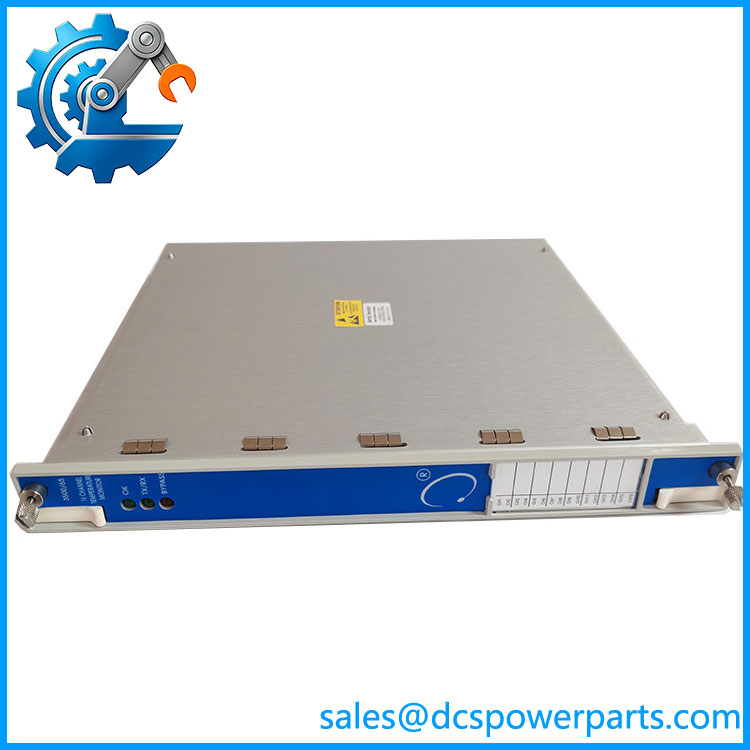
350065 145988-02
Key Features and Advantages
Sixteen points in the slot of one
A machine train with four bearings, a generator with six winding sensors and a compressor with interstage thermocouples used to consume three or four rack slots and the same number of rear terminal banks. 3500/65 consolidates them into one slot pair, which matters in a 3500 rack that is usually full long before the machine list is exhausted — the constraint on expansion is almost always physical, not logical.
The front card and the rear terminal are one decision
Termination type is chosen at order time, not at commissioning. A monitor built for internal terminations expects the rear module that carries the terminal strips on its own faceplate; the external-termination build expects field wiring brought to a separate terminal block. Treating 145988-02 and its I/O module as a matched pair — and stocking them as a pair — avoids the most common spare-part failure in this rack family, where a correct-looking card produces no readings.
Alarms that keep working when the network does not
Each channel compares its conditioned signal against configured setpoints and drives relay logic without waiting for the transient data interface. Delay settings are asymmetric by design: Alert delays run in one-second steps for trending, Danger delays in half-second steps for genuine protection, so a load transient can be filtered without slowing the trip that actually protects the bearing.
Mixed sensors without mixed hardware
RTD and thermocouple channels coexist on the same card, chosen per channel in configuration. The 913 µA excitation is deliberately low, keeping self-heating in a 100 Ω element negligible, and isolated-tip thermocouples are specified because a grounded tip on a machine casing introduces a common-mode path that degrades cold-junction compensation.
Applications
Steam and gas turbine TSI racks are the primary application: journal and thrust bearing metal temperatures per API 670, generator stator winding and core temperatures, steam chest and exhaust thermocouples, and seal oil or lube header points on the same machine train, all landing in one monitor instead of three.
Centrifugal and reciprocating compressors in refining and petrochemical service use 3500/65 for discharge, interstage and cooler outlet temperatures, where an excursion is often the first measurable sign of a fouled bundle or a failing valve before vibration responds.
Hydro units apply the type to thrust bearing and stator winding monitoring inside the same rack that carries the 3500/46M hydro monitor, keeping generator thermal protection and vibration protection on a common platform and a common time base.
Offshore installations and Zone 2 machinery cabinets rely on the hazardous-area certification of the assembly — Class I Division 2 and Zone 2 with a T4 rating across the −20 to +65 °C ambient window — which allows the rack to sit in the turbine enclosure rather than a pressurised analyzer house.
Motor and gearbox monitoring in cement, paper and steel plants uses the channel count to cover a whole drive train, including windings, bearings and cooling air, without buying a second rack.
Related Products
3500/60 — six-channel temperature monitor without recorder outputs, the lower-density sibling for small skids with four or fewer points.
3500/61 — six-channel temperature monitor with a 4–20 mA recorder output per channel, chosen when a hard-wired trend signal is required.
172103-01 — the rear I/O module for RTD and isolated-tip TC with internal terminations, the correct partner for an internally terminated monitor.
172109-01 — the external-termination I/O module for the same monitor, used where field wiring lands on a separate terminal block.
173005 — 20-position black connector header for the internal-termination terminal base.
3500/22M — Transient Data Interface module, the rack gateway that carries configuration and data to System 1.
3500/15 — rack power supply module, the redundant 24 VDC source feeding the monitor slots.
3500/32 — four-channel relay module, the device that converts monitor alarms into trip contacts.
3500/92 — communication gateway module for Modbus and Ethernet integration to the plant control system.
3500/05 — system rack in 19-inch and 14-inch formats, the mechanical and backplane host for the assembly.
Installation and Maintenance
Before installation: confirm the rack slot is a full-height position with the matching full-height rear slot free behind it, and verify that the rear I/O module installed there is the same termination type as the monitor — internal versus external is an order-time decision that cannot be corrected in configuration. Check the sensor inventory against the channel plan, since the module accepts any mix of RTD and isolated-tip TC but each channel must be told what it is receiving. Land field wiring with the cable shield terminated at the rack chassis ground only, taped and isolated at the machine junction boxes, and keep RTD/TC leads clear of VFD and contactor wiring. For TMR configurations, fit 3500/65 modules in groups of three adjacent slots so that voting has three independent channels to compare.
Maintenance practice: after any module substitution, upload the validated rack configuration before returning the machine to service, because a factory-default card will read a thermocouple channel as an RTD and produce a full-scale false high. Confirm each channel against a known resistance or millivolt input and check the DCS or System 1 readback against the design thermal limits. Watch the front panel for the OK, TX/RX and Bypass indications — a bypass left engaged after maintenance is a protection point silently out of service. Record 3-wire RTD lead resistance at commissioning and re-check it at each outage, since a degrading termination appears as a slow temperature offset long before it appears as a fault.
Warranty and Quality
145988-02 is supplied as the front monitor card with the revision level and part number legible on the label, and the rear I/O module identified separately so that the pair can be verified before installation. Each assembly is powered in a test rack and every channel checked for sensor excitation, response to a simulated input and correct alarm behaviour at configured setpoints, with the results recorded on the dispatch sheet. A 12-month warranty applies under standard practice for machinery protection hardware, covering repair or replacement of quality-related failures. Support covers slot and termination-type verification, channel configuration and scaling, alarm delay selection, TMR grouping and the matching spare strategy for racks where a single missing I/O module would otherwise strand a monitor.