Description
Technical Specifications
| Parameter | Specification |
|---|---|
| Model | ATK4A-00 S1 |
| Manufacturer | Yokogawa |
| Product category | KS cable interface adapter |
| Intended signal family | Analog I/O |
| Channel capacity | Associated with 16-channel analog I/O configurations |
| Terminal-board interface | AEA4D, as specified for the /K4A00 option |
| Cable interface | KS cable connection |
| Compatible I/O families | AAI143, AAI141, AAI543 and other models explicitly supporting /K4A00 |
| External power supply | No separate power supply is identified for the passive interface adapter; verify the exact assembly |
| Operating temperature | Confirm from the applicable specification for the exact suffix |
| Dimensions and weight | Verify against the supplied unit and manufacturer documentation |
S1 suffix |
Exact revision or environmental-option meaning not conclusively established for this specific designation |
The manufacturer documentation links the /K4A00 ordering option to the ATK4A-00 KS Cable Interface Adapter used to connect an applicable I/O module to an AEA4D terminal board. Third-party listings describe the S1 version as having a conformal-coating option, but this should be verified before relying on it for corrosive-environment service.
Product Overview
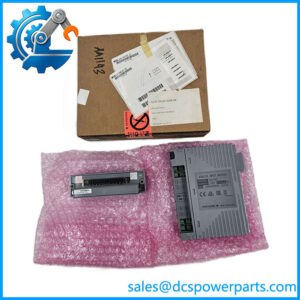
The Yokogawa ATK4A-00 S1 is a KS cable interface adapter associated with analog field I/O in compatible Yokogawa distributed control system installations. Its role is to provide the physical connection between a supported analog I/O module and the corresponding field terminal-board assembly. Rather than processing signals itself, the adapter forms part of the wiring interface that allows field signals to pass through the specified cable and terminal-board arrangement.
The base ATK4A-00 is documented for use with compatible Yokogawa analog I/O modules and the AEA4D terminal board. Applicable module families include AAI143, AAI141, AAI543, AAI841, and other models whose hardware specifications explicitly support the /K4A00 option. Compatibility should be established from the complete I/O model number, terminal-board model, and cable configuration; similar connector shapes alone do not prove electrical compatibility.
The additional S1 designation requires particular care during procurement. Some supplier listings associate it with ISA Standard G3 conformal coating, but the exact suffix interpretation should be checked against the manufacturer’s documentation for the unit being purchased. Do not assume that every adapter carrying this designation has the same environmental rating or hardware revision.
For maintenance engineers, the practical value of the ATK4A-00 S1 is maintaining the intended field-wiring interface without unnecessarily disturbing individual field conductors. When replacing a missing, damaged, or suspect adapter, match the original part number, mating connector, cable, and terminal board. Confirm the actual supplied condition and any available inspection or test evidence before installation.
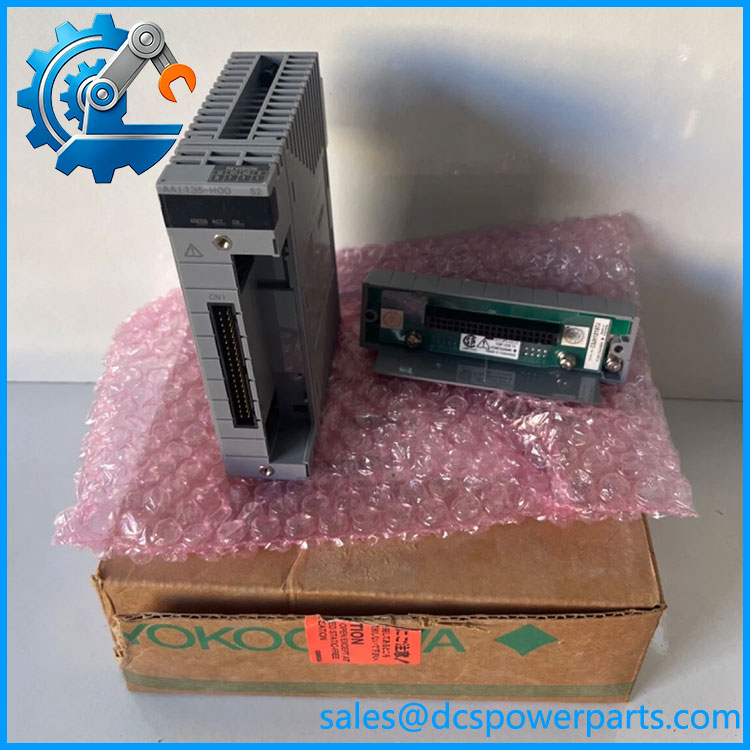
ATK4A-00 S1
Major Features and Advantages
1. Defined analog I/O cable interface
The adapter supports a specified connection arrangement between compatible analog I/O hardware and the field terminal board. Using the intended interface helps preserve the designed wiring layout and avoids improvised connections that can introduce wiring errors or maintenance difficulties.
2. Compatibility with selected Yokogawa I/O modules
The ATK4A-00 interface is documented for multiple Yokogawa analog I/O models. This does not make it universal across all CENTUM or FIO modules. Confirm that the exact module ordering code includes the /K4A00 option before selecting the adapter as a replacement.
3. Support for cabinet maintenance
A cable-based interface can simplify the handling of field wiring during approved module replacement procedures. The benefit depends on the installed cabinet design and cable arrangement. The adapter should not be treated as a substitute for the correct terminal board, cable, or I/O module.
4. Potential environmental protection option
Third-party listings describe the S1 designation as associated with conformal coating. This may be relevant in installations exposed to corrosive gases or contaminants, but the claim should be verified from the exact manufacturer’s specification. Do not use the suffix alone as proof that the complete assembly meets a particular environmental classification.
5. Focused replacement verification
For legacy DCS hardware, accurate identification is often more useful than assuming that a newer or visually similar part is interchangeable. Confirm the adapter’s label, connector condition, terminal-board type, and cable part number. These checks reduce the risk of ordering a component that fits mechanically but does not match the installed interface.
Applications
The Yokogawa S1 is relevant to field-wiring arrangements in compatible CENTUM VP and CENTUM CS 3000 installations where an analog I/O module uses the KS cable interface option. Such configurations may be found in process plants that collect current or voltage signals from transmitters and other field instrumentation.
Typical maintenance scenarios include replacing a damaged adapter, restoring a cabinet after connector damage, or sourcing a spare for a planned shutdown. In each case, the adapter must match the I/O module’s connection option and the installed terminal-board assembly. The base documentation identifies the AEA4D terminal board for the /K4A00 option. Other terminal-board arrangements should not be assumed compatible without supporting documentation.
The adapter may also be relevant when maintaining analog input and output assemblies. Examples of associated module families include AAI143 and AAI141 for analog input, and AAI543 for analog output. The correct combination depends on the exact module specification and wiring design, not simply the signal type or number of channels.
In facilities with corrosive atmospheres, verify whether the specific S1 unit carries the claimed environmental coating and whether that option meets the plant’s requirements. If the original assembly has been operating in a demanding environment, replacing it with a differently specified variant without engineering review could change the level of environmental protection.
Before commissioning, verify the cable pinout, connector seating, terminal-board compatibility, and the affected I/O channels. The adapter’s role is physical interfacing; it does not independently validate signal scaling, controller configuration, or field-instrument operation.
Related Products
| Model | Relationship |
|---|---|
| AAI143-H50/ | 16-channel isolated HART analog input module configuration using the KS cable interface option. |
| AAI141 | Related Yokogawa analog input module family; confirm the exact suffix and interface option. |
| AAI543 | Related 16-channel isolated analog output module family with applicable interface options. |
| AAI841 | Related analog I/O module family listed for the ATK4A interface. |
| AAV141 | Related analog voltage input module family listed in Yokogawa interface documentation. |
| AEA4D | Terminal board identified for the / interface option. |
| ATA4S-00 | Alternative pressure-clamp terminal block option; not the same component as . |
| ATA4D-00 | Alternative dual pressure-clamp terminal block option; verify the required interface before substitution. |
| KS1 / KS2 cables | Cable families referenced in Yokogawa I/O connection documentation; confirm the required cable type and length. |
These products belong to related I/O connection arrangements, but they are not all interchangeable.
Installation and Maintenance
Before installing the S1, confirm the complete adapter designation and compare it with the existing assembly. Check the associated I/O module’s ordering code, terminal-board model, and KS cable specification. Follow the plant’s approved isolation and maintenance procedures before disconnecting or reconnecting hardware.
Inspect the adapter for bent or damaged contacts, corrosion, contamination, cracked components, and loose mechanical fittings. Examine both mating connectors and the cable ends; a defective connector can cause intermittent or missing signals even when the I/O module remains functional. Do not force a connector into place or modify the pinout to accommodate a mismatch.
After installation, verify that the adapter is correctly seated and mechanically secured. Check cable routing, strain relief, and terminal-board identification against the cabinet drawings. Once the system is returned to the appropriate test state, verify affected channels using the site’s commissioning procedure and confirm that the controller receives the expected signals.
If the S1 designation is being selected for environmental reasons, obtain documentation confirming the coating or environmental option before accepting the component. Visual inspection cannot establish the coating specification or its suitability for a particular atmosphere.
Record the installed model, cable and terminal-board references, inspection results, and any deviations from the original configuration. If compatibility cannot be established from the available drawings or manufacturer documentation, obtain engineering confirmation before placing the assembly into service.
Product Assurance
Procurement of the Yokogawa S1 should focus on correct identification, connector condition, compatibility, and traceability. Request a clear photograph of the actual unit’s label and connector interfaces. Confirm whether the item is new, unused surplus, refurbished, or used, and ensure the stated condition accurately describes the supplied part.
For tested stock, ask what inspection was performed. Visual inspection can identify physical damage, but it does not establish suitability for a particular I/O module and terminal-board combination. Where available, retain the inspection record and any documentation that confirms the exact suffix and environmental option.
Before purchase, verify the required quantity, supplied accessories, warranty conditions, return terms, and delivery lead time. Confirm whether the adapter alone is being supplied or whether a cable or terminal board is included; do not assume these items are part of the same order.
The final acceptance criterion is a verified match to the installed Yokogawa hardware configuration. The base is documented as a KS cable interface adapter for compatible analog I/O modules, while the additional S1 designation should be verified separately before making revision-specific or environmental-performance claims.