Description
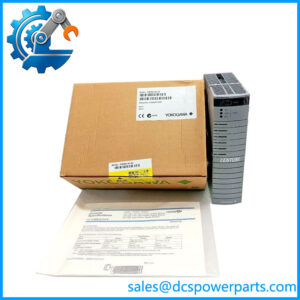
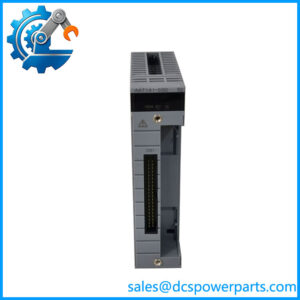
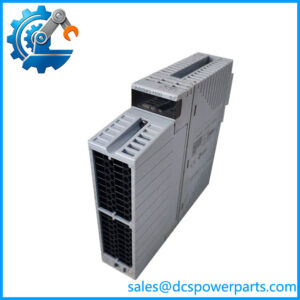
Yokogawa ALP121-S01
Product Introduction
When a Yokogawa FIO installation needs to exchange process data with PROFIBUS field devices, the critical component is not another generic serial interface; it is the communication module that sits correctly inside the FCS or bus-node architecture. Yokogawa ALP121-S01 performs this role as a PROFIBUS-DP master, communicating with PROFIBUS-DP slave devices such as remote I/O stations, PLCs, and other field-level equipment. Yokogawa’s hardware documentation identifies the ALP121 for installation in AFV30/AFV40 field control units and in ANB10 or ANB11 bus nodes connected to those FCS units.
The Yokogawa ALP121-S01 uses an EIA-RS-485-compliant PROFIBUS-DP interface and supports communication rates from 9.6 kbps through 12 Mbps. The S01 variant is the G3 option, identified in available product records as the ISA Standard G3 version. For maintenance and procurement, that suffix should be preserved: ALP121-S00 and ALP121-S01 share the communication function, but they are not identical ordering configurations.
Key Technical Specifications
| Parameter | Specification |
|---|---|
| Product Model | -S01 |
| Manufacturer | Yokogawa Electric |
| Product Type | PROFIBUS-DP Communication Module |
| Application | FIO / Yokogawa DCS communication |
| Master Function | PROFIBUS-DP master |
| Communication Interface | PROFIBUS-DP |
| Physical Interface | EIA-RS-485 compliant |
| Transmission Speed | 9.6 kbps to 12 Mbps |
| Communication Ports | 1 |
| Communication Connector | D-sub 9-pin female |
| Maximum Transmission Distance | 1.2 km at 9.6 kbps |
| Signal Isolation | Isolated between field and system |
| Mounting Locations | AFV30/AFV40; ANB10; ANB11 |
| Suffix | S01 — ISA Standard G3 option |
| Approx. Weight | 0.3 kg |
| System Role | PROFIBUS field-network interface |
The core hardware values above are supported by documentation describing the family. The 0.3 kg figure and one-port D-sub configuration are also listed in the hardware specification.
Major Features and Advantages
PROFIBUS-DP Master Function
The is not simply a passive PROFIBUS interface. It operates as the master device, exchanging data with PROFIBUS-DP slave equipment connected to the field network. Typical slave-side equipment can include remote I/O stations and PLC-based devices.
This distinction matters when reviewing an existing configuration. A replacement communication board needs to match the system’s PROFIBUS architecture and master configuration; identifying the unit merely as a “PROFIBUS card” is not enough.
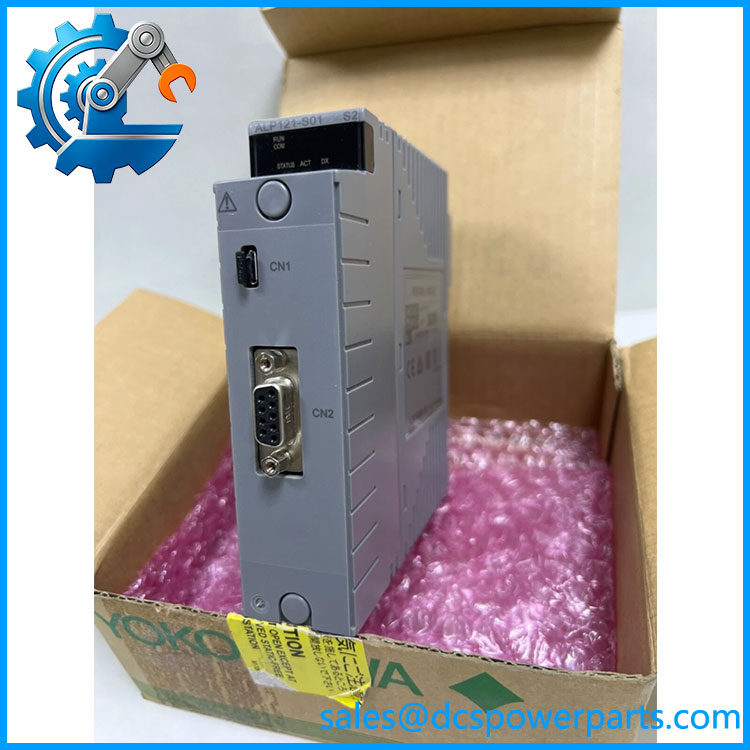
ALP121-S01
Broad PROFIBUS Transmission-Speed Range
The documented communication range is 9.6 kbps to 12 Mbps. The maximum stated transmission distance is 1.2 km at 9.6 kbps, reflecting the normal relationship between PROFIBUS baud rate and permissible cable length.
For troubleshooting, do not treat the 1.2 km figure as a universal cable-length allowance. Network topology, cable specification, connectors, repeaters, termination, and selected baud rate all affect the actual installation.
EIA-RS-485 Physical Layer
The PROFIBUS connection uses an EIA-RS-485-compliant electrical interface. The module has one communication port using a D-sub 9-pin female connector.
That makes physical-layer details important during replacement. A module can appear electrically correct while the associated connector, termination arrangement, or PROFIBUS wiring is incorrect.
FIO Architecture Compatibility
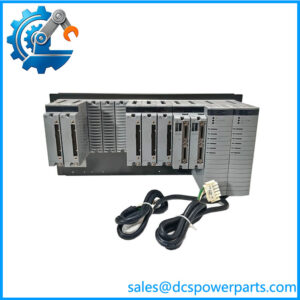
The is specifically documented for Yokogawa FIO architecture. It can be mounted in AFV30/AFV40 field control units and can also be installed in ANB10 ESB bus node units or ANB11 optical ESB bus node units connected to those FCS units.
This is a system component, not a universal PROFIBUS master that should be dropped into an unrelated PLC rack.
G3 Environmental Option
The S01 suffix is associated with the ISA Standard G3 option. Product records distinguish S01 from the basic S00 configuration and identify S01 as the G3 version.
That distinction is particularly relevant in plants where corrosive-gas exposure is part of the environmental design basis. The coating option should be verified from the actual nameplate and Yokogawa documentation for the installed revision rather than inferred solely from a reseller description.
Application Scenarios & Field Considerations
The -S01 is most relevant where an existing Yokogawa FIO installation needs a native PROFIBUS-DP master interface.
- PROFIBUS remote I/O integration: Allows the Yokogawa FIO control architecture to exchange data with PROFIBUS-DP remote I/O equipment.
- PLC integration: PROFIBUS-DP slave PLCs and controllers can exchange configured data with the Yokogawa master.
- Drive and packaged-equipment interfaces: PROFIBUS-capable drives and intelligent equipment can be integrated into the control architecture when the device-side configuration is supported.
- PROFIBUS-PA integration: PROFIBUS-PA equipment can be reached through an appropriate DP/PA coupler; the itself should not be described as a native PROFIBUS-PA interface.
A common maintenance mistake is to replace the communication module and assume the network will immediately recover. PROFIBUS configuration is part of the system engineering. Slave addresses, GSD/device definitions, data mapping, termination, cable polarity, and master configuration all need to remain consistent.
Related Products
- Yokogawa -S00 — PROFIBUS-DP module without the S01 G3 option.
- Yokogawa AFV30 — FIO-compatible field control unit family in which can be mounted.
- Yokogawa AFV40 — another documented FIO field control unit platform supporting .
- Yokogawa ANB10 — ESB bus node unit supporting installation.
- Yokogawa ANB11 — optical ESB bus node unit supporting installation.
- Yokogawa ALE111 — Ethernet communication module family; different physical network function.
- Yokogawa ALR121 — RS-422/RS-485 communication module family; not a PROFIBUS-DP replacement.
- Yokogawa ALF111 — FOUNDATION Fieldbus communication module family; different fieldbus technology.
These related models should not be treated as interchangeable merely because they occupy similar communication-module roles. The is specifically the PROFIBUS-DP interface. Available documentation distinguishes from the Ethernet, RS-422/485, and FOUNDATION Fieldbus communication families.
Engineer’s Guide — Field Pitfalls to Avoid
1. Do not confuse S00 and S01
The full order code matters. carries the G3 option, while is the basic configuration. If the plant specification requires G3 protection, quoting the S00 version because the model appears to be “” is not sufficient.
2. Verify the FIO mounting architecture
The is documented for AFV30/AFV40, ANB10, and ANB11 architectures. Confirm the actual mounting location before purchasing a replacement.
3. Check PROFIBUS configuration, not just hardware
A new communication module does not automatically reproduce the existing PROFIBUS configuration. Check master configuration, slave addresses, GSD/device definitions, cyclic data mapping, diagnostics, and termination.
4. Inspect the physical bus
If a replacement fails to communicate after installation, do not immediately assume the module is defective. Check the PROFIBUS cable, connector, shielding, termination resistors, polarity, and network topology first.
5. Do not confuse PROFIBUS-DP with PROFIBUS-PA
The is a PROFIBUS-DP master interface. PA instruments can be incorporated through an appropriate DP/PA coupler, but that does not make the a direct PROFIBUS-PA interface.
6. Match the complete part number
For procurement, record , not simply “Yokogawa .” The suffix can determine the environmental configuration supplied with the module.
FAQ
What is Yok?
is a Yokogawa PROFIBUS-DP communication module for FIO. It functions as a PROFIBUS-DP master and exchanges data with PROFIBUS-DP slave devices.
a PROFIBUS-DP master or slave?
It is a PROFIBUS-DP master. The field devices connected to its PROFIBUS network operate on the slave side of the communication relationship.
What is the difference between -S0?
Both belong to the PROFIBUS-DP communication-module family. The S01 version is identified with the ISA Standard G3 option, while S00 is the basic version.
What communication speed does support?
The documented PROFIBUS-DP transmission range is 9.6 kbps to 12 Mbps. The maximum transmission distance is specified as 1.2 km at 9.6 kbps under the documented conditions.
Wher be installed?
The documented installation locations include AFV30/AFV40 field control units, ANB10 ESB bus node units, and ANB11 optical ESB bus node units connected to the applicable FCS architecture.
communicate with PROFIBUS-PA instruments?
Not directly as a native PA interface. PROFIBUS-PA devices can be incorporated through an appropriate PROFIBUS-DP/PA coupler, with the remaining the DP-side master.
What should be checked before purchasing a replac?
Verify the complete part number, installed FIO architecture, G3 requirement, PROFIBUS connector and wiring, existing master configuration, slave configuration, and physical condition of the replacement unit. For used or refurbished hardware, actual inventory condition should be confirmed rather than assumed from a catalog listing.
Procurement Takeaway
Yok is a PROFIBUS-DP master communication module designed for Yokogawa FIO architecture. The key procurement identifiers are the model, S01 G3 option, PROFIBUS-DP interface, and intended /AFV40 or / installation architecture.
For a maintenance replacement, match the complete suffix and confirm the existing PROFIBUS configuration before installation. The module is a communication component within the DCS architecture, so a correct electrical part number alone does not guarantee a working network after replacement.