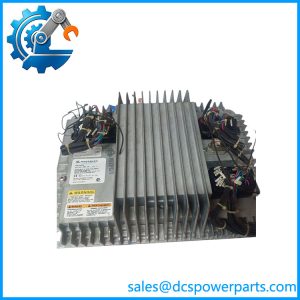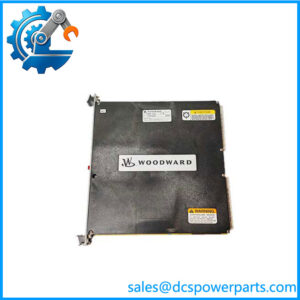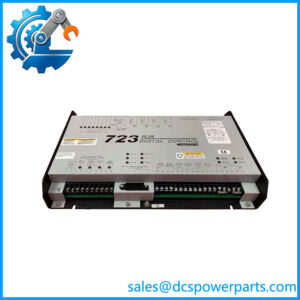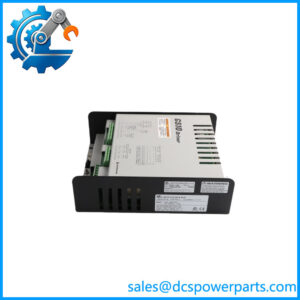
Description
Woodward DPG-2201-002 Digital Governor Controller
Product Overview
The Woodward DPG-2201-002 is a microprocessor-based digital governor controller developed primarily for diesel and gas engine generator sets. Unlike a PLC output module that simply issues a command to another device, the DPG-2201-002 closes the engine-speed control loop directly around a magnetic pickup signal and an electronic actuator. Its primary job is to maintain engine speed under changing load conditions, making it a key control component in generator-set governor systems. Woodward documentation identifies the DPG-2201-00X family as providing programmable isochronous control, droop operation, startup functions, acceleration and deceleration ramps, torque limits, idle control, and speed-related protection functions.
For generator applications, the Woodward DPG-2201-002 provides 0–10% programmable droop with 0.1% resolution and a stated steady-state speed band of ±0.25%. The controller operates from 9–30 VDC and can deliver up to 7 A continuously to a compatible actuator, with a 14 A surge capability for no more than 10 seconds. A magnetic pickup signal of at least 2.0 VAC RMS during cranking is specified for speed detection. The controller also includes a built-in user interface and serial communication capability for setup and tuning.
The practical significance of the Woodward DPG-2201-002 is its position between the engine speed sensor, governor actuator, and generator control strategy. It can be applied with compatible DYNA, APECS, EPG, and Power Flow actuator arrangements listed in Woodward documentation. It is therefore better treated as an engine-governor control device than as a conventional industrial automation controller. For a replacement project, matching the part number alone is not enough; actuator type, magnetic-pickup configuration, programmed speed parameters, droop settings, and stored tuning values should all be checked before commissioning.
Product Introduction
A generator that hunts, responds slowly to load steps, or fails to return cleanly to minimum fuel after a lost speed signal does not necessarily need a new PLC. In many installations, the governor controller is the component that determines the actual engine response. The Woodward DPG-2201-002 addresses this layer directly, combining speed measurement, programmable PID tuning, actuator drive output, and isochronous/droop control in one dedicated unit.
For legacy generator controls, this makes the relevant to engine governor replacement, genset control refurbishment, and selected legacy controller upgrades. It should not, however, be treated as a universal replacement for every Woodward DPG model. The actuator and speed-sensing arrangement must be confirmed against the existing installation.
Key Technical Specifications
| Parameter | Value |
|---|---|
| Product Model | |
| Manufacturer | Woodward |
| Product Series | DPG-2201-00X Digital Controllers |
| Controller Type | Digital programmable engine governor |
| Primary Application | Diesel or gas generator-set engine speed control |
| Operating Voltage | 9–30 VDC |
| Continuous Actuator Output | 7 A maximum |
| Maximum Surge Output | 14 A, not exceeding 10 seconds |
| Speed Input | Magnetic pickup |
| Minimum MPU Signal | 2.0 VAC RMS during cranking |
| Speed Regulation | ±0.25% steady-state speed band |
| Droop Range | 0–10% of set speed |
| Droop Resolution | 0.1% |
| Connection | 13-terminal Euro-style connector |
| Communication | Serial communication port |
| Ambient Operating Temperature | -40 to +85°C |
| Weight | Approximately 341 g / 12 oz |
| Enclosure | Die-cast enclosure with conformal coating; oil, water, and dust resistant |
| Vibration | Suitable for mounting per SAE J1455, 1–500 Hz, 5G amplitude |
The electrical and mechanical ratings above are taken from -00X documentation.
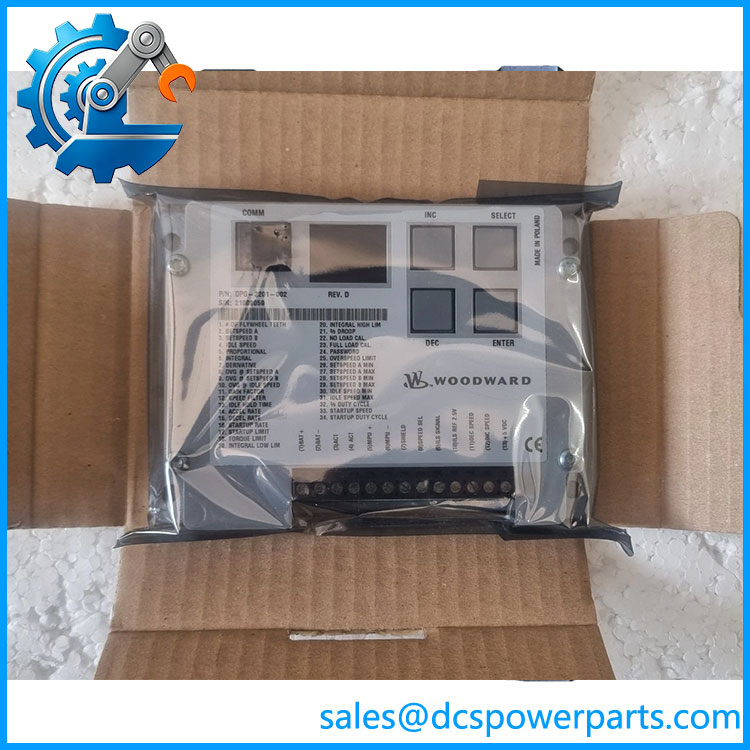
Woodward DPG-2201-002
Major Features / Practical Advantages
Programmable Isochronous Speed Control
The is designed to maintain engine speed under load changes rather than simply provide an open-loop actuator command. Isochronous operation is particularly relevant to generator sets where frequency stability matters. The controller provides separately programmable proportional, integral, and derivative gains, allowing the governor response to be tuned around the mechanical characteristics of the engine and actuator.
Configurable Droop Operation
Droop can be programmed from 0 to 10% of set speed with 0.1% resolution. That matters when several generating units operate in parallel and the governor needs a controlled speed/load relationship rather than strict isochronous behavior on every machine. The parameter structure also includes no-load and full-load calibration functions, so replacement work should include verification of the existing calibration rather than simply copying nominal speed values.
7A Continuous Actuator Drive
The controller can supply up to 7 A continuously and 14 A for short-duration surge conditions. This makes actuator compatibility a critical engineeringThe is documented for several Woodward actuator families, including DYNA 2000/2500/7000/8000-series arrangements, APECS 0150/0250/0300, EPG 512/1724, Power Flow Series gas valves, and the APECS Linkage Free Integral Type.
Engine-Speed Failsafe
The controller incorporates a FAILSAFE response associated with loss of the engine speed signal. Woodward documentation states that loss of the speed signal causes the actuator output to return toward minimum fuel. This is important, but it should not be confused with an independent overspeed shutdown system. Woodward specifically states that the prime mover should have a separate, independent overspeed shutdown device.
Local and Remote Configuration
The built-in keypad/display provides access to controller parameters, while the serial communication port supports remote setup and tuning. Parameter groups include speed settings, PID gains, speed filtering, acceleration/deceleration rates, startup limits, torque limits, droop, calibration, and overspeed settings.
Practical Replacement Considerations
This is where procurement teams frequently ge. A may be electrically correct yet still require commissioning because the engine’s tuning constants and operating parameters determine actual governor behavior. A replacement unit should be checked against the existing configuration before startup. Record the existing set-speed values, PID parameters, droop setting, actuator type, magnetic-pickup arrangement, overspeed limit, and calibration data whenever the old controller is still accessible.
The controller also has specific wiring limitations: Woodward documentation limits overall cabling to less than 30 m and power cabling to less than 10 m, with dedicated power wiring recommended rather than a plant-wide distribution source.
Related Products
- Woodward DPG-2201-001 — Closely related controller variant; verify the exact speed-input and configuration differences before interchange.
- Woodward DPG-2223-002 — DPG family controller intended for related governor applications; not an automatic drop-in substitute.
- Woodward DPG-2101-001 — DPG family controller used in generator-set applications with a different application/configuration basis.
- Woodward DPG-2302-002 — DPG controller family member intended for off-road/mobile engine applications rather than the same genset application envelope.
- Woodward DPG-2401-002 — DPG controller configured for EFC valve applications.
- Woodward DYNA 2500 — Compatible actuator family; actuator electrical characteristics must be matched to the controller output.
- Woodward APECS 0250 — Compatible electronic actuator family listed for the -00X.
- Woodward EPG 1724 — Compatible actuator option documented for the family.
- Woodward DPG Calibration Kit 8447-1003 — Calibration accessory associated with DPG controller service and setup work.
FAQ
Is tard a PLC or DCS module?
No. It is a dedicated digital engine governor controller. It performs engine-speed regulation and actuator control rather than serving as general-purpose PLC/DCS I/O. Treating it as a standard automation I/O module would lead to the wrong integration assumptions.
Can I replace a h a without checking the configuration?
Do not assume that. The two models are covered by the same -00X documentation, but the complete application should be checked at the wiring, speed-input, actuator, and parameter level before interchange. The actual controller configuration is what determines the final engine response.
Can I hthe ?
No unrestricted hot-swap procedure should be assumed. This is an engine governor controlling a live prime mover. Replacement should be performed with the engine and governor system placed in an approved safe state, followed by wiring verification and controlled commissioning.
the support firmware v3.1?
The part number alone does not establish firmware version. Firmware/software revision should be verified from the actual controller identification and service documentation rather than inrom .
What actuators can be used with this controller?
Woodward documentation lists DYNA 2000, DYNA 2500, DYNA 7000, DYNA 70025, DYNA 8000, DYNA 8200, DYNA 8400, DYNA 10141, APECS 0150/0250/0300, EPG 512, EPG 1724, Power Flow Series gas valves, and the APECS Linkage Free Integral Type among the compatible arrangements. The actual engine application still needs to be checked.
Does the controller retain the engine’s programming?
The contains programmable parameters for speed control, PID tuning, acceleration/deceleration, startup, torque, droop, calibration, and related functions. Whether the installed unit contains the required application settings cannot be established from the part number alone. Before removing a working controller, document or export the configuration wherever the application permits.
s a suitable for a generator synchronization system?
It can participate in generator-set load-sharing and speed-control arrangements, but it is not itself a complete generator synchronizer or switchgear controller. Parallel-generation applications require the governor, load-sharing/synchronizing equipment, actuator, engine, and generator control architecture to be considered as one system.
the still a Woodward product?
The DPG product line has undergone ownership/product-line changes. QCC currsts as a controller final assembly and identifies the ATmega32 version; it also lists cross-reference numbers for certain applications. For procurement, the physical nameplate, exact revision, application cross-reference, and replacement documentation should be checked rather than relying only on the historic Woodward brand name.
Procurement Note
For a replacement, the part number is only the starting point. Before ordering, confirm the controller nameplate, hardware revision, actuator model, magnetic-pickup arrangement, engine application, programmed speed range, droop setting, PID parameters, and any stored calibration information.
The controller is a safety-relevant part of the engine governing system, but it is not the independent overspeed protection device. Woodward’s documentation explicitly calls for a separate overspeed shutdown mechanism.
For new-surplus or refurbished stock, request clear photographs of the nameplate and terminal area, verify that the exact designation is present, and establish whether the unit is an unused assembly, repaired controller, or previously installed service spare. For a legacy genset, matching the original tuning and actuator interface is generally more important than simply finding a controller with the same family number.