Description
WOODWARD 9907-135 — Product Technical Guide
Key Technical Specifications
| Parameter | Specification |
|---|---|
| Model | 9907-135 |
| Manufacturer | Woodward |
| Product type | GS3/LQ valve driver module |
| Supply voltage | 10–32 VDC |
| Control input | 4–20 mA |
| Maximum output current | 24 A, as reported in product documentation |
| Feedback type | Single-speed resolver |
| Compatible valve families | LQ3, LQ25, LQ25T, and LQ bypass series |
| Response time | Exact value requires confirmation against the applicable manufacturer documentation |
| Mounting | Verify the installed assembly and mounting arrangement |
| Operating temperature | Confirm the applicable specification and hardware revision |
| Protection rating | Not verified for the exact model |
The specifications above are based on model-specific product listings. The 10–32 VDC supply, 4–20 mA input, 24 A output, resolver feedback, and listed LQ valve families are consistently identified in the available descriptions.
Important: The 24 A figure is a stated maximum, not a guarantee that every actuator can draw that current continuously. Confirm the actuator’s electrical requirements, the driver’s current limits, and the installed wiring before commissioning.
Product Introduction
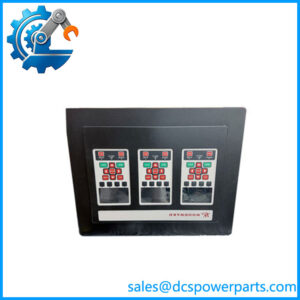
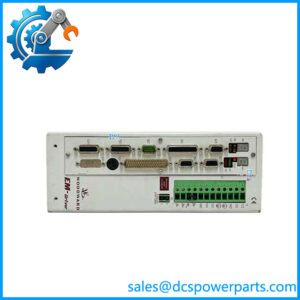
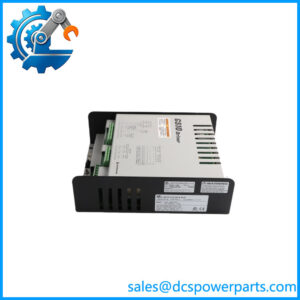
WOODWARD 9907-135 GS3/LQ Valve Driver Module
The WOODWARD 9907-135 is a valve driver module used in turbine fuel-control applications involving compatible GS3/LQ actuator assemblies. It accepts a 4–20 mA command and supplies the drive current needed to position the associated valve. Resolver feedback provides position-related information for the control arrangement.
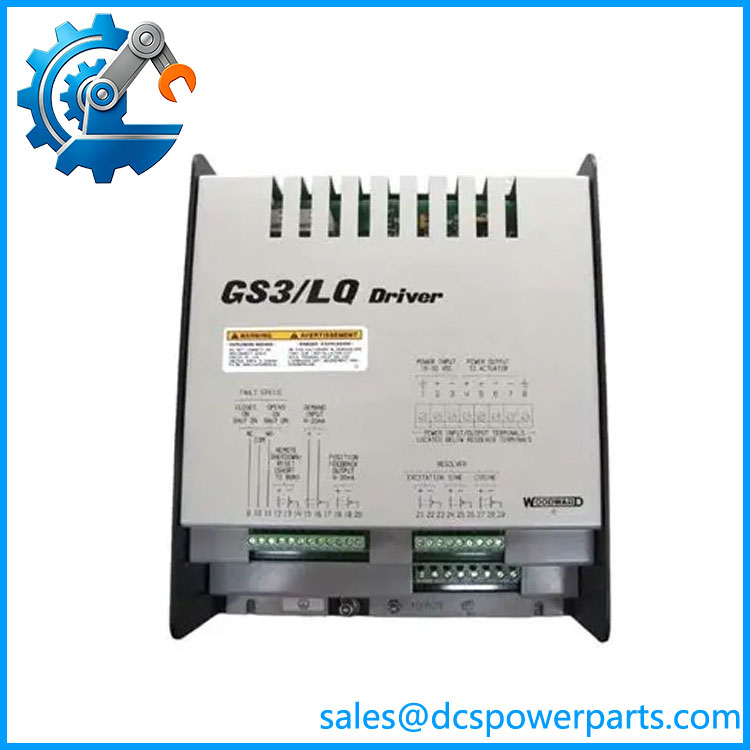
9907-135
For maintenance teams, the critical issue is matching the driver to the installed actuator and governor configuration. Verify supply voltage, command scaling, resolver compatibility, output-current requirements, and wiring before replacing a failed unit. A part-number match alone is not enough to establish that the complete fuel-control loop will operate correctly.
Application Scenarios & Field Pitfalls — The Engineer’s Perspective
Engineering Pain Point
A turbine fuel valve fails to follow its demand signal during startup or a load change. The governor output may appear normal, yet the actuator does not reach the commanded position. On systems using a WOODWARD 9907-135, the fault could involve the driver stage, resolver feedback, actuator wiring, DC supply, or the valve’s mechanical load. Replacing the module without testing these interfaces risks an unnecessary shutdown or a repeat failure.
Typical Applications
- Gas turbine power generation: Fuel valve actuation in compatible turbine fuel-control assemblies.
- Industrial gas turbines: Driver replacement and troubleshooting for compatible GS3/LQ valve systems.
- Turbine package maintenance: Diagnosis of actuator response problems during startup, shutdown, or load transitions.
- Critical process utilities: Maintenance of turbine-driven compressors and other equipment where the installed turbine package uses a compatible valve-driver arrangement.
These applications depend on the actual installed hardware. Confirm the turbine and actuator configuration before treating the 9907-135 as suitable for a particular machine.
Technical Pitfalls to Avoid
1. Do not overlook resolver feedback. A defective resolver, damaged cable, loose connection, or incompatible feedback configuration can cause incorrect valve-position behavior. Inspect the feedback circuit and compare measured signals with the manufacturer’s troubleshooting procedure before condemning the driver.
2. Verify the complete electrical load. Check the DC supply at the module under operating conditions, inspect terminals for heat damage, and confirm actuator resistance and current requirements against the applicable documentation. Never assume that a 24 A maximum rating makes the module suitable for every actuator.
3. Preserve the original configuration. Record terminal assignments, governor settings, command scaling, and any documented calibration values before removing the old unit. Do not copy settings blindly if the replacement hardware has a different revision or configuration.
4. Treat commissioning as a safety-critical task. Follow the turbine manufacturer’s isolation and testing procedures. Verify valve travel and feedback behavior under approved test conditions before returning the equipment to service. Fuel-control faults can have consequences beyond the immediate component.
Related Products
The following models and equipment families are relevant to maintenance planning. Their functional relationship does not establish direct interchangeability with the 9907-135.
- WOODWARD 9907-014 — A separate Woodward control part number worth evaluating when tracing older control-system inventories. Confirm its actual function and electrical interfaces before considering it as an alternative.
- WOODWARD 9907-252 — A load-sharing module with a documented 0.5–4.5 VDC output. Its function differs from the 9907-135 valve driver; it is relevant to generator control architectures, not a presumed replacement.
- WOODWARD 9907-810 — A 505LST digital control-system variant with an 18–32 VDC supply specification. It belongs to a different control function and should not be substituted for the valve driver.
- WOODWARD 9907-811 — A 505LST control-system variant specified for 90–150 VDC or 88–132 VAC supply. Its supply requirements and control role differ from the 9907-135.
- WOODWARD 9907-812 — A 505LST variant with a 220 VAC supply designation. Consider it only when identifying the installed 505LST control hardware, not as a direct valve-driver substitute.
- WOODWARD 2301A Load Sharing and Speed Control — A governor and load-sharing control system family documented for generator and engine applications. It may form part of the wider control architecture, but its function is different from the 9907-135 actuator driver.
- WOODWARD 9905/9907 Series Load Sharing and Speed Control — A family of controls covered by installation and operating documentation. Confirm the specific model and its intended application because shared series numbering does not imply equivalent hardware.
- WOODWARD 9907-135-compatible LQ3 valve assembly — The LQ3 is one of the valve families identified in listings for the 9907-135. Confirm the exact actuator variant, feedback type, and electrical requirements before ordering a replacement driver.
- WOODWARD 9907-135-compatible LQ25/LQ25T valve assemblies — These valve families are also listed for use with the driver. Verify the installed valve model and revision; do not assume all LQ variants share identical wiring or current requirements.
Final engineering recommendation: Before purchasing a replacement WOODWARD 9907-135, confirm the complete nameplate, the actuator model, the resolver arrangement, and the governor interface. For a turbine shutdown spare, request clear condition documentation and functional test evidence. A unit described as new surplus should not be assumed to have been tested under load.