Description
Product Overview
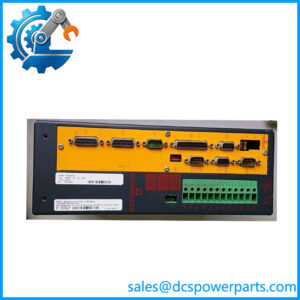
The Woodward 9905-969 is a LINKnet distributed I/O module intended for analog signal acquisition in compatible Woodward control systems. It provides six 4–20 mA input channels for collecting process measurements from field transmitters. The module’s integrated 24 VDC loop-power capability supports compatible current-loop instruments, reducing the need for separate field excitation supplies in installations designed around this arrangement. Its role is signal acquisition and network communication; it is not a standalone controller and should be selected as part of the complete LINKnet architecture.
In a turbine or prime-mover control installation, analog measurements such as pressure, flow, and other process variables may be distributed across remote I/O nodes. The 9905-969 collects these current-loop signals and makes them available to the host control system through the legacy LINKnet network. Correct application depends on more than the 4–20 mA signal range. Engineers must confirm the installed controller, network type, node addressing, field wiring, transmitter power requirements, and software configuration. Loop-powered and externally powered transmitters must be connected according to the module’s documented wiring arrangement; do not assume that every channel supports both arrangements simultaneously without checking the applicable manual.
The Woodward 9905-969 is now an obsolete part. Its lifecycle status is especially important when planning a replacement: newer LINKnet HT modules use CANopen, whereas the 9905-969 belongs to the earlier LON-based LINKnet generation. A newer module may provide a functional alternative for signal acquisition, but it is not automatically a drop-in replacement. Migration can require network hardware changes, controller configuration updates, and application software modifications. For maintenance teams keeping an existing installation in service, a verified original spare may therefore be preferable to an unplanned architecture conversion.
Product Introduction
A failed analog input node can remove several process measurements from a control system at once. The Woodward 9905-969 addresses this requirement through six 4–20 mA input channels and integrated 24 VDC loop power, serving compatible legacy LINKnet installations.
The critical procurement issue is network generation. This model uses LON-based LINKnet, while proposed LINKnet HT alternatives use CANopen. Verify the existing network and controller before approving any substitute; matching the signal type alone is not enough.
Key Technical Specifications
| Parameter | Specification |
|---|---|
| Product model | 9905-969 |
| Manufacturer | Woodward |
| Product family | LINKnet |
| Product type | Distributed analog input module |
| Number of input channels | 6 |
| Input signal | 4–20 mA |
| Field-loop power | Integrated 24 VDC |
| Network generation | Legacy LON-based LINKnet |
| Network interface | LINKnet network connection |
| Application | Remote process-signal acquisition |
| Lifecycle status | Obsolete |
| Inactivation date | April 2015 |
Specification note: The six-channel input function, 4–20 mA range, and 24 V loop-power designation are supported by available part references. Exact channel isolation, input impedance, accuracy, environmental limits, terminal assignments, and power-consumption figures should be confirmed against Woodward Manual 26640 and the applicable product revision. I would not use unverified third-party values for engineering approval.
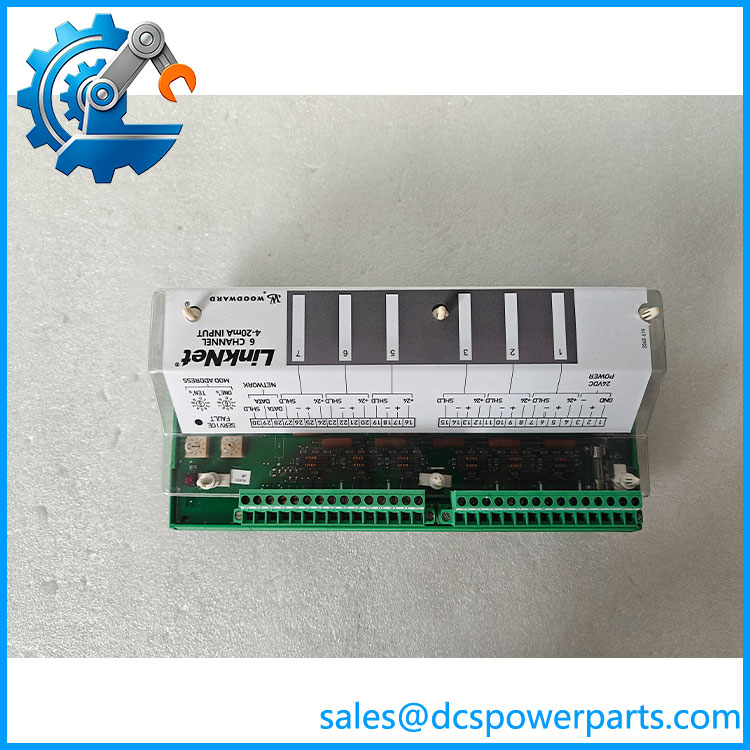
9905-969
Related Products
The following models are relevant when maintaining or evaluating a LINKnet analog-input installation. They have different signal functions or network generations and should not be assumed interchangeable.
- 9905-968 – LINKnet six-channel 4–20 mA analog input model without the 24 V loop-power designation shown for the 9905-969.
- 9905-958 – Earlier LINKnet analog input product reference; verify its channel configuration and electrical characteristics before considering it.
- 9905-970 – LINKnet six-channel 100-ohm RTD input module for resistance temperature sensors.
- 9905-966 – LINKnet thermocouple input module with fail-high behavior.
- 9905-967 – LINKnet six-channel thermocouple input module with fail-low behavior.
- 8200-1202 – LINKnet HT CANopen module with 4–20 mA inputs and outputs; a possible migration candidate, not a confirmed direct replacement.
- 8200-1203 – LINKnet HT CANopen 4–20 mA module with loop-power functionality; assess the channel arrangement and controller requirements before considering it as an alternative.
The 8200-1202 and 8200-1203 belong to the newer CANopen LINKnet HT generation. Moving from the original LON network to CANopen can require hardware, configuration, and software changes.
Frequently Asked Questions
Q1: What is the Woodward 9905-969 used for?
It is a six-channel analog input node for compatible Woodward LINKnet systems. It acquires 4–20 mA signals from field instruments and transfers the collected data through the LINKnet network to the associated control system. Its integrated 24 VDC loop-power function supports compatible transmitter wiring arrangements.
Q2: Can I hot-swap the 9905-969 while the control system is running?
Do not assume hot replacement is permitted. The available references do not establish a universal live-removal procedure for this specific module. Check the applicable Woodward installation manual and system operating procedure. If the node is part of an operating turbine or prime-mover control system, assess the impact of losing its six input signals before disconnecting it.
Q3: Does the 9905-969 support firmware v3.1?
A general firmware v3.1 compatibility claim cannot be confirmed from the available part references. Compatibility depends on the LINKnet controller, node configuration, and installed application software. Confirm the exact software revision and supported hardware combination in the relevant Woodward documentation.
Q4: Can the 9905-969 be replaced by a newer 8200-series LINKnet HT module?
Not as an automatic plug-in replacement. The 9905-969 belongs to the legacy LON-based LINKnet generation, while the 8200-series LINKnet HT products use CANopen. Although some newer modules handle similar analog signal types, a migration may require changes to network hardware, controller configuration, and application software. Review the proposed conversion with the system integrator before ordering.
Q5: Does the 9905-969 support both loop-powered and externally powered transmitters?
Available product descriptions identify integrated 24 VDC loop power, but the exact wiring rules and permitted transmitter arrangements must be verified in the module manual. Do not connect a mixture of transmitter types based solely on the 4–20 mA input rating. Check the terminal diagram, channel arrangement, and loop-power limitations first.
Q6: Does replacing the 9905-969 erase the controller’s application logic?
The module is a distributed I/O node, not the primary application-program storage device. Replacing the node does not by itself establish that controller logic will be erased. However, node addressing, input-channel assignments, scaling, alarm thresholds, and application references may need verification. Back up the control-system configuration before maintenance and confirm all six input values after installation.
Q7: How should I verify a new-surplus or refurbished 9905-969 before installation?
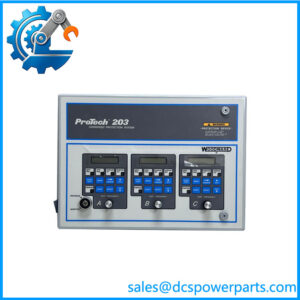
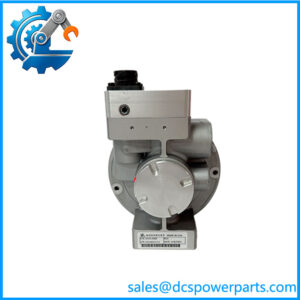
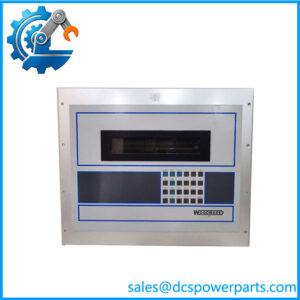
Because this is an obsolete module, procurement should focus on traceability and functional evidence rather than the seller’s condition label alone. Request photographs of the actual unit and its nameplate. Check the connectors, enclosure, terminal condition, and signs of corrosion or repair. Where testing is available, request evidence for all six input channels, loop-power operation, and LINKnet communication. A visual inspection or power-on check alone does not establish full functionality.
Engineering procurement note: The key decision is whether to maintain the existing LON-based LINKnet installation with an original 9905-969 spare or undertake a controlled migration to CANopen LINKnet HT. Those are different engineering paths. Treat any proposed replacement as a system-level compatibility decision, not simply an analog-input module substitution.