Description
Product Overview
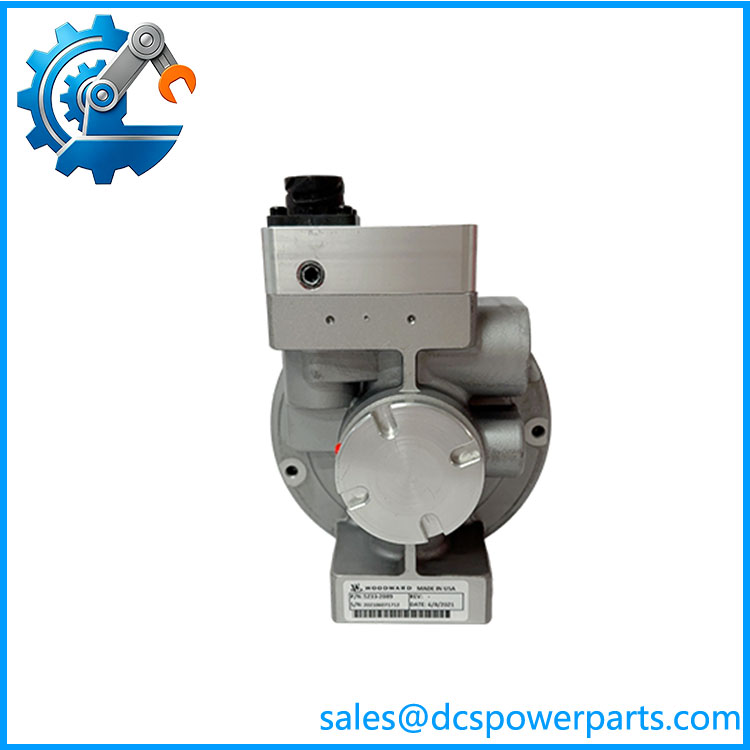
The Woodward 5233-2089 is an electro-hydraulic servo valve designed for precision actuator control in industrial turbine and engine applications. This component converts electrical commands from a Woodward control system into proportional hydraulic movement, allowing accurate positioning of fuel valves, steam valves, or other hydraulic actuators. The Woodward 5233-2089 belongs to Woodward’s family of turbine and prime mover control components used in power generation, mechanical drive, and industrial engine systems.
Within a turbine control architecture, the Woodward 5233-2089 operates as the interface between electronic control logic and hydraulic power systems. The valve receives a command signal from the governor or control unit and regulates hydraulic output pressure or flow to achieve precise actuator positioning. This function is critical in applications where fuel flow, speed regulation, and load response depend on accurate mechanical movement.
The Woodward 5233-2089 is typically found in gas turbine, steam turbine, and industrial engine control systems where fast response and repeatable positioning are required. It may be integrated with Woodward turbine control platforms such as MicroNet-based systems or other compatible electronic governors. The exact replacement suitability depends on actuator model, hydraulic interface, electrical connection, and control configuration.
For maintenance teams supporting long-service turbine assets, this servo valve is usually evaluated during fuel control troubleshooting, actuator refurbishment, or lifecycle replacement programs. To be completely transparent, matching the part number is necessary but not always sufficient. Hydraulic pressure requirements, valve calibration data, contamination control, and actuator compatibility should be confirmed before installation.
A properly matched Woodward 5233-2089 can help restore precise actuator response without changing the existing turbine control architecture. Inspection of hydraulic cleanliness, connector condition, and mechanical alignment should be completed before returning the equipment to operation.
Key Technical Specifications
| Parameter | Value |
|---|---|
| Product Model | Woodward 5233-2089 |
| Manufacturer | Woodward |
| Product Type | Electro-Hydraulic Servo Valve |
| Application | Turbine and engine actuator control |
| Control Function | Electrical-to-hydraulic signal conversion |
| Input Signal | Differential current command |
| Hydraulic Function | Fuel valve / actuator positioning |
| Typical Systems | Woodward turbine control platforms |
| Hydraulic Interface | Woodward-specific actuator connection |
| Electrical Interface | Industrial control connector |
| Response Function | Proportional actuator movement |
| Installation | Turbine control hydraulic system |
| Maintenance Use | Servo valve replacement and overhaul support |
5233-2089
Related Products
- Woodward 5233-2085 — Related electro-hydraulic servo valve variant. Used in similar actuator control applications where hydraulic and electrical specifications match.
- Woodward 9907 Series Governors — Electronic control systems commonly paired with Woodward actuator components. Provide speed and load control logic while servo valves handle hydraulic positioning.
- Woodward 505 Series Controller — Turbine control platform used for steam turbine applications. Works with compatible hydraulic actuator systems.
- Woodward MicroNet Controller Series — Digital turbine control platform used in power generation and industrial applications. Provides command signals for actuator control devices.
- Woodward 5466 Series Modules — Control and I/O hardware used in Woodward industrial control systems. Supports signal processing and interface functions.
- Woodward 8440 Series Synchronizer Modules — Generator synchronization components used in power generation systems alongside turbine control equipment.
- Woodward 9905 Series Actuator Systems — Hydraulic and mechanical actuator products used with turbine and engine control solutions.
Frequently Asked Questions (FAQ)
1. What is the Woodward 5233-2089 used for?
The Woodward 5233-2089 is an electro-hydraulic servo valve used to control hydraulic actuators in turbine and engine systems. It receives electrical commands from a controller and adjusts hydraulic output for precise valve or fuel actuator positioning.
2. Can I hot-swap the Woodward 5233-2089?
No. A servo valve should not be treated as a hot-swappable electronic module.
Typical replacement steps include:
- Shut down the controlled equipment safely.
- Isolate hydraulic pressure.
- Verify hydraulic cleanliness.
- Remove and replace the valve.
- Perform calibration and operational checks.
Hydraulic components require controlled maintenance procedures.
3. Does the Woodward 5233-2089 support firmware v3.1?
No firmware version applies directly to the servo valve because it is an electro-hydraulic device rather than a programmable controller.
Compatibility depends on:
- Controller output signal requirements
- Actuator hydraulic specifications
- Valve calibration parameters
- Turbine control configuration
4. Will replacing the Woodward 5233-2089 erase my turbine control logic?
No. The servo valve does not store turbine control programs or configuration files.
After replacement, technicians should verify:
- Actuator movement
- Hydraulic response
- Controller output signal
- Speed/load control performance
5. How can I verify a New Surplus Woodward 5233-2089?
Recommended inspection steps:
- Confirm Woodward nameplate information.
- Verify model number 5233-2089.
- Inspect hydraulic ports and fittings.
- Check electrical connector condition.
- Confirm storage and handling history.
6. What failures are commonly associated with servo valves?
Common issues include:
- Hydraulic contamination
- Internal spool wear
- Electrical coil faults
- Incorrect hydraulic pressure
- Calibration drift
A failed servo valve may create symptoms similar to controller problems, so complete system troubleshooting is recommended.
7. Is the Woodward 5233-2089 suitable for turbine upgrade projects?
The component is mainly used for maintaining existing turbine control systems. During upgrades, engineers should evaluate the complete control chain, including controller hardware, actuator type, hydraulic system design, and replacement compatibility before selecting a servo valve.