Description
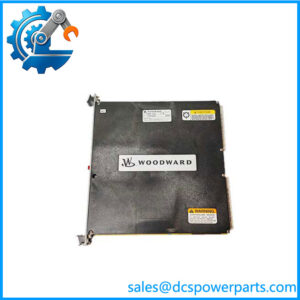
Woodward 5501-365 | Analog Combo TMR FTM | MicroNet Turbine Control
Key Technical Specifications
| Parameter | Specification |
|---|---|
| Manufacturer | Woodward |
| Part Number | 5501-365 |
| Component Type | Field Termination Module |
| FTM Designation | Analog Combo TMR FTM |
| System Family | MicroNet TMR |
| Architecture | TMR |
| Associated I/O Module | 5466-253 |
| Typical FTM Quantity | 2 per 5466-253 configuration |
| Primary Function | Analog I/O field termination |
| Active Signal Processing | No — termination/interface hardware |
| Application | 5009 / MicroNet turbine control |
Woodward’s product-change documentation confirms the original 5466-253 arrangement used 2 × 5501-365. The newer 5466-1115/5466-1105 architecture uses different FTMs, including 5501-372 and 5501-502, so those should not be treated as direct substitutes for 5501-365 without checking the complete system configuration.
Product Introduction
The Woodward 5501-365 is a legacy Analog Combo TMR Field Termination Module used in MicroNet TMR control systems. Its job is to provide the field-side termination and interface arrangement for the associated analog combination I/O hardware rather than perform the analog conversion itself. Woodward lists it as the FTM for the 5466-253 TMR High Density Combo I/O.
The distinction matters during procurement. The 5466-253 contains the actual combination I/O functions, while the 5501-365 provides the associated field termination. Woodward’s later product changes introduced a different FTM arrangement, so replacing the entire I/O chain requires checking the module, FTM, cable, CPU/Coder version, and cabinet wiring together.
Application Scenarios & Field Pitfalls — The Engineer’s Perspective
Engineering Pain Point
When a legacy MicroNet cabinet develops multiple analog-channel problems, the FTM can be overlooked because it contains no obvious processor or I/O intelligence. Loose terminals, damaged connectors, wiring faults, or a mismatched termination assembly can affect several channels and may initially look like an I/O module failure.
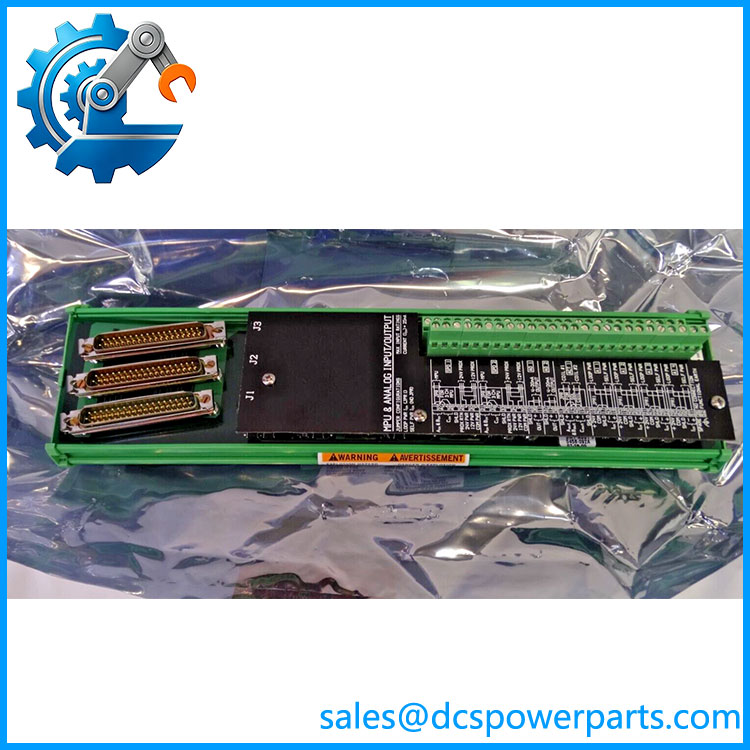
5501-365
Typical Applications
- Woodward MicroNet TMR turbine control systems
- Woodward 5009 and 5009FT configurations
- Legacy steam-turbine control panels
- TMR analog combination I/O installations
- Maintenance replacement for 5466-253 field termination assemblies
Technical Pitfalls
1. 5501-365 is an FTM, not the 5466-253 I/O module.
This is the most important identification point. Woodward calls the component an Analog Combo TMR FTM. The associated 5466-253 is the TMR High Density Combo I/O module.
2. Two 5501-365 units are associated with the 5466-253 configuration.
Woodward’s documentation specifies 2 × 5501-365 for the legacy 5466-253 arrangement. This is different from the newer 5466-1115/5466-1105 arrangement.
3. Do not substitute 5501-372 simply because both are TMR analog FTMs.
Woodward introduced the 5501-372/5501-502 arrangement with the newer high-density analog modules. The physical and electrical architecture should be checked before making a substitution.
4. Verify the connected cable.
The FTM is only one part of the signal path. Cable type, connector assignment, I/O module, and cabinet wiring should all be checked against the system drawings.
5. Preserve TMR channel identification.
During maintenance, document the three redundant signal paths before removing the FTM. Swapping field connections between redundant channels can create commissioning problems even when every individual conductor is electrically sound.
6. Inspect rather than relying only on continuity testing.
A basic continuity test will not identify every termination problem. Check connector condition, terminal tightness, contamination, mechanical damage, and signs of overheating.
7. Be careful with replacement-generation assumptions.
Woodward introduced newer HD Combo modules and different FTM arrangements. The newer modules also require software/Coder changes in applicable systems. Woodward specifically notes that older 040 or Pentium/NT CPU systems should continue using 5466-253/5466-316 for spare parts and expansion rather than assuming the newer architecture is a drop-in replacement.
Related Products
- Woodward 5466-253 — TMR High Density Combo I/O module that uses 2 × 5501-365 in the legacy configuration.
- Woodward 5466-316 — Simplex High Density Combo I/O; uses 5501-371, not 5501-365.
- Woodward 5466-1115 — newer TMR High Density Analog Combo I/O module; uses a different FTM arrangement.
- Woodward 5466-1105 — high-accuracy version of the newer HD Combo architecture; uses the newer FTM arrangement.
- Woodward 5501-371 — MicroNet Simplex MPU & AIO FTM; intended for a different architecture.
- Woodward 5501-372 — High Density Analog I/O Triplex FTM used with newer TMR high-density analog configurations.
- Woodward 5501-502 — newer high-density analog FTM used with 5466-1115/5466-1105 configurations.
- Woodward 5417-173 — MicroNet high-density analog/discrete cable used in selected high-density I/O configurations.
- Woodward 5009FT — turbine-control platform in which the legacy and newer MicroNet TMR I/O arrangements are documented.
Procurement Note
For a 5501-365 replacement, the critical cross-check is the installed I/O module. If the cabinet contains 5466-253, Woodward’s documentation identifies two 5501-365 FTMs as its original termination arrangement.
Do not approve a 5501-372 or 5501-502 substitution based solely on connector appearance. For a legacy turbine system, provide the I/O module part number, CPU type, Coder/GAP version, cable part number, and photographs of the FTM connectors when evaluating a replacement.