Description
Key Technical Specifications
| Parameter | Value |
|---|---|
| Manufacturer | Woodward |
| Product Family | 505 Digital Governor |
| Model | 997D-11CC-JURG |
| Product Type | Digital Steam Turbine Controller |
| Primary Application | Steam turbine control |
| Power Supply | 120 VAC configuration |
| Operator Interface | Integrated keypad/display |
| Speed Inputs | Magnetic pickup / speed-sensing inputs |
| Analog Inputs | Configurable analog process inputs |
| Analog Outputs | Configurable turbine/process control outputs |
| Discrete Inputs | Configurable |
| Discrete Outputs | Configurable |
| Control Functions | Speed, load, extraction/admission/process control depending on configuration |
| Protection Functions | Overspeed-related and configurable turbine shutdown functions |
| Communications | Serial communication depending on installed/configured interface |
| Mounting | Panel-mounted controller |
| Configuration | Application-specific software/settings |
| Series Status | Legacy Woodward 505 platform |
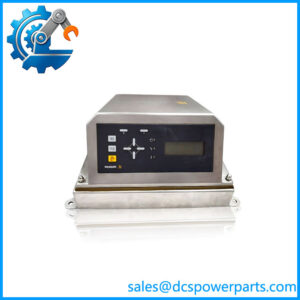
Important identification note: The 997D-11CC-JURG ordering code is configuration-specific. The base 505 family has multiple hardware and application variants, so the complete suffix should be retained when matching a replacement. Do not assume that another 505 controller with a similar front panel is electrically equivalent.
Product Introduction
Woodward 997D-11CC-JURG Product Introduction
The Woodward 997D-11CC-JURG belongs to the Woodward 505 digital governor family used for industrial steam-turbine control. The controller combines turbine speed regulation, load/process control, sequencing, operator interaction, and configurable shutdown functions in one dedicated turbine-control platform.
Its practical value is in replacing multiple discrete governor functions with a programmable controller specifically designed around steam-turbine operating requirements. For a legacy turbine package, retaining the exact 997D configuration can also avoid unnecessary changes to field wiring, turbine sequencing, and commissioning documentation.
Application Scenarios & Field Pitfalls
Engineering Pain Point
A steam turbine can look perfectly healthy mechanically while the governor is generating unstable speed, load, or valve-position behavior. On an older 505 installation, the controller itself is only one part of the equation. Magnetic pickup signals, actuator calibration, trip wiring, configuration parameters, and the turbine’s mechanical response all need to be checked before declaring the governor defective.
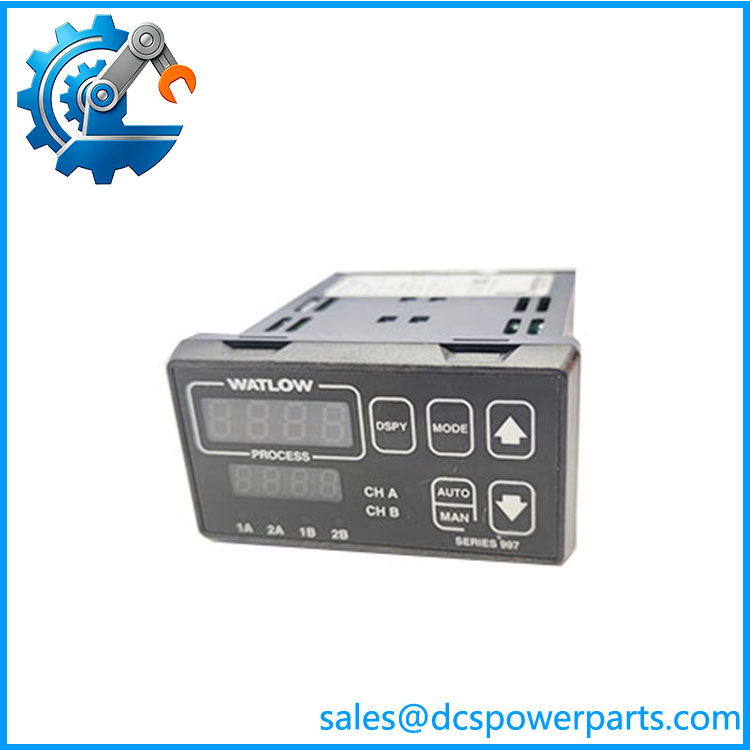
997D-11CC-JURG
Typical Applications
- Power Generation — Generator-drive steam turbine speed and load control.
- Petrochemical — Steam turbines driving compressors, pumps, and other rotating equipment.
- Refining — Turbine-driven process machinery requiring speed and process-pressure control.
- Industrial Utilities — Boiler/steam-system turbine packages with extraction or admission requirements.
Technical Pitfalls to Avoid
- Match the complete ordering code.
505 controllers were supplied in numerous hardware and application configurations. The suffix is not decoration. A replacement should be checked against the original model, I/O requirements, power supply, and application configuration. - Check magnetic pickup signals before replacing the controller.
Poor pickup gap, damaged wiring, shielding problems, or excessive electrical noise can produce unstable speed readings. A governor that sees an unreliable speed signal can behave exactly like a controller with a processing fault. - Preserve the turbine configuration.
The governor’s programmed control strategy is as important as the hardware. Back up configuration data before changing the controller whenever the existing unit is still accessible. - Verify actuator compatibility.
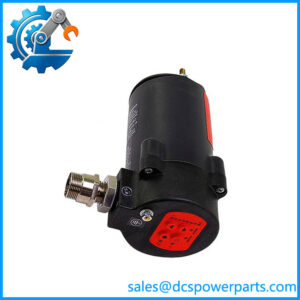
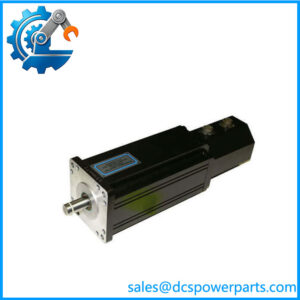
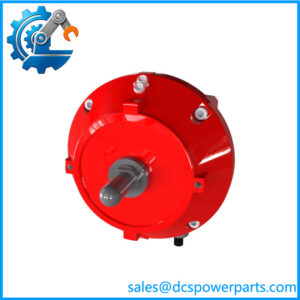
The final control element—hydraulic actuator, electric actuator, or associated servo system—must be compatible with the governor’s output configuration. Do not select a replacement based only on the 505 front-panel appearance. - Treat shutdown circuits separately.
The turbine trip circuit is a protection function, not merely another control output. Verify the actual de-energize-to-trip/energize-to-trip philosophy and field relay arrangement before commissioning.
Related Products
- Woodward 505 Digital Governor — The broader 505 controller family. Different 505 variants provide different combinations of speed, load, extraction, admission, and process-control functions.
- Woodward 505XT — A later-generation 505 turbine controller intended for industrial steam and extraction/admission turbine applications. It is a potential modernization path, but it should not be treated as a direct hardware swap without an I/O and application review.
- Woodward 505E — Earlier 505-family digital steam-turbine controller. It is relevant when maintaining legacy turbine packages with established 505 control architectures.
- Woodward 505H — Higher-function 505-family controller used for more complex steam-turbine applications, including extraction/admission control. The appropriate model depends on the turbine valve and process configuration.
- Woodward 9905 Governor Series — Older electronic governor family used in industrial turbine applications. It represents an earlier control architecture and is not a drop-in substitute for the 505.
- Woodward 2301A — Electronic speed/load control family commonly associated with engine and turbine governor applications. It provides a different control architecture and I/O philosophy from the 505.
- Woodward EGCP-2 — Generator control platform that can complement turbine-governor systems where generator synchronization, load sharing, and electrical control are required. It is not itself a replacement for the 505 turbine governor.
- Woodward ProTech Overspeed Protection System — Independent overspeed protection equipment used where a separate dedicated turbine overspeed protection layer is required. It serves a protection role rather than replacing the 505’s normal governing functions.