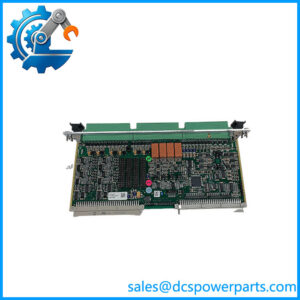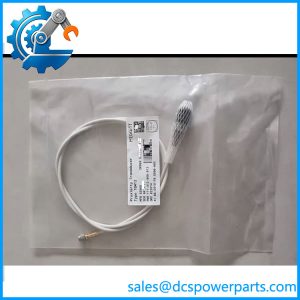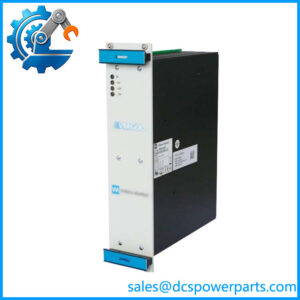
Description
Key Technical Specifications
| Parameter | Value |
|---|---|
| Manufacturer | Vibro-Meter |
| Product Family | VM600 CMS |
| Module | CMC16 |
| Part Number 1 | 200-530-025-014 |
| Part Number 2 | 200-530-111-013 |
| Product Type | Condition Monitoring Card / Intelligent DAU |
| Number of Channels | 16 individually configurable dynamic channels |
| Dynamic Inputs | 16 |
| Tachometer Inputs | First 4 channels configurable as tachometer inputs |
| Process Inputs | Last 12 channels configurable as process values |
| ADC / Filtering | 16 parallel programmable anti-aliasing filters and ADCs |
| Sampling | Synchronous and asynchronous sampling |
| FFT | High-resolution, up to 3200-line FFT |
| Processed Outputs | Up to 10 configurable outputs per channel |
| Alarm Configuration | Up to 6 configurable alarms per processed output |
| Data Logging | Schedule, on-alarm, and on-exception logging |
| Architecture | VME |
| Communication | Ethernet / RS-485 through applicable VM600 system architecture |
| Companion I/O | IOC16T |
| Host Software | VM600 CMS software / VibroSight-family environment depending on system generation |
| Installation | VM600 6U rack |
| Typical Application | Machinery condition monitoring and diagnostics |
The CMC16 is described as an intelligent front-end data acquisition unit for the VM600 CMS. Its documented feature set includes 16 dynamic channels, programmable anti-aliasing filters/ADCs, tachometer configuration on the first four channels, process-value configuration on the remaining channels, synchronous/asynchronous sampling, 3200-line FFT, configurable processed outputs, alarms, and event-based data logging.
The older VM600 documentation also records 200-530-025-014 in the CMC16 firmware-management history, associated with CMS software version 2.0 and CMC16 firmware 6.05. That is useful when checking a replacement against an installed system.
Product Introduction
Vibro-Meter CMC16 Product Introduction
The Vibro-Meter CMC16 is an intelligent 16-channel data acquisition and condition-monitoring card for rotating machinery. It acquires vibration and related dynamic/process signals, performs onboard digital processing and FFT analysis, and supplies processed information to the CMS for machinery diagnostics.
The important distinction is monitoring versus basic protection. The is intended for detailed condition monitoring and diagnostic analysis, while an MPC4 is used for dedicated machinery protection functions. In a typical installation, the works with an IOC16T and communicates with the wider system through the rack architecture.
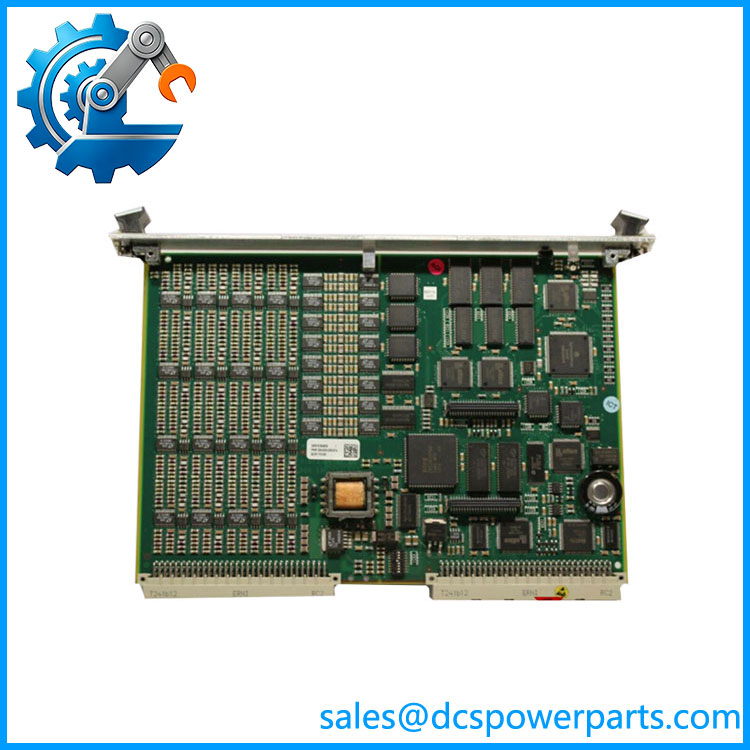
CMC16
Application Scenarios & Field Pitfalls (The Engineer’s Perspective)
Engineering Pain Point
A turbine or compressor can continue running while its vibration signature is quietly changing. By the time a simple alarm becomes obvious, the useful diagnostic window may already be gone. The addresses that problem by retaining processed vibration information, spectra, process values, and event-triggered data so engineers can compare machine behavior rather than relying only on a trip signal.
Typical Applications
- Gas Turbines — Bearing vibration, shaft vibration, rotational speed, and process-condition correlation for turbine trains.
- Centrifugal Compressors — Multi-channel vibration and speed monitoring for compressor bearings, shafts, and associated machinery.
- Power Generation — Generator and turbine condition monitoring with spectral analysis and event-triggered data capture.
- Petrochemical — Pumps, compressors, fans, and other critical rotating assets requiring trending and diagnostic analysis.
Technical Pitfalls to Avoid
- Do not treat 200-530-025-014 and 200-530-111-013 as automatic substitutes.
The ordering scheme contains firmware and hardware revision information. The published ordering information specifically notes that hardware revisions can have implications for interchangeability. Match the complete ordering number, not just “.” - Check the IOC16T configuration.
The does not replace the physical sensor-interface function of the IOC16T. The IOC16T provides signal conditioning and EMC protection and is part of the measurement architecture. - Do not confuse condition monitoring with machinery protection.
provides detailed acquisition and diagnostic processing. If the system requires certified trip/protection functionality, check the MPC4 and associated I/O/protection architecture separately. - Verify firmware before commissioning.
CMS software manages firmware. The historical firmware records show specific hardware/firmware combinations, so replacing a card without checking the installed CMS version can create an avoidable commissioning problem. - Check the signal configuration, not merely channel count.
Sixteen channels does not mean sixteen identical inputs. The documented architecture allows the first four channels to serve as tachometer inputs and the last twelve as process values. Review the actual channel assignment before moving a replacement card into service.
Related Products
- IOC16T 200-565-000-013
The principal companion I/O card for installations. It provides the field-side sensor interface, signal conditioning, EMC protection, and associated connections required by the monitoring card. - MPC4 200-510-071-113
Machinery protection card. Unlike the , the MPC4 is intended for protection functions such as vibration, position, speed, and other machine-protection measurements. It can coexist with in a broader system. - CPUM 200-595-079-531
Rack controller associated with system management and communication. It provides the system-level interface through which monitoring data can be made available to higher-level software. - IOCN 200-566-000-113
Communication I/O hardware for the rack. It is relevant where the rack requires a dedicated communication interface rather than serving as the ‘s measurement input card. - RPS6U 200-582-600-013
110 VDC rack power supply. It provides the regulated backplane power required by installed monitoring cards, including . This is a power-system component, not a functional substitute for the . - ABE040 204-040-100-012
Standard 19-inch, 6U rack with backplane. This is the physical/electrical rack platform in which the and its associated I/O card are installed. - ABE042 204-042-100-012
Related 6U rack configuration. It serves a similar rack function but uses different mechanical mounting arrangements, so cabinet fit must be checked before substitution. - Later-generation condition-monitoring hardware related to the 16-channel monitoring architecture. It is relevant when evaluating migration from older installations, but should not be treated as a plug-in replacement without checking the rack, I/O card, software, and configuration.
- Associated I/O hardware for newer /XMV16 or XMC16 configurations. It performs the field-interface role corresponding broadly to the , but the exact card pairing must match the monitoring-card generation.