Description
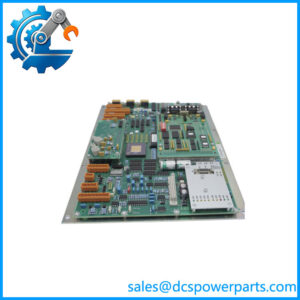
ULSTEIN IDA1035C Industrial Data Acquisition and Control Card
Product Introduction
Marine propulsion remote-control systems have very different requirements from ordinary industrial PLC installations. The controller has to coordinate propulsion commands, feedback, alarms, indication, and communication with other marine equipment while operating as part of a dedicated vessel-control architecture. The ULSTEIN IDA1035C is the main processor/control card used in the HELICON-X system, providing the central processing and data-acquisition functions for this marine propulsion control platform.
The HELICON-X hardware documentation identifies the IDA1035C as an Industrial Data Acquisition and Control Card and describes CPU, RAM, flash memory, RTC/calendar, DMA, serial communications, digital I/O, analog input circuits, and analog output circuits. This makes it substantially more than a simple interface board. The part is now identified as discontinued, so replacement work should focus on exact hardware revision and system compatibility rather than simply matching the IDA1035 designation.
Key Technical Specifications
| Parameter | Specification |
|---|---|
| Manufacturer | ULSTEIN Marine Electronics |
| Model | IDA1035C |
| Product Type | Industrial Data Acquisition and Control Card |
| System | HELICON-X |
| Functional Role | Main Processor Card |
| Application | Marine propulsion remote control |
| Processor Architecture | Intel 386-class CPU |
| Digital I/O | Supported |
| Analog Inputs | Supported |
| Analog Outputs | Supported |
| Pulse Interface | Documented within the I/O architecture |
| Serial Ports | COM1 and COM2 |
| CAN | Documented in the HELICON-X architecture |
| Memory | RAM and flash memory |
| Real-Time Clock | Integrated |
| Connections | 7 connection groups |
| Hardware Version | V1.1 |
| Status | Discontinued |
| Installation | HELICON-X propulsion-control system |
The original HELICON-X documentation provides a functional block description showing the CPU, RAM, 3 V battery-backed memory, flash memory, serial ports, digital I/O, analog inputs, analog output circuits, calendar/RTC circuit, timer, DMA, and associated interface circuitry.
Publicly available records do not provide a sufficiently reliable complete pin-by-pin electrical specification. For that reason, supply voltage, individual I/O ranges, channel counts, connector pin assignments, and environmental ratings should be taken from the applicable ULSTEIN engineering drawings rather than inferred from the board designation.
Application Scenarios & Pain Points
A failed processor card in a marine propulsion-control system is not an ordinary PCB replacement. The processor is part of a larger control architecture containing propulsion commands, pitch feedback, indication, alarms, remote-control functions, and other interface cards. The HELICON-X manual places the IDA1035C alongside dedicated cards such as the PCC1030C panel processor and PIB1039 pitch-indication/backup card.
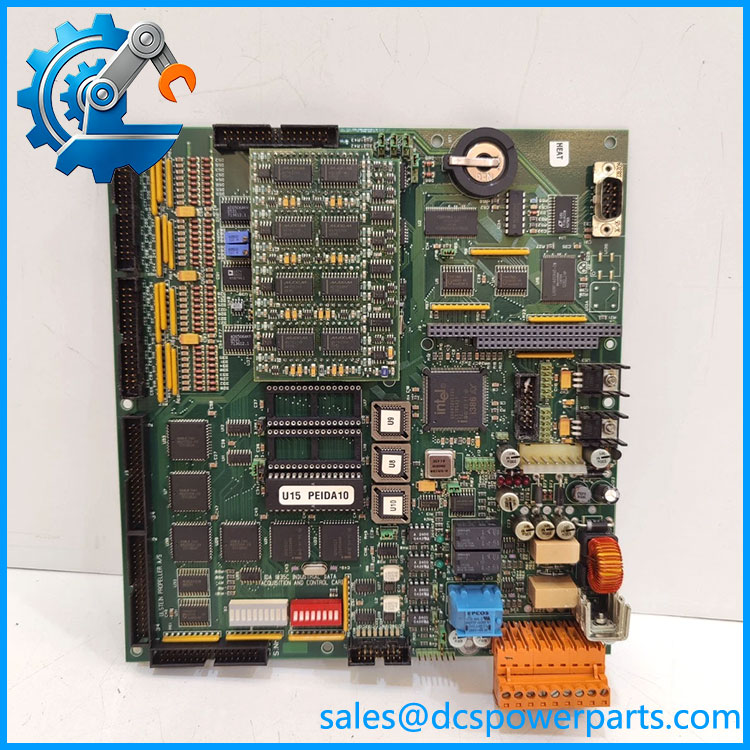
IDA1035C
Typical applications include:
- Marine propulsion remote control: Central processing for HELICON-X propulsion-control functions.
- Propeller control: Processing command and feedback information associated with marine propeller systems.
- Industrial marine data acquisition: Acquisition and processing of analog and digital signals from vessel-control equipment.
- Marine automation integration: Serial and other communication interfaces for connected propulsion-system equipment.
- Legacy vessel maintenance: Replacement of an IDA1035C where the original HELICON-X processor card has failed or become unavailable.
Field note: Before removing an installed , record every board marking and connector designation. On legacy marine systems, the application-specific wiring and software configuration can be more important than the generic card description.
Related Products
- ULSTEIN PCC1030C — Panel Processor Card used within the HELICON-X control architecture.
- ULSTEIN PIB1039 — Pitch Indication and Backup Card associated with pitch feedback and indication functions.
- ULSTEIN AI1036A — Analog I/O interface card associated with the HELICON-X hardware family.
- ULSTEIN PDM1040 — Power Distribution and Monitor Card used in related ULSTEIN marine control architecture.
- ULSTEIN DIO1037A — Digital I/O card used for interface functions within the marine control system.
- ULSTEIN PFI1038 — Pulse/Frequency Interface card for associated signal-processing functions.
- ULSTEIN LSI1031B — Lamp and Switch Interface card used in the broader HELICON-X architecture.
- ULSTEIN WRC1021B — Controller board associated with ULSTEIN marine control equipment.
These cards should be considered system-related components rather than direct substitutes. The performs the main processing role, while the other boards provide panel processing, I/O, pitch indication, power distribution, or dedicated signal-interface functions.
Engineer’s Guide — Field Pitfalls to Avoid
1. Do not mistake for a conventional PLC CPU
The is a dedicated marine propulsion-control processor. Its I/O and communication architecture is tied to the HELICON-X system.
Avoidance: Confirm the vessel’s system architecture and approved spare-parts list before attempting substitution with a general-purpose controller.
2. Match the hardware revision
The available product record identifies V1.1, while the HELICON-X documentation identifies the as a specific main processor card.
Avoidance: Photograph the complete PCB label and revision before procurement. Do not assume that IDA1035B and are interchangeable merely because they share the same base designation.
3. Do not guess connector pinouts
The documentation identifies seven connection groups and separate digital, analog, pulse, and serial interfaces, but publicly available summaries do not establish a complete pin-level replacement specification.
Avoidance: Use the vessel’s wiring diagram and ULSTEIN circuit drawings for terminal-by-terminal verification.
4. Preserve the software/configuration environment
Replacing the processor hardware does not necessarily restore the original vessel configuration. Memory contents, application software, parameters, and connected interface cards can all affect system behavior.
Avoidance: Preserve the existing configuration and document the installed system before taking the processor out of service.
5. Check the associated I/O cards
The works as part of a larger HELICON-X architecture. A fault that appears to be a processor failure can originate in an attached I/O, power, communication, or feedback card.
Avoidance: Check power distribution, communication paths, I/O cards, and system alarms before condemning the processor.
6. Treat this as a marine propulsion component
A processor-card replacement can affect propulsion availability and vessel operation.
Avoidance: Perform functional testing in accordance with the vessel’s approved maintenance procedure before returning the propulsion-control system to operational service.
FAQ
What is ULSTEIN ?
The is an Industrial Data Acquisition and Control Card and serves as the Main Processor Card in the ULSTEIN HELICON-X marine propulsion remote-control system.
What does the control?
The card provides the central processing and data-acquisition functions for the HELICON-X architecture. Its documented circuitry includes digital I/O, analog input and output circuits, serial ports, memory, RTC/calendar, timer, and DMA functions.
Is a PLC CPU?
Not in the conventional Siemens, Allen-Bradley, or other general-purpose PLC sense. It is a dedicated marine propulsion-control processor card designed around the HELICON-X system architecture.
What processor does use?
The HELICON-X hardware documentation describes the around an Intel 386-class CPU architecture, together with RAM, flash memory, serial interfaces, and dedicated I/O circuitry.
Is discontinued?
Current component records identify the as discontinued by the manufacturer.
How many connections does have?
The available product record identifies 7 connections, while the HELICON-X documentation breaks the card’s interfaces into digital I/O, analog input, analog output, pulse, and serial interface circuitry.
What should I verify before purchasing an replacement?
Verify the complete part number, hardware revision, PCB markings, connector arrangement, HELICON-X system version, installed software/configuration, and associated I/O cards. For this legacy marine controller, those details are much more useful than simply confirming that the replacement is labeled .