Description
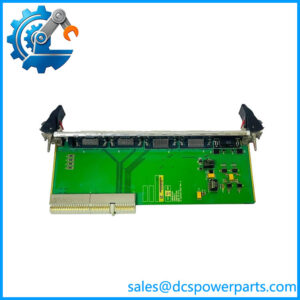
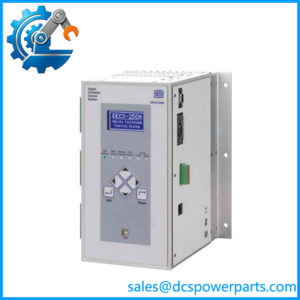
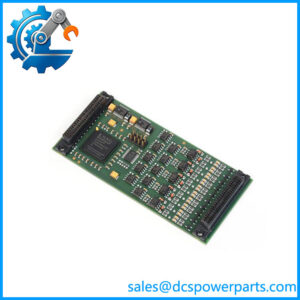
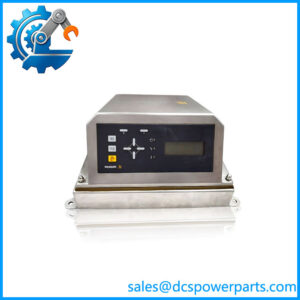
ULSTEIN DIO1037A Digital I/O Interface Card
Product Introduction
A propulsion control fault does not always originate in the CPU or application software. On older HELICON-X installations, the digital interface between the controller and the vessel’s field wiring is just as important. The ULSTEIN DIO1037A serves this layer of the system, providing the digital I/O interface used with the HELICON-X propulsion control architecture. The hardware manual specifically identifies DIO1037A as the Digital I/O Interface Card and shows it as an external interface card connected to the IDA1035C main processor.
From a maintenance standpoint, the ULSTEIN DIO1037A should be treated as a system-specific marine control spare rather than a generic PLC digital I/O module. The IDA1035C documentation allows three DIO1037 cards to be connected through 34-lead flat cables, while external interface circuitry handles the connection to vessel wiring. That architecture matters during replacement because connector position, cable routing, card revision and the existing HELICON-X configuration all need to agree.
Key Technical Specifications
| Parameter | Specification |
|---|---|
| Product Model | DIO1037A |
| Manufacturer / Brand | ULSTEIN Propeller / ULSTEIN Marine Electronics |
| Product Type | Digital I/O Interface Card |
| System | HELICON-X marine propulsion remote control |
| Primary Function | Digital signal interface for propulsion control |
| Controller Interface | 34-lead flat-cable connection |
| Compatible Main Processor | IDA1035C |
| Maximum DIO1037 Cards per IDA1035C | 3, according to the HELICON-X hardware manual |
| Field Interface | External interface circuitry / screw-terminal wiring |
| Reference Associated With Card | EP203.12720-028 |
| PCB Form | Plug-in circuit board |
| Weight Reported in Spare-Part Records | Approximately 280 g |
| Communication Architecture | HELICON-X internal I/O architecture; do not substitute generic Modbus assumptions |
| Condition | Verify actual unit condition and revision |
The HELICON-X manual is particularly useful here because it distinguishes the DIO1037A from the processor itself: the IDA1035C performs the application processing, while the DIO1037 cards provide the external digital interface. The same manual states that three DIO1037 cards can be connected to the processor using 34-lead flat cables.
Application Scenarios & Pain Points
The typical field problem is not simply “I need a digital input card.” It is usually a vessel with an aging propulsion-control installation where one I/O interface has developed intermittent signals, failed channels, damaged terminals, or communication/interface problems and the original hardware must be replaced without disturbing a working configuration.
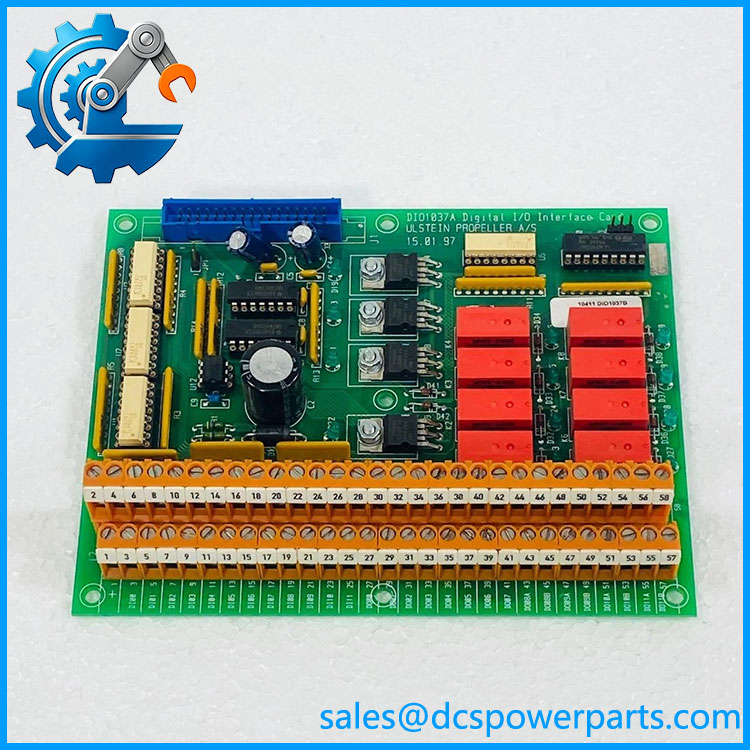
DIO1037A
- Main propulsion control: Used as part of the HELICON-X control architecture for digital signals associated with propulsion equipment.
- Controllable-pitch propeller systems: Suitable for installations where pitch-related status, interlocks and command circuitry are handled through the HELICON-X I/O architecture.
- Thruster control: Supports the digital interface layer associated with vessel thruster control and monitoring.
- Marine automation maintenance: Useful as a replacement spare when an installed has failed and the existing IDA1035C-based architecture is being retained.
A useful diagnostic distinction is that the is not the main processor. If the processor, application memory, CAN communication or another interface card is actually responsible for the fault, replacing the will not solve it. The HELICON-X documentation separates the main processor, digital interface cards, AIO1036A analog interface cards and PFI1038 pulse interface card as different hardware functions.
Related Products
- — Main Processor / Industrial Data Acquisition and Control Card. It hosts the application processing and provides the interfaces to and AIO1036A cards.
- AIO1036A — Analog In/Out Interface Card for analog signal processing in the same HELICON-X architecture.
- PFI1038 — Pulse/Pickup Interface Card used for pulse and rotational-speed related signals.
- PDM1040 — Power Distribution and Monitoring Card used for internal power distribution and supervision.
- PIB1039A — Pitch Indication and Backup Card associated with pitch indication and backup-control functions.
- PCC1030C — Panel Controller Card used within the HELICON-X operator-panel architecture.
- PIC1041 — Panel Interface Card used in the control-station interface structure.
- LSI1031B — Lamp and Switch Interface Card for operator-panel functions.
These are not direct drop-in replacements for . They occupy different functional positions within the HELICON-X hardware architecture, so substitution should be based on the system drawing and card reference rather than physical appearance alone.
Engineer’s Guide — Field Pitfalls to Avoid
1. Do not confuse with the
The two cards are complementary, not interchangeable. is the main processor, while is an external digital I/O interface card. A processor failure and a field-I/O failure can produce similar symptoms at the operator station.
Avoidance: Trace the affected I/O channel back through the wiring diagram before ordering the replacement board.
2. Verify the card revision
units appear in spare-part records with different revision references, including Rev. B and other revision markings.
Avoidance: Photograph the complete PCB label, revision marking and connector area before purchasing. Do not assume that two boards carrying the same base model have identical revision-dependent circuitry.
3. Check the 34-lead interface carefully
The HELICON-X processor documentation specifies 34-lead flat cables for connections to the DIO1037 and AIO1036 interface cards.
Avoidance: Inspect the cable orientation, connector condition and pin alignment. A loose or incorrectly seated flat cable can create multiple apparent I/O failures at once.
4. Do not treat it as a generic PLC I/O replacement
The belongs to a specific HELICON-X propulsion-control architecture. A generic 24 V digital I/O module may have similar-looking terminals but cannot be assumed electrically or functionally compatible.
Avoidance: Match the exact card number, revision, system drawing and external interface circuitry.
5. Inspect the external wiring before condemning the PCB
The card sits between the controller and field-side digital signals. Corroded terminals, damaged cables, poor connections and vessel-side interface faults can all present as an I/O-card problem.
Avoidance: Check field supply, terminal integrity, continuity and the corresponding I/O status in the HELICON-X diagnostic functions before replacing the board.
6. Handle the PCB as an ESD-sensitive electronic assembly
Even when a card has been removed from a marine cabinet, its semiconductor devices and connectors remain vulnerable to static discharge and contamination.
Avoidance: Use appropriate ESD handling, protect the connector contacts and keep the replacement board sealed until installation.
FAQ
Is the ULSTEIN a PLC digital input module?
Not in the conventional modular PLC sense. It is documented as a Digital I/O Interface Card within the HELICON-X marine propulsion control system. The card works with the processor and the system’s external interface circuitry.
What controller is the connected to?
The HELICON-X hardware documentation identifies the as the main processor and states that its interface connections can support three DIO1037 cards through 34-lead flat cables.
Is interchangeable with AIO1036A?
No. is the digital I/O interface card, while AIO1036A is the analog input/output interface card. The HELICON-X architecture provides separate connections for the two card types.
What is the reference number associated with ?
One documented spare-part record identifies EP203.12720-028 together with . For procurement, the PCB’s actual label and revision should still be checked because reference numbers and board revisions can vary between installed assemblies.
Is still a current production component?
Available industrial spare-part records describe as discontinued, so it should be approached as a legacy marine-control component. Availability and actual condition should be verified unit by unit rather than assuming current manufacturer production.
Can a used be installed directly?
It may be possible when the part number, revision, connector arrangement and HELICON-X system configuration match, but a visual match is not enough. For a propulsion-control application, I would verify the board revision, connector condition, flat-cable interface and all affected I/O channels before putting the vessel back into service.
What should procurement provide when requesting a replacement?
At minimum, provide , the complete PCB revision marking, any secondary part/reference number such as EP203.12720-028, photographs of both sides of the card, and the vessel/control-system information available from the existing installation. This reduces the risk of receiving a visually similar but electrically different revision.