Description
Product Overview
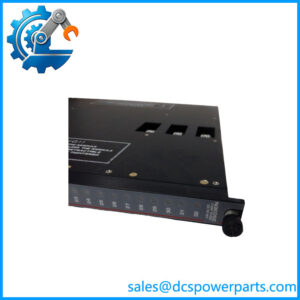
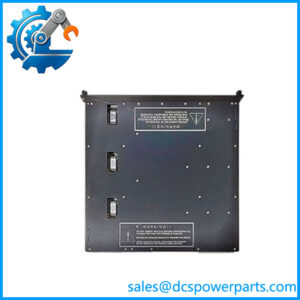
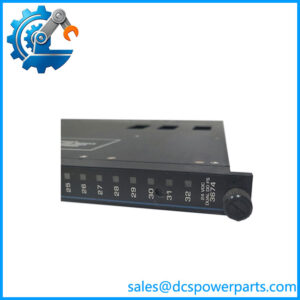
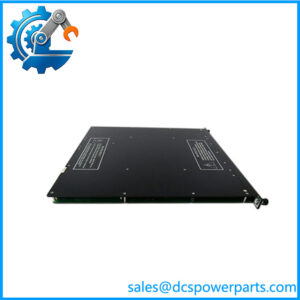
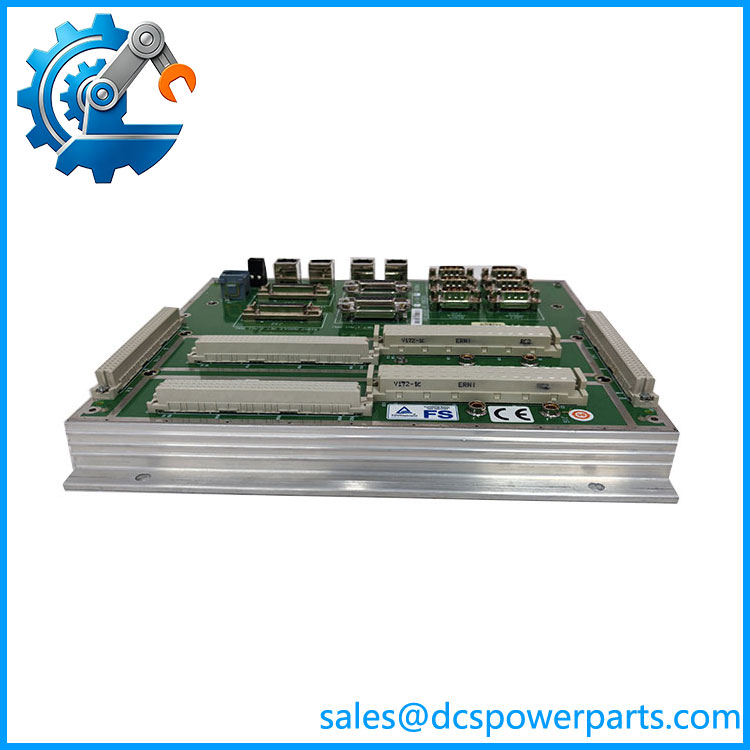
CM2201 7400206-100 is the carrier half of the Trident communication subsystem: the Model 2201 Communication Module Baseplate Kit. It is not a module, and the distinction is the source of most ordering errors around it — the smart part is the Model 3201 Communication Module, which slides into one of this baseplate’s two slots, and the two are sold together as the 5201 Communication Module TriPak. The baseplate is what the plant actually keeps when a module is swapped: two slots, all the field connectors, the serial isolation, the AUI and MII interfaces, and the mechanical keying that prevents a module being inserted where it does not belong.
Two slots, and this is the design decision that matters. A single Trident controller supports up to two CMs on one baseplate, each operating independently. Put two in and one of two things happens: either they provide redundant communication connections on the same network, so a failed module does not cost the plant its link to the DCS, or they provide independent sets of ports, so one CM talks Modbus to a DCS while the other carries TriStation, peer-to-peer traffic, time synchronisation and a network printer. Both patterns exist in the field, and which one a cabinet is wired for determines whether a second module is a spare or a working channel.
The port inventory belongs to the baseplate, not to the card. Each CM position presents three optically isolated serial ports — RS-232 or RS-485, user-configurable, up to 115.2 kbps — and two Ethernet ports with distinctly different capabilities: Net1 is 10 Mbit with a 10BaseT RJ-45 and an AUI connector for a media adapter unit, while Net2 is 100 Mbit with 100BaseTX and an MII connector for a 100 Mbit MAU. The asymmetry is deliberate. AUI and MII exist so that the port can be converted to another medium — fiber, for instance — with a MAU, rather than by changing the module. That is also why the power budget has two extra line items: 6 W for a 10 Mb AUI MAU and 3.75 W for a 100 Mb MII MAU, on top of 8 W per CM without any MAU.
The three serial ports carry Modbus: master RTU, or slave in ASCII or RTU. The Ethernet ports carry TSAA over UDP/IP including multicast, TriStation, peer-to-peer over both UDP/IP and DLC, Modbus master or slave over TCP, and Triconex time synchronisation over UDP/IP SNTP, with Net1 also supporting time synchronisation over DLC. Per CM, the Modbus TCP limit is four ports — a figure worth knowing before planning a gateway that assumes more.
Electrically the baseplate takes its logic power from the MP baseplate on the same column: 24 VDC nominal, 19.2 to 30 VDC, with 33 VDC absolute maximum and −0.6 VDC reverse tolerance, a 1 ms ride-through on power interruption, and a 2.4 A inrush per input. It tolerates a 500 VDC protective-earth-to-functional-earth difference and provides regulated auxiliary power to the media adapters — 12 V ±10 % at 6 W for AUI, 5 V ±5 % at 3.75 W for MII, both current limited.
Mechanically it shares the wide footprint of the MP and HART carriers at 229 × 249 mm, which is why it takes the MP-type interconnect rather than an I/O interconnect, and why a column’s worth of these sits taller than the I/O baseplates beside them. Modules remain 44 × 220 × 169 mm, ambient limit 70 °C, and the CMs are the parts that carry CE-mark obligations about enclosure: Triconex requires both MP and CM modules to be mounted in a metal enclosure for emissions compliance.
Dealer material on 7400206-100 is uniformly wrong in ways that would mislead a buyer. It is described as a “high-performance communication module” managing 2,048 I/O points with native OPC and EtherNet/IP — none of which exists in the Triconex documentation; as a DIN-rail safety control module of 320 g with eight digital inputs and four digital outputs; as a digital input module; and, in one page, as a heating-cable soft-start controller with thyristor phase control. None of those describes a 229 × 249 mm baseplate with two card slots and fourteen field connectors.
Technical Specifications
| Parameter | Value |
|---|---|
| Model and identity | CM2201 = Trident Model 2201 Communication Module Baseplate Kit; ordering number 7400206-100 |
| Manufacturer / platform | Triconex, Invensys; now Schneider Electric — Trident (Trident v2) TMR safety controller |
| Item class | Communication baseplate kit — passive carrier with all field connectors |
| Slots | 2 × CM (Model 3201); each CM independent; two CMs give redundant links or independent port sets |
| Serial ports per CM | 3 × optically isolated RS-232/RS-485 (DB-9 DTE), up to 115.2 kbps per port; Modbus master RTU, slave ASCII/RTU |
| Network ports per CM | Net1: 10 Mbit — 10BaseT plus AUI for a 10 Mb MAU. Net2: 100 Mbit — 100BaseTX plus MII for a 100 Mb MAU |
| Protocols | TSAA (UDP/IP) incl. multicast; TriStation; peer-to-peer (UDP/IP and DLC); Modbus master/slave TCP; time sync via UDP/IP SNTP, plus DLC on Net1; JetDirect printer DLC/LLC |
| Modbus TCP limit | Maximum 4 Modbus TCP ports per CM |
| Logic power | From the MP baseplate: 24 VDC nominal, 19.2–30 VDC (+5 % AC ripple); 8 W max per CM without MAUs |
| Power with media adapters | +6 W per 10 Mb AUI MAU; +3.75 W per 100 Mb MII MAU; +12 V AUI output 12 V ±10 %, 6 W; +5 V MII 5 V ±5 %, 3.75 W |
| Electrical protection | Absolute maximum 33 VDC; reverse −0.6 VDC; 1 ms power interruption ride-through; 2.4 A inrush per input; PE-to-FE isolation 500 VDC |
| Mechanical | Baseplate 229 × 249 mm (MP-size footprint, uses the MP interconnect); CM modules 44 × 220 × 169 mm; metal enclosure required for CE emissions compliance |
| Environment and system limits | 70 °C maximum ambient for modules; at least 15 cm clearance around active modules; up to 8 baseplates end-to-end per I/O column; I/O bus 200 m maximum |
| Kit and packaging | Baseplate with its interconnect assembly and slot covers; sold with a CM as the 5201 Communication Module TriPak; network addressing taken from the MP baseplate address plug |
TRICONEX CM2201 7400206-100
Key Features and Advantages
Two slots, two working patterns: redundancy or port fan-out. A pair of CMs can be wired to duplicate a critical link to the DCS, or split into one Modbus-facing and one TriStation/peer-to-peer-facing unit. The baseplate supports both without rewiring, which is why a cabinet with one populated slot usually has the second slot covered and waiting.
All the connectors on the carrier, none on the card: swapping a CM breaks no cable. Serial isolation, AUI, MII, RJ-45s and keying stay with the baseplate, so the module is a lift-and-seat replacement and the plant’s wiring history survives.
Deliberate port asymmetry: 10 Mbit on Net1 and 100 Mbit on Net2 are not a cost shortcut, they are a role split — Net1 carries time synchronisation over DLC as well, and the slower channel is where legacy DCS and modem-era links naturally live.
Media flexibility without module changes: AUI and MII interfaces accept media adapter units, so a copper port becomes fiber at the connector instead of in the bill of materials. The cost is power and heat, both published: 6 W per 10 Mb MAU, 3.75 W per 100 Mb MII MAU on top of the 8 W base load — a figure that decides how many CMs a cabinet’s thermal budget will carry.
Serial isolation that earns its keep: three optically isolated ports per CM against 500 VDC protective-earth-to-functional-earth isolation, in a plant where the DCS cabinet and the safety cabinet are often on different building earths.
Power behaviour suited to real supplies: 1 ms ride-through on interruption with a 1-second minimum repetition interval, and a 2.4 A inrush limit per input, keep the carrier inside what a shared MP logic supply can deliver without nuisance trips.
A footprint that tells you what it is: at 229 × 249 mm it is the wide MP-size carrier, visibly different from the 178 mm I/O baseplates, and it takes the MP interconnect — a physical cue that prevents fitting an I/O interconnect where an MP one belongs.
Honest limits: the baseplate adds no redundancy of its own, contributes no diagnostics beyond what the CMs report, and does not increase the four-Modbus-TCP-port ceiling per CM. It is a carrier, and a good one, but the engineering value lives in the module.
Applications
DCS integration on a Trident controller: one CM carrying Modbus over the isolated serial ports to a legacy DCS, the other carrying TSAA and peer-to-peer traffic to the plant network — the classic two-slot, two-role configuration this baseplate exists to support.
Redundant supervisory links: two CMs on the same network, so a module fault or a cable failure does not remove the operator’s view of the safety system, and time synchronisation continues through the surviving channel.
Sequence-of-events and time coherence: Net1’s DLC time-synchronisation support and the SNTP path on the Ethernet side keep SOE timestamps aligned across controllers, which matters when a trip investigation compares events from two cabinets.
Fiber extension where copper will not reach: an AUI or MII media adapter converts Net1 or Net2 to fiber at the carrier, which is how a Trident column reaches a control room across a refinery without a copper run — and why the power budget has to account for the MAU.
Legacy Tricon v9–v10 interoperability: the Trident CM is specified as communicating with Tricon version 9–10 systems among its supported peers, which makes this carrier the bridge in plants running both generations side by side.
Printer and engineering access: TriStation connectivity and JetDirect printer support over DLC are unglamorous but real requirements in plants that still print shift reports from the safety network, and both are served from this carrier.
Related Products
3201 Communication Module — the module that seats in this baseplate; three serial plus two Ethernet ports per CM, sold with the carrier as the 5201 TriPak. 5201 Communication Module TriPak — the packaged one-module-plus-one-baseplate combination, the standard ordering route. 2101 Main Processor Baseplate Kit — supplies the logic power this carrier distributes and holds the network address plug the CM positions reference. 2071 Main Processor Module — wait, corrected below. 3101 Main Processor Module — the three MPs that the CM interfaces to; one module per channel on the 2101 baseplate. 9760-210 (3000470-510) Current Input Terminal Board — Tricon v9/v10 termination hardware, a different platform from this carrier and not interchangeable. 4351A Communication Module (Tricon) — Tricon-generation Ethernet communication module; a different platform, often found in the same plant, never in the same column. A2H124-24FX-RH — Enterasys fiber switch appearing in the same Triconex spares lists, a typical far-end device for these ports. 2921 I/O Interconnect Assembly and 2281 I/O Bus Extender Module Kit — the I/O-side equivalents; note that this carrier takes the MP interconnect because of its wide footprint. 2291 / 2292 I/O Bus Termination Kits — required when the I/O bus exceeds 6 m, at both open ends of the system.
Installation and Maintenance
Before installation: confirm the carrier is 7400206-100 (Model 2201) and not the CM module itself, and confirm whether the position is intended for one CM or two. Read the cabinet’s power budget before adding media adapters — 8 W per CM plus 6 W per AUI MAU is the number that trips a shared supply, not the module count. Establish the network plan first: which CM sits on which subnet, whether the pair is redundant or split by role, and whether Net1 or Net2 carries the critical path. Check that the column’s interconnect is the MP type, that the baseplate is in a metal enclosure for CE emissions compliance, and that 15 cm clearance exists around active modules.
Installation: mount the carrier vertically on the panel with wiring channels along the left side of the column, fit the interconnect and end caps, and terminate the serial and network cabling before any module is seated. Serial runs observe the RS-232 15 m and RS-485 1.2 km practical limits, and RS-485 segments need their termination and bias set at the ends rather than at every node. Where an AUI or MII media adapter is used, mount it where its heat can escape and account for its power and its own diagnostics. Seat the CM, engage the lock lever, and verify the keying. Record which slot holds which role, and label the ports at the panel — the two slots are electrically independent, and a cable moved to the wrong slot changes which module the DCS is talking to.
Maintenance: the carrier needs little beyond inspection — compression and D-sub terminations, connector seating, corrosion at the AUI/MII shells, and dust on unused ports. Optical or copper media adapters are the parts that fail first, not the baseplate. When a link drops, determine whether the loss affects one CM or both; one means the module, its port or its cable, both means the network beyond the cabinet. Keep slot covers on unpopulated positions, keep the second slot’s role documented even when empty, and treat any change of module population as a configuration event requiring the network drawing to be updated. Do not remove or insert a CM with the column powered if the procedure for the site says otherwise, and never assume the second slot provides redundancy unless it was wired and configured for it.
Warranty and Quality
Every CM2201 7400206-100 is supplied as the Trident Model 2201 Communication Module Baseplate Kit — two CM slots, three isolated serial ports and two Ethernet ports per position, MP-size 229 × 249 mm carrier with its interconnect and slot covers — and its identity is confirmed by the ordering number and baseplate assembly marking before dispatch, because this number circulates online as a communication module with 2,048 I/O points and OPC support, as a DIN-rail controller of 320 g with eight inputs and four outputs, as a digital input module, and as a heating-cable controller. Each unit is inspected for connector and D-sub integrity, AUI and MII shell condition, keying, slot and interconnect seating, corrosion on the carrier, and evidence of prior field repair. Where a Trident bench is available, the carrier is populated with two Model 3201 modules, powered from an MP baseplate supply, and each position is checked for serial port function at 115.2 kbps, Ethernet link on Net1 and Net2, time-synchronisation response, and clean independent operation of the two slots. A 12-month repair, replacement or refund commitment applies. Technical support covers what this carrier actually raises: separating the baseplate from the CM module and the TriPak, planning two slots as redundancy or as role split, budgeting power for AUI and MII media adapters, and confirming that the wide MP-type interconnect — not an I/O interconnect — is what the position requires.