Description
Key Technical Specifications
| Parameter | Value |
|---|---|
| Model | BI01 |
| Manufacturer | TRICONEX |
| Product Type | Bus Interface Module |
| Primary Function | Fiber-optic safety-system bus communication |
| Interface | 3 groups of fiber-optic ports |
| Reported Transmission Distance | Up to 20 km |
| Architecture | Dual-channel redundancy reported |
| System Compatibility | Tricon, Tricon CX, Trident reported |
| Safety Application | SIS / safety controller communication |
| Certification Claim | SIL 3 applications reported |
| Installation | Safety-system communication infrastructure |
| Replacement Requirement | Verify exact hardware revision and system generation |
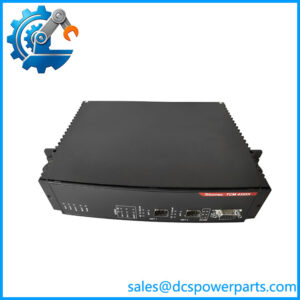
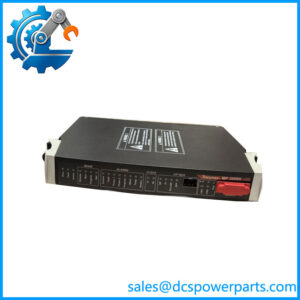
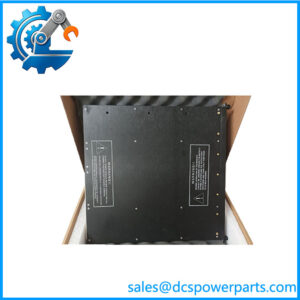
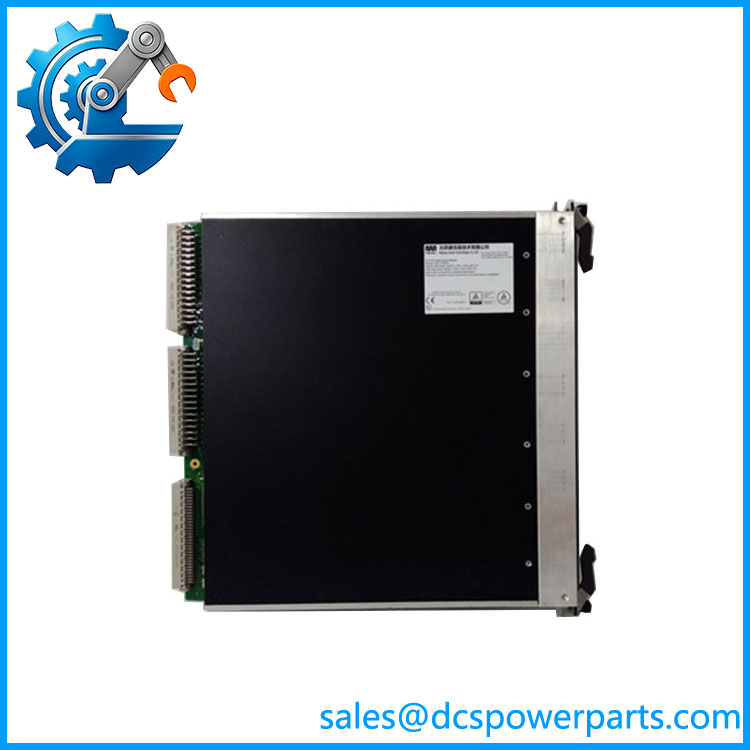
Current industrial component listings identify the TRICONEX BI01 specifically as a Bus Interface Module, rather than a conventional digital-input card. They report three groups of fiber-optic ports and transmission distances up to 20 km.
That distinction matters. Tricon’s standard I/O modules use dedicated field termination arrangements, while the BI01 is associated with the system communication layer. The standard Tricon documentation separately describes the TMR I/O architecture and external termination panels.
Product Introduction
The TRICONEX BI01 is a bus interface module used for fiber-optic communication within Tricon-family safety systems. Its role is to provide the communication interface between safety-system components over optical links rather than acquire conventional 24 VDC or 115 VAC field signals.
For maintenance teams, the BI01 is particularly relevant when a Tricon communication path fails while the individual I/O modules remain healthy. The optical transceivers, fiber connections, module revision, and system architecture all need to be checked before declaring the BI01 itself defective.
DO3201
Application Scenarios & Field Pitfalls
Engineering Pain Point
A communication fault in a safety system can be misleading. The controller may report a bus or communication diagnostic while every field I/O point appears normal. In that situation, replacing an I/O card will accomplish nothing. The engineer needs to isolate the optical path, interface module, connectors, and receiving node.
Typical Applications
- Oil & Gas — Fiber communication between distributed Tricon safety-system components
- Refineries — ESD system communication across separated control cabinets
- Chemical Processing — Safety-system data exchange between remote processing areas
- Power Generation — Distributed safety controller communication where electrical isolation is required
Technical Pitfalls to Avoid
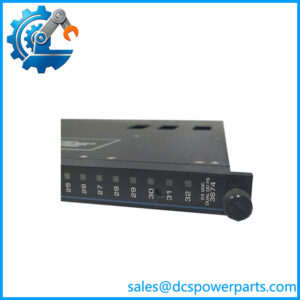
- Do not confuse with a digital-input module.
The model is identified in current listings as a Bus Interface Module. Standard Tricon digital-input modules use different model numbers and electrical specifications. - Inspect the fiber path before condemning the module.
Check fiber connectors, contamination, cable routing, optical attenuation, and the receiving interface. A dark or intermittent optical link can produce symptoms that look like a failed . - Verify the complete hardware revision.
Tricon systems exist across multiple generations. Do not assume that a from one configuration is interchangeable with another simply because the front-panel designation is identical. - Do not perform uncontrolled module replacement on an operating SIS.
Follow the plant’s approved maintenance, bypass, hot-spare, and proof-test procedures. A communication module in a safety system is not an ordinary PLC communication card.
Related Products
- TRICONEX 3008 — Main Processor Module used in Tricon controller architecture. It performs application execution and system diagnostics; it is complementary to the rather than a substitute.
- TRICONEX 3501E/T — TMR digital-input module for discrete field signals. It belongs to the I/O layer, while operates at the communication-interface level.
- TRICONEX 3503E — 24 VAC/VDC TMR digital-input module. Relevant for field signal acquisition, not fiber bus communication.
- TRICONEX 3604E — TMR digital-output module for discrete field loads. It is commonly considered alongside digital-input modules when maintaining a complete Tricon I/O rack, but it does not replace .
- TRICONEX 3721 — Analog-input module used for process measurements. Its function is fundamentally different from , but it may reside within the same overall SIS architecture.
- TRICONEX 4351A — Tricon communication module used for external communication functions. It should be evaluated separately from because communication purpose and system interface are different.
- TRICONEX 8310 — Tricon power module. It supports chassis power requirements and is relevant when diagnosing a complete rack-level communication failure.
- TRICONEX 8311 — 24 VDC Tricon power module. A useful related spare when communication problems occur alongside chassis power diagnostics.
Procurement Note: The should be purchased by exact hardware identification, not by functional description alone. Before approving a replacement, verify the nameplate, revision, fiber connector arrangement, installed Tricon generation, and the corresponding system documentation. Public listings provide useful identification information, but I would not use those listings alone to establish safety-system compatibility.