Description
Product Overview
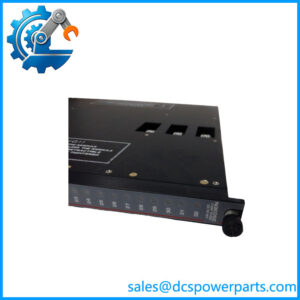
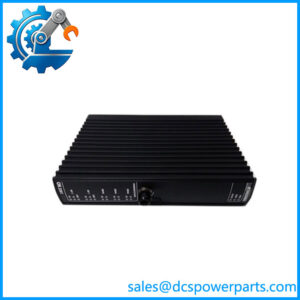
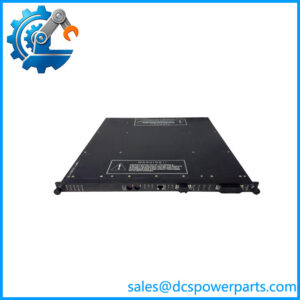
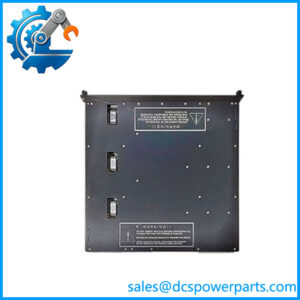
AI3351 is the analog input module of the Trident safety controller, and it is the single most common analog part on that platform. Thirty-two points, commoned, 4–20 mA — the workhorse configuration for pressure, level, flow and analyser transmitters in a safety system. The platform boundary matters from the first line of any enquiry: the 3300-series model numbers belong to Trident, not to Tricon v9/v10, whose analog inputs are different parts on different baseplates. A AI3351 will not seat in a Tricon chassis, and a Tricon analog module will not fit the Trident carrier. Sites running both platforms keep both, and the mistake is common enough that it is worth settling before anything else.
Inside, the module holds three isolated sets of electronics — one channel per main processor. Each channel processes the field data independently and hands its array to the MP associated with it; the three MPs then vote. The voting behaviour is worth stating precisely because it is often misdescribed: in TMR mode the value passed to the application is the mid-value of the three, and in dual mode it is the average. Mid-value selection is the reason a single channel drifting high or low does not move the process variable, while a genuine process change moves all three and passes through untouched.
The analog path itself is completed on the baseplate, not on the card. Triconex specifies the input impedance as 250 Ω with baseplate, against a 180 Ω source impedance, with a 100 Ω 0.01 % current-to-voltage resistor in the measuring chain. Thirty-two points share a common return, and the module tolerates 33 VDC absolute maximum field voltage, −0.6 VDC reverse, and 50 mA absolute maximum input current — ratings that matter on a plant where a 24 VDC loop supply can be mis-wired and where transmitter surge damage is a routine failure mode. Resolution is 12 bits at 0.15 % of full-scale error, input bandwidth is 16 Hz, and the scan completes in under a millisecond across all thirty-two points.
Four carrier routes change what the module becomes. Model 2351 is the standard 4–20 mA baseplate. The AI external termination baseplate serves thermocouple and RTD work through the 9764-510 panel, or the 9792-310 panel in a hazardous area. Model 2354 adds HART pass-through, letting a 4850 HART multiplexer read smart transmitters for configuration and asset management, and 2354A is its ATEX counterpart. The packaged forms are 5351 (one 3351 plus a 2351) and 5352 (one 3351 plus a 2352).
Diagnostics are per channel, not per module: a detected failure turns on the Fault indicator and raises the system alarm, but it identifies a channel fault. The module is specified to operate correctly with a single fault and may continue with multiple faults, which is precisely why the indicator’s granularity matters during a trip investigation.
Dealers add noise in both directions. AI3351 appears sold as a “next-generation modular controller” with an Intel Xeon processor, as a bundle with unrelated part numbers, and — in lists from the same suppliers — as a Tricon part. The revision suffix is real, however: hardware revisions such as AI3351S2 circulate, and a replacement must match the revision level the installed base expects rather than the bare model alone.
Technical Specifications
| Parameter | Value |
|---|---|
| Model and platform | AI3351 — Triconex Model 3351 Analog Input Module; Trident (Trident v2) TMR safety controller |
| Module type | Analog input; three isolated channels; TMR voting, hot-spare capable, mechanically keyed |
| Points | 32, commoned (shared return reference) |
| Nominal input current | 4–20 mA DC |
| Operational current range | 2–22 mA DC |
| Absolute maximum field voltage | 33 VDC; reverse −0.6 VDC |
| Absolute maximum input current | 50 mA DC |
| Input path | Source impedance 180 Ω; input impedance 250 Ω with baseplate; 100 Ω 0.01 % I-to-V resistor |
| Resolution and accuracy | 12 bits; absolute error 0.15 % of full scale (20 mA) |
| Bandwidth and scan | 16 Hz (3 dB); scan time < 1 ms for all 32 points |
| Diagnostics | Force-to-value diagnostic (FVD); fault reported per channel, not per module |
| Voting behaviour | TMR mode: mid-value passed to application; dual mode: average |
| Isolation | Functional earth to protective earth 500 VDC min; functional earth to functional earth (logic) 800 VDC min |
| Compatible baseplates | 2351 (standard 4–20 mA); AI external termination baseplate with 9764-510 or 9792-310 panel; 2354 (HART); 2354A (HART, ATEX) |
| Mechanical and environment | 44 × 220 × 169 mm (W × H × D); 70 °C maximum ambient; logic power from MP baseplate, 24 VDC (19.2–30 VDC), under 3 W |
| Packaging and capacity | 5351 TriPak (3351 + 2351); 5352 TriPak (3351 + 2352); system limit 14 I/O modules, 10 when AO or PI modules are present |
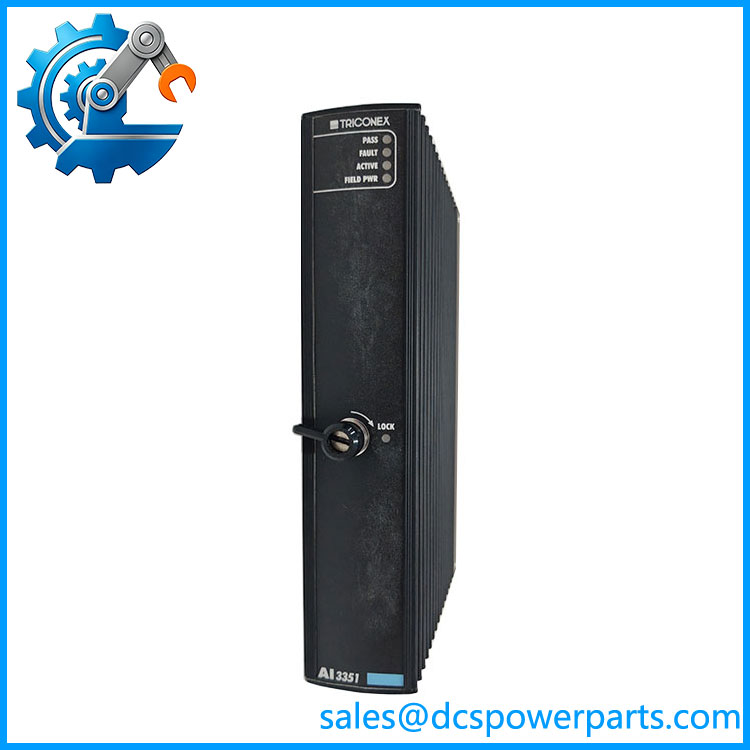
TRICONEX AI3351
Key Features and Advantages
Mid-value voting, not averaging, in TMR: the value passed to the application is the middle of the three channels, so a channel that drifts fails to move the process variable while a real process change moves all three. Averaging applies only in dual mode — a distinction that explains behaviour during channel faults better than any general description of redundancy.
Thirty-two points inside a millisecond: the full point set is refreshed in under 1 ms, which keeps analog loop timing predictable even when a column carries several input modules, and removes scan phasing as a variable during trip-sequence analysis.
A measurement window built for diagnostics: the 2–22 mA operational range against a 4–20 mA nominal signal means an open loop reads under-range rather than as a plausible zero. Combined with the 50 mA absolute limit, a mis-wired or surged loop is absorbed instead of destroying the channel.
Sixteen hertz of deliberate bandwidth: the 3 dB roll-off filters the noise that switching plant electronics inject into long transmitter runs, while remaining fast enough for pressure, level and flow control. Signals that genuinely pulse faster than that belong on a pulse input module, not here.
Fault granularity that directs the technician: the Fault indicator reports a channel fault rather than declaring the module failed, and the module is specified to keep working through a single fault. On a live unit that is the difference between pulling a module and pulling a loop.
The burden is a baseplate decision: the 250 Ω input impedance is quoted with baseplate, so choosing 2351, an external termination carrier, or a HART carrier is an electrical choice as well as a wiring one. The same AI3351 measures through a 2351 and reads through a 2354 for HART; it does not become a different module.
Hot spare without touching the field: terminals live on the carrier, the module is keyed, and the I/O set holds an active and a standby module. Replacement is a lift-and-seat operation, and the baseplate keeps the plant’s wiring history intact.
One module, four carriers: standard 4–20 mA, thermocouple and RTD via external termination, HART with asset-management access, and HART in a hazardous area. Buying the module once and matching the carrier to the duty is how a spares holding stays small.
Honest limits: commoned points, no per-point isolation, and no thermocouple or RTD capability without the external termination route. A floating source or an ungrounded thermocouple is a carrier decision, not a module configuration.
Applications
Refinery and petrochemical process monitoring: pressure, level, flow and analyser transmitters feeding safety logic, thirty-two loops per module, with the 2–22 mA window converting an open transmitter into a diagnosable under-range reading rather than a silent offset in the operator display.
Emergency shutdown and burner management input scope: drum level, fuel and air pressures, and process measurements that participate in trips, where mid-value voting keeps a drifting channel from disturbing the voted value and where per-channel diagnostics shorten the path from alarm to the correct spare.
Gas turbine and compressor packages: suction and discharge pressures, lube-oil pressure, and process inputs around anti-surge control, on a platform whose sub-millisecond full-set scan keeps loop timing stable across the module.
Power generation balance of plant: feedwater, condensate, cooling-water and steam-side transmitters on Trident columns that have run for decades, where the practical question is which carrier each position already uses rather than which module to buy.
Water and wastewater treatment: level, flow and pressure transmitters on safety-related pump and dosing interlocks, in panels where thirty-two commoned points cover a station without a second module position.
Brownfield retrofit and spares consolidation: replacing a failed module on an existing carrier, or holding one module type that serves four different baseplate duties. The AI3351 is the part that stays common while the carriers differ, which is why so many sites standardise on it.
Related Products
2351 Analog Input Baseplate Kit — the standard 4–20 mA carrier; the pairing sold as the 5351 Analog Input TriPak. 2352 Analog Input Baseplate Kit (TC, RTD, 4–20 mA) — external termination carrier for thermocouples and RTDs, used with two 9764-510 termination panel kits; the 5352 TriPak pairs this carrier with the same module. 2354 Analog Input HART Baseplate Kit — adds HART pass-through for smart transmitters, read through a 4850 HART multiplexer. 2354A Analog Input HART Hazardous Location Baseplate Kit (ATEX) — hazardous-area HART carrier on the larger 229 × 249 mm footprint. 9764-510 RTD/TC/AI Termination Panel Kit — external termination panel with signal conditioning modules for thermocouple and RTD work. 9792-310 Analog Input Termination Panel Kit, Hazardous Location — the hazardous-area external termination panel for analog inputs. 4850 HART Multiplexer — the asset-management gateway used when the module reads HART data through a 2354 or 2354A carrier. 3361 Analog Input/Digital Input Module — mixed 16 DI plus 16 AI module on carrier 2361; the route when a position must serve both signal classes. 3381 Pulse Input Module — speed and flow inputs on carrier 2381, the module for signals faster than the 16 Hz analog bandwidth allows. 3481 Analog Output Module — the analog output counterpart, on carrier 2481, for the loops these inputs supervise.
Installation and Maintenance
Before installation: confirm the platform — is a Trident module and will not seat in a Tricon v9/v10 chassis — and confirm the revision level on the label, since hardware revisions such as AI3351S2 circulate and the installed base may expect one. Identify the carrier in the position: 2351 for standard 4–20 mA, an external termination baseplate where thermocouples or RTDs are involved, 2354 or 2354A where HART data is collected. Verify the carrier’s assembly number rather than its sticker, check keying, and confirm that the thirty-two points can share a common return.
Installation: with the carrier already terminated, seat the module, engage the lock lever, and verify the keying aligns. Apply loop power and watch the front panel: PASS steady, ACTIVE indicating scan activity, no FAULT. Because the burden sits on the baseplate, each loop should be checked at the terminals — supply present, return continuous, transmitter output within range — before the module is seated; a wiring error otherwise appears as a channel fault. Drive representative points to 4, 12 and 20 mA and confirm the reading at the operator station and in TriStation, and record the module revision in the as-built file alongside the carrier model.
Maintenance: read the panel before reaching for a laptop. A FAULT on one channel is a channel diagnosis, and the module is specified to keep operating through a single fault — check the field loop, its supply and its terminations before swapping hardware. Persistent under-range readings across several points on one module usually indicate a shared return or a carrier terminal problem rather than thirty-two transmitters failing together. Keep a hot spare of the correct revision, replace by lifting the module (field wiring stays on the carrier), and log channel-level faults with their timestamps; a repeat pattern on the same point after a module swap points at the loop, not the electronics.
Warranty and Quality
Every is supplied as the Triconex Model 3351 Trident Analog Input Module — thirty-two commoned 4–20 mA points, 12-bit at 0.15 % of full scale, mid-value voting in TMR — and is identified by label and revision before dispatch, because this model number circulates online as a general-purpose controller with processor and memory specifications that belong to no Triconex product, and because the Triton-versus-Trident platform boundary is routinely blurred by sellers. Each unit is inspected for front-panel and housing condition, connector and lock-lever integrity, keying, indicator operation, and evidence of prior repair, heat damage or moisture ingress. Where a Trident bench is available, the module is seated on a 2351 carrier with a Model 3351 loop simulator, driven across 4, 12 and 20 mA on representative points, checked for accuracy within 0.15 % of span, exercised for force-to-value diagnostic response on an open loop, and observed for clean active/hot-spare transfer. A 12-month repair, replacement or refund commitment applies. Technical support covers what this module actually raises: separating Trident from Tricon parts, matching the four baseplate routes to the field duty, explaining mid-value versus average voting, and identifying the revision level a replacement has to match.