Description
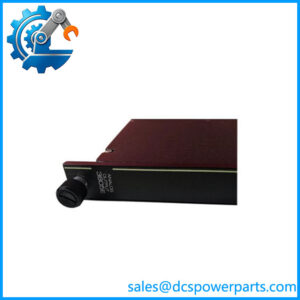
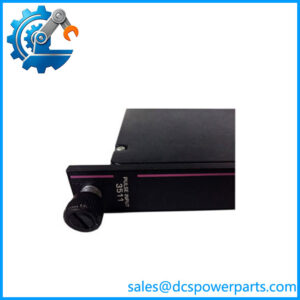
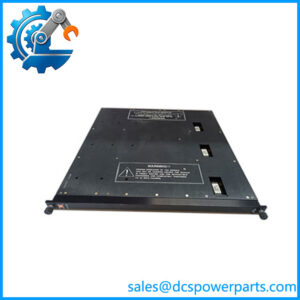
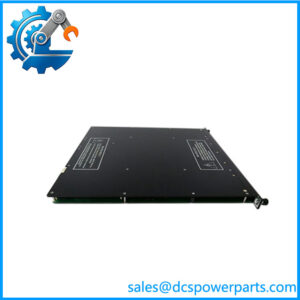
Triconex 5411H — Digital Output TriPak, Supervised, High Current
Product Introduction
In a safety controller, a digital output is only useful if the system can determine whether the commanded field circuit is actually behaving as expected. Triconex 5411H addresses that requirement with a supervised high-current digital-output architecture. Schneider’s product documentation identifies 5411H as a Digital Output TriPak, Supervised, High Current, built from the 3411 digital output module and 2401H high-current baseplate kit.
The Triconex 5411H is intended for applications where output supervision and higher field-current capability are required. Its 3411 module provides 16 commoned 24 VDC outputs and monitors conditions such as loss of field power and output-point short circuits. This is a different hardware arrangement from the standard 5401 Digital Output TriPak, so replacing one with the other requires an electrical and application review rather than a simple channel-count comparison.
Key Technical Specifications
| Parameter | Specification |
|---|---|
| Product Model | 5411H |
| Manufacturer | Triconex / Schneider Electric |
| Product Family | Trident / Triconex TriPak |
| Product Type | Digital Output TriPak, Supervised, High Current |
| Digital Output Module | 3411 |
| Baseplate Kit | 2401H |
| Number of Points | 16 |
| Output Configuration | Commoned |
| Nominal Output Voltage | 24 VDC |
| Specified Operating Voltage | 19–30 VDC |
| Absolute Maximum Output Voltage | 45 VDC |
| Minimum Required Field Load | 30 mA |
| Switching Current | <4.8 A, self-limiting |
| Typical Switching Current | 3.0 A |
| Carry Current | 700 mA maximum, self-limiting |
| Off-State Leakage | <1 mA |
| Diagnostic Glitch Duration | <2 ms maximum; 500 µs typical |
| Field Diagnostics | Loss of field power; output point shorted ON/OFF |
| Loop-Back Thresholds | 0–5 VDC OFF; 6–14 VDC transition; 15–30 VDC ON |
| Architecture | Tricon/Trident fault-tolerant control platform |
| Installation | TriPak module and dedicated baseplate |
The published Trident technical guide lists the 3411 output module at 24 VDC nominal, 19–30 VDC operating voltage, 45 VDC absolute maximum output voltage, and 30 mA minimum required field load. It also specifies self-limiting switching current below 4.8 A and 700 mA maximum carry current.
Application Scenarios & Pain Points
Safety Shutdown Outputs
The supervised high-current design is suited to field circuits where the controller needs more than a simple ON/OFF command. Field monitoring can identify loss of field power and output-point short conditions, providing useful diagnostic information for safety-related maintenance.
Solenoid and Actuator Control
High-current digital outputs can be used for appropriate DC field loads such as solenoid-operated devices, contactor interfaces, and other discrete actuators. The actual load must remain within the electrical limits of the 3411 module and the connected field circuit.
Emergency Shutdown and Interlock Systems
The supervised output architecture is relevant to interlock applications where the status of the output circuit matters in addition to the commanded state. This is particularly useful when troubleshooting a field device that does not respond even though the logic solver indicates an output command.
High-Current Discrete Control
The H designation is significant. The 5411H is the supervised, high-current TriPak configuration, not merely another 16-channel digital-output package. Schneider’s product guide separately lists the standard 5401, low-current 5401L, high-voltage 5402-F, and supervised high-current 5411H configurations.
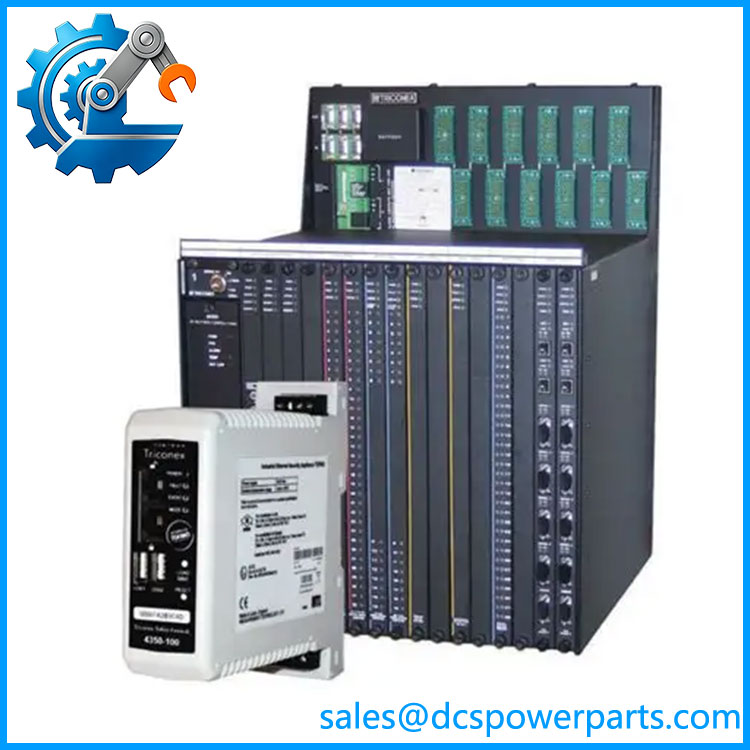
TRICONEX 5411H
Related Products
- Triconex 3411 — Digital Output Module used within the 5411H TriPak.
- Triconex 2401H — High-current digital-output baseplate kit associated with the 5411H configuration.
- Triconex 5401 — Standard Digital Output TriPak using the 3401 module and 2401 baseplate.
- Triconex 5401L — Low-current Digital Output TriPak.
- Triconex 5402-F — High-voltage Digital Output TriPak.
- Triconex 5451 — Solid-State Relay Output TriPak.
- Triconex 3401 — Standard Digital Output Module.
- Triconex 3451 — Solid-State Relay Output Module.
The manufacturer’s product guide explicitly maps 5411H → 3411 + 2401H, while 5401 → 3401 + 2401. That distinction should be preserved on a procurement order.
Engineer’s Guide — Field Pitfalls to Avoid
1. Do not confuse 5411H with the 3411 module
5411H is the TriPak configuration, while 3411 is the actual Digital Output Module. The 5411H configuration includes the high-current baseplate kit. If a project BOM calls for the complete TriPak, a bare 3411 does not provide the same package.
2. Do not substitute a standard 5401 without checking the load
The 5401 uses a 3401 module and standard 2401 baseplate. The 5411H uses the supervised 3411 and 2401H high-current baseplate. Their application characteristics are not identical.
3. Check the minimum field load
The 3411 specification lists a 30 mA minimum required field load. This is easy to overlook when testing an output with a high-impedance instrument or bench meter. A circuit that looks electrically acceptable during a basic voltage check may not reproduce the intended supervised operating condition.
4. Respect the commoned-output arrangement
The 16 outputs are documented as commoned. Do not treat them as individually isolated relay contacts simply because the system provides individual output points.
5. Check the actual field current
The module’s switching current is self-limiting below 4.8 A, with a typical value of 3 A, while continuous carry current is specified at 700 mA maximum. Those figures should not be interpreted as a blanket statement that every field load can be operated at several amps continuously.
6. Use the supervision diagnostics during commissioning
The 3411 provides field alarms for loss of field power and output-point short conditions. These diagnostics should be included in commissioning tests rather than only checking whether the controlled solenoid or relay physically moves.
7. Verify the complete assembly before purchase
For legacy Tricon/Trident hardware, record the module label, revision, baseplate type, keying arrangement, terminal configuration, and system generation. A seller describing an item simply as “5411H” may actually be offering the 3411 module without the 2401H baseplate, or a different configuration entirely.
FAQ
What is Triconex 5411H?
Triconex 5411H is a Digital Output TriPak, Supervised, High Current. The documented configuration consists of one 3411 Digital Output Module and one 2401H High-Current Digital Output Baseplate Kit.
How many outputs does the 5411H have?
The 3411 module used in the 5411H configuration provides 16 digital output points, with the outputs specified as commoned.
What voltage does the 5411H use?
The nominal output voltage is 24 VDC, with a specified operational range of 19–30 VDC. The documented absolute maximum output voltage is 45 VDC.
What does “supervised” mean on the 5411H?
The 3411 module monitors field-circuit conditions in addition to generating the output command. Documented field alarms include loss of field power and output-point shorted ON or OFF conditions.
Is 5411H a relay output module?
It should not be described simply as a conventional relay-output card. The documented hardware is a Digital Output TriPak using the 3411 electronic digital-output module, with supervised high-current functionality. The 5411H designation identifies the complete TriPak configuration.
What is the difference between 5411H and 5401?
The 5401 is the standard Digital Output TriPak using the 3401 module and 2401 baseplate. The 5411H uses the supervised 3411 module and high-current 2401H baseplate. The latter also has a 30 mA minimum field-load requirement and dedicated field diagnostics.
What should I verify before buying a replacement 5411H?
Verify that the supplied hardware is actually the 5411H TriPak configuration, not merely a 3411 module. Check the 2401H baseplate, hardware revision, terminal arrangement, field-load requirements, output voltage, and existing Tricon/Trident system configuration. For used or refurbished equipment, verify actual inventory condition and test documentation before installation.