Description
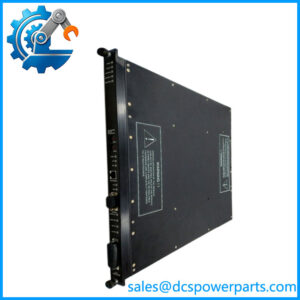
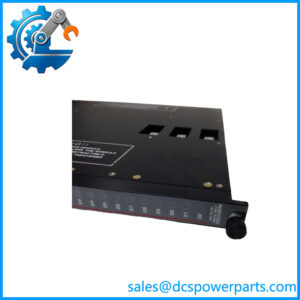
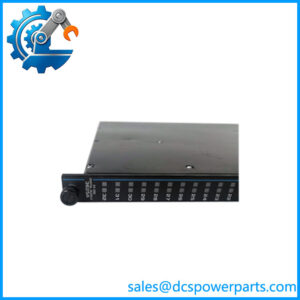
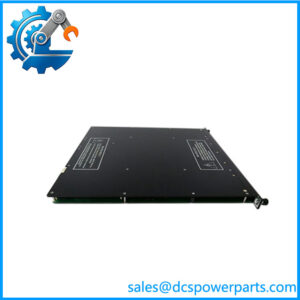
TRICONEX 4609 Advanced Communication Module
Product Introduction
The TRICONEX 4609 is an Advanced Communication Module (ACM) used to connect a Tricon safety controller with a Foxboro Intelligent Automation (I/A) Series control system. Rather than functioning as a conventional Tricon I/O module, the 4609 operates at the communication-system level. It presents Tricon information to the Foxboro I/A Series environment as a safety node on the I/A Series Nodebus, allowing process information, diagnostic information, alarms, and configured Tricon data to be made available to Foxboro operator workstations. The technical product documentation specifically identifies Model 4609 as the ACM for Foxboro I/A Series Nodebus integration.
The TRICONEX 4609 Advanced Communication Module supports several communication paths associated with the Tricon architecture. The documented hardware includes an AUI connection to the DNBI Nodebus data interface, a 9-pin RS-423 connection for DNBI control, a BNC network connection, and TS/TSAA communication interfaces. The separate network interface can support TriStation-related communication, TSAA applications, and TSAA/TCP (UDP/IP) communication with external host systems. The ACM can also process Tricon alarms, provide diagnostic information, support time synchronization from the I/A environment, and provide write protection to prevent unauthorized changes from I/A Series sources.
From an engineering and procurement standpoint, the TRICONEX 4609 is a system-specific communication component. It should not be treated as a modern Ethernet gateway simply because it has network interfaces. Its documented architecture belongs to the legacy Tricon/Foxboro integration environment, and system-version compatibility must be checked before replacement. The Tricon v9–v11 planning documentation specifically lists the 4609 ACM with compatibility through Tricon v10.x, so an apparently similar communication module from another Tricon generation should not be assumed to be interchangeable.
Technical Specifications
| Parameter | Specification |
|---|---|
| Product Model | 4609 |
| Manufacturer | Triconex |
| Product Type | Advanced Communication Module (ACM) |
| Primary Application | Tricon controller to Foxboro I/A Series integration |
| DCS Interface | Foxboro I/A Series Nodebus |
| Nodebus BNC | 1 × BNC for RG58 50-ohm thin cable, documented as reserved |
| DNBI Data Interface | 1 × 15-pin D connector, AUI |
| DNBI Control Interface | 1 × 9-pin RS-423 connector |
| NET 2 / TSAA Network | 1 × BNC for RG58 50-ohm thin cable |
| Serial Interfaces | 9-pin RS-232/RS-422/RS-485 interfaces, documented as reserved |
| Network Communication Speed | 10 Mbps for BNC/AUI interfaces |
| Nodebus Control Speed | 2400 baud |
| Protocols / Applications | Tristation, TSAA, TSAA/TCP (UDP/IP) |
| Port Isolation | 500 VDC for specified network and RS-232 interfaces |
| Status Indicators | PASS, FAULT, ACTIVE, ONLINE, SBRDY, TX/RX |
| Logic Power | Less than 20 W |
| System Compatibility | Tricon v9–v10; documentation also specifies v10.x compatibility |
| Mounting | Tricon chassis installation |
| Application Environment | Tricon safety-system communication architecture |
The interface and electrical values above are taken from Triconex technical product and planning documentation. In particular, the official-style product guides specify the 15-pin AUI, 9-pin RS-423, BNC network connections, 10 Mbps network rate, 2400-baud Nodebus control connection, 500 VDC isolation, and less-than-20-W logic power requirement.
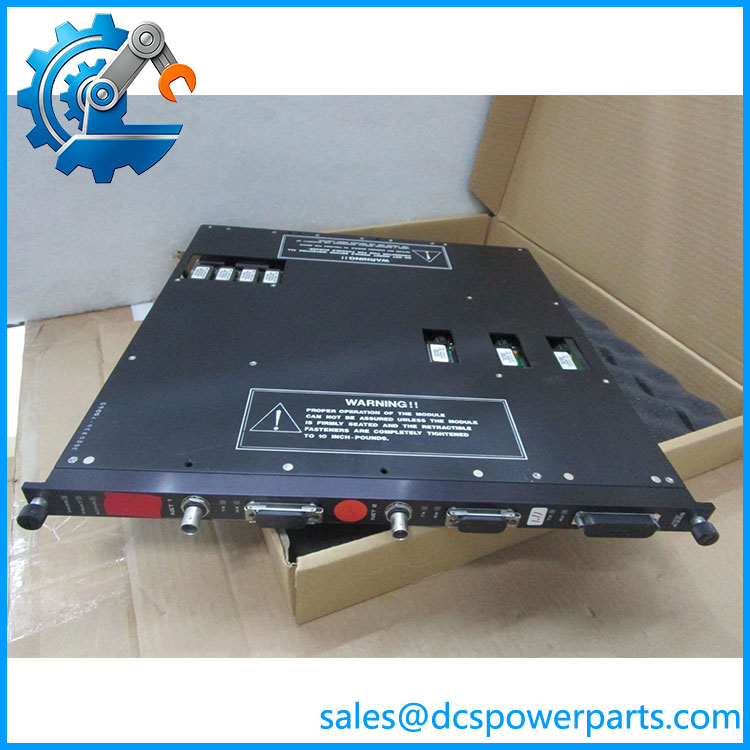
TRICONEX 4609
Main Features and Engineering Considerations
Foxboro I/A Series Integration
The defining function of the TRICONEX 4609 is its Foxboro I/A Series interface. The ACM allows the Tricon safety controller to appear to the I/A Series environment as a safety node on the Nodebus. This permits configured Tricon data and diagnostic information to be presented through the Foxboro control environment without converting the Tricon system into a conventional DCS I/O subsystem.
Tricon Alarm and Diagnostic Transfer
The ACM can process Tricon alarms and propagate them to user-defined I/A Series destinations. It can also make Tricon diagnostic information available to I/A Series workstations. This is important in integrated SIS/DCS architectures because operators can receive safety-system status and alarms through the established Foxboro operator environment.
TS/TSAA Communication
The 4609 also provides communication facilities for Triconex software and external applications. The documentation identifies TriStation, TSAA, and TSAA/TCP (UDP/IP) applications as supported functions through the external network interface. This makes the module useful for engineering access and configured data exchange, but it should not be confused with a generic Ethernet communication card.
Write Protection
One useful system-level feature is write protection. The ACM can prevent changes to the Tricon controller from I/A Series sources. In a safety-system environment, this distinction matters because monitoring and controlled data exchange should not automatically imply permission to alter safety logic.
Hot-Spare Communication
The product documentation describes hot-spare capability for maintaining communication with the I/A Series Nodebus. This is particularly relevant in high-availability Tricon installations where communication availability is part of the overall control-system architecture.
Legacy Architecture
The 4609 is a legacy communication architecture. Its documented interfaces include AUI, BNC thin Ethernet, RS-423 and reserved serial interfaces rather than the Gigabit Ethernet interfaces common in current industrial networks. A replacement project therefore needs to begin with the actual Tricon/Foxboro architecture, not simply with the desired modern network standard.
Application Scenarios
- Tricon SIS and Foxboro I/A Series DCS integration
- Tricon safety-node communication with Foxboro Nodebus
- Safety-system alarm transfer to Foxboro operator stations
- Tricon diagnostic information display through I/A Series workstations
- Tricon process-data access from Foxboro systems
- TriStation engineering communication
- TSAA-based Tricon data applications
- TSAA/TCP or UDP/IP external-host communication
- Legacy Tricon v9/v10 integrated control architectures
- High-availability Tricon/Foxboro communication systems
Engineer’s Guide: Field Pitfalls
1. Do not classify the 4609 as a Tricon I/O card.
It is an Advanced Communication Module. It does not directly replace an analog input, digital output, or processor module.
2. Verify the Foxboro architecture.
The defining application is the Foxboro I/A Series Nodebus interface. If the plant does not use this architecture, the 4609 may not be the appropriate communication module.
3. Check the Tricon system version.
Planning documentation identifies the 4609 with Tricon v9–v10 systems and v10.x compatibility. Do not assume compatibility with a newer Tricon generation solely because the module physically fits the chassis.
4. Check every physical interface.
The 4609 uses a combination of BNC, 15-pin D, and 9-pin serial connections. Connector availability alone is not sufficient; the DNBI, Nodebus, TS/TSAA addressing, and network cabling must match the existing installation.
5. Do not confuse NET 2 with a modern Ethernet service port.
The documentation identifies the BNC network interface for TriStation, TSAA and related applications. It is part of the legacy Tricon communication architecture.
6. Preserve node addressing.
The technical documentation specifies that the network address for the relevant port is set through TS/TSAA Node Address switches. A replacement should therefore be checked against the existing addressing configuration.
7. Do not assume a third-party “4609 equivalent” is interchangeable.
The ACM participates in safety-system communication and DCS integration. Hardware revision, system version, node addressing, communication configuration, and redundancy arrangements should all be verified before installation.
Frequently Asked Questions
What is TRICONEX 4609?
TRICONEX 4609 is the Advanced Communication Module (ACM) for Tricon systems. Its primary role is to interface a Tricon controller with a Foxboro I/A Series Nodebus.
Is TRICONEX 4609 a communication module?
Yes. It is specifically classified as an Advanced Communication Module rather than an I/O module.
What DCS does the 4609 connect to?
The primary documented DCS integration is with Foxboro Intelligent Automation (I/A) Series systems through the I/A Series Nodebus.
Does the 4609 support Ethernet?
It has documented BNC network interfaces operating at 10 Mbps for the applicable network connections. This is legacy Ethernet/Tricon communication hardware, not a modern high-speed Ethernet interface.
Does the 4609 support TriStation?
Yes. The ACM supports TriStation-related communication through the documented TS/TSAA interface and external network connection.
What is the Nodebus communication speed?
The documented 9-pin Nodebus control connection operates at 2400 baud, while the applicable BNC and 15-pin D network interfaces are specified at 10 Mbps.
What is the power consumption?
The Triconex documentation specifies less than 20 W of logic power for the 4609.
Is the 4609 suitable for a new Tricon installation?
It is primarily a legacy component. Its suitability depends on the Tricon version and Foxboro integration architecture. The planning documentation identifies it with Tricon v9–v10/v10.x systems, so compatibility should be established from the installed system documentation before procurement.
Procurement Note
For purchasing and spare-stock identification, specify:
TRICONEX 4609 — Advanced Communication Module (ACM) — Foxboro I/A Series Nodebus Interface
Before approving a replacement, verify:
- Complete model: 4609
- Tricon system version
- Foxboro I/A Series architecture
- DNBI interface arrangement
- Nodebus cabling
- BNC network connection
- TS/TSAA node address
- Existing communication configuration
- Redundancy/hot-spare arrangement
- Hardware revision and serial number
- Physical condition and diagnostic status of refurbished stock
The critical point is system compatibility, not merely physical fit. The 4609 is a communication bridge between two legacy control-system architectures, so its surrounding DNBI, Nodebus, addressing, and Foxboro configuration are part of the replacement specification.