Description
Product Introduction
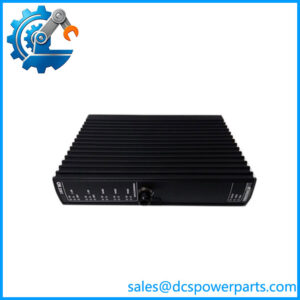
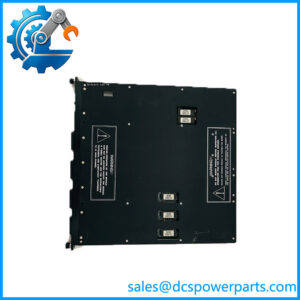
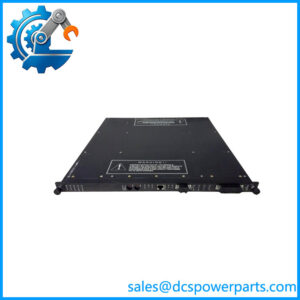
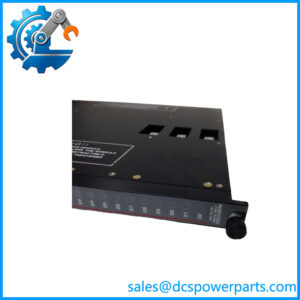
The TRICONEX 4210 is a digital input module used within the Triconex Tricon Safety Instrumented System. The Tricon platform is designed for high-integrity process safety applications and uses a Triple Modular Redundant (TMR) architecture. Within that architecture, the 4210 provides the interface through which discrete field conditions are acquired by the safety controller.
The TRICONEX 4210 is intended for applications where discrete signals form part of a safety or shutdown function. Depending on the plant configuration, inputs can originate from switches, shutdown contacts, equipment-status devices, alarms, permissives, and other discrete instrumentation. The module’s role is to make those field states available to the Tricon safety logic while supporting the system’s diagnostic and redundancy architecture.
The exact electrical specification of a Tricon I/O module should not be inferred from the model number alone. For a 4210 replacement, the hardware revision, input voltage, channel arrangement, termination panel, chassis configuration, and application documentation should be checked against the existing installation. This is especially important when the module is being sourced as legacy or refurbished hardware.
Technical Specifications
| Parameter | Specification |
|---|---|
| Manufacturer | Triconex / Schneider Electric |
| Model | 4210 |
| Product Family | Tricon |
| Product Type | Digital Input Module |
| System | Tricon Safety Instrumented System |
| Architecture | Triple Modular Redundancy (TMR) |
| Signal Type | Discrete digital input |
| Primary Application | Safety and shutdown signal acquisition |
| Typical Field Devices | Switches, contacts, alarms, status signals |
| Installation | Tricon chassis |
| Field Termination | Configuration dependent |
| Internal Communication | Tricon I/O architecture |
| Input Voltage | Verify exact 4210 hardware variant |
| Channel Count | Verify exact revision/nameplate |
| Isolation | Verify exact module documentation |
| Operating Temperature | Verify exact hardware revision |
| Product Status | Legacy/service hardware |
Main Features and Engineering Considerations
Tricon TMR Architecture
The key characteristic of the TRICONEX 4210 is its integration into the Tricon TMR safety architecture. Redundant processing and I/O paths allow the system to detect certain hardware faults while maintaining the required safety function.
This makes the module fundamentally different from a conventional single-channel PLC digital-input card.
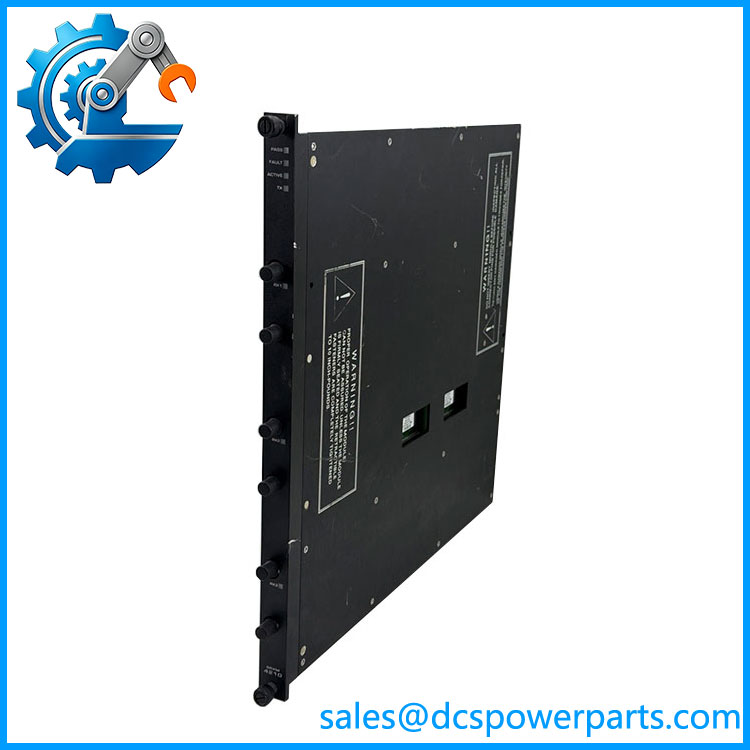
TRICONEX 4210
Discrete Safety Signal Acquisition
The 4210 is intended to acquire ON/OFF field conditions. In an emergency-shutdown or process-safety application, these signals can be used to initiate trips, establish permissives, monitor equipment states, or generate safety alarms.
The quality of the field signal remains important. Incorrect wiring, degraded contacts, incorrect voltage, or grounding problems can create diagnostic indications even when the I/O module itself is healthy.
Integration With Tricon Hardware
The module should be evaluated as part of the complete Tricon installation. The chassis, termination assembly, I/O configuration, controller revision, and field wiring all affect whether a replacement is appropriate.
Application Scenarios
The TRICONEX 4210 may be used in:
- Emergency shutdown systems
- Safety Instrumented Systems
- Process shutdown applications
- Oil and gas facilities
- Refining plants
- Petrochemical facilities
- Chemical processing
- Power-generation safety systems
- Compressor protection
- Turbomachinery shutdown systems
Engineer’s Guide: Field Pitfalls
⚠️ Do not substitute it based only on the word “digital input.”
Tricon modules have system-specific electrical, mechanical, diagnostic, and termination requirements.
⚠️ Verify the exact 4210 revision.
Input voltage, channel configuration, isolation, and other specifications should be confirmed from the physical nameplate and applicable Tricon documentation.
⚠️ Check the termination panel.
The field termination arrangement must match the replacement module and existing plant wiring.
⚠️ Preserve the existing configuration.
Record channel assignments, trip logic, alarm behavior, and diagnostic status before removing the original module.
⚠️ Test the complete safety loop.
A module that powers up and reports healthy status has not necessarily demonstrated correct operation of the associated shutdown function.
Frequently Asked Questions
What is TRICONEX 4210?
It is a Triconex digital input module used within the Tricon Safety Instrumented System.
Is TRICONEX 4210 a PLC module?
It is an I/O module, but it is specifically designed for the Tricon safety-system architecture, rather than general-purpose PLC applications.
What architecture does Tricon use?
Tricon uses Triple Modular Redundancy (TMR) to provide fault tolerance for safety-critical control applications.
What type of signals does 4210 handle?
It handles discrete digital field signals, with the exact electrical characteristics dependent on the particular hardware variant.
What should be verified before purchasing?
- TRICONEX 4210
- Complete part number
- Hardware revision
- Input voltage
- Channel configuration
- Chassis compatibility
- Termination assembly
- Keying arrangement
- Firmware/system compatibility
- Safety-function test results
Procurement note: For a TRICONEX 4210, avoid accepting a generic “tested OK” report. For safety-system service, the useful evidence is an exact part-number match plus documented I/O diagnostics and functional testing appropriate to the installed Tricon system.