Description
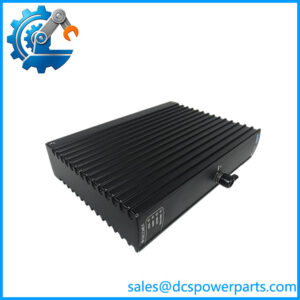
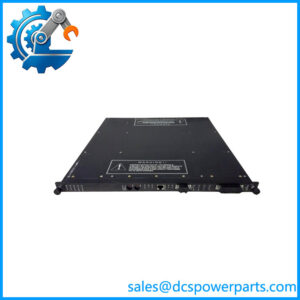
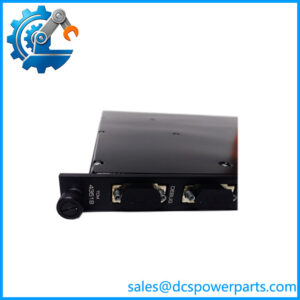
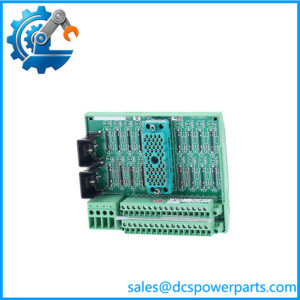
TRICONEX 4000103-546 Product Description
Key Technical Specifications
| Parameter | Specification |
|---|---|
| Manufacturer | Triconex / Schneider Electric |
| Model | 4000103-546 |
| Product Type | Control / System Module |
| Part Number | 4000103-546 |
| Product Family | Triconex |
| Application | Safety Instrumented System |
| Control Architecture | Triconex fault-tolerant architecture |
| Exact I/O Function | Requires verification |
| Channel Count | Not reliably verified |
| Communication Protocol | Not reliably verified |
| Operating Voltage | Not reliably verified |
| Operating Temperature | Not reliably verified |
| Dimensions | Not reliably verified |
| Weight | Not reliably verified |
| Hardware Revision | Verify from module label |
| Installation | Triconex chassis/system dependent |
Product Introduction
The TRICONEX 4000103-546 is identified in current industrial automation inventory references as a Triconex control/system module used within Triconex safety-control equipment. Available listings consistently associate the exact part number with Triconex control hardware, but they do not provide enough reliable primary documentation to establish a detailed electrical specification.
For that reason, the TRICONEX 4000103-546 should be sourced by its complete part number and physical identification rather than being described as a generic communication, analog, or digital I/O module. Triconex systems use different dedicated processor, communication, I/O, termination, and expansion components, and confusing these roles during replacement can result in an otherwise physically compatible module being installed in the wrong system position.
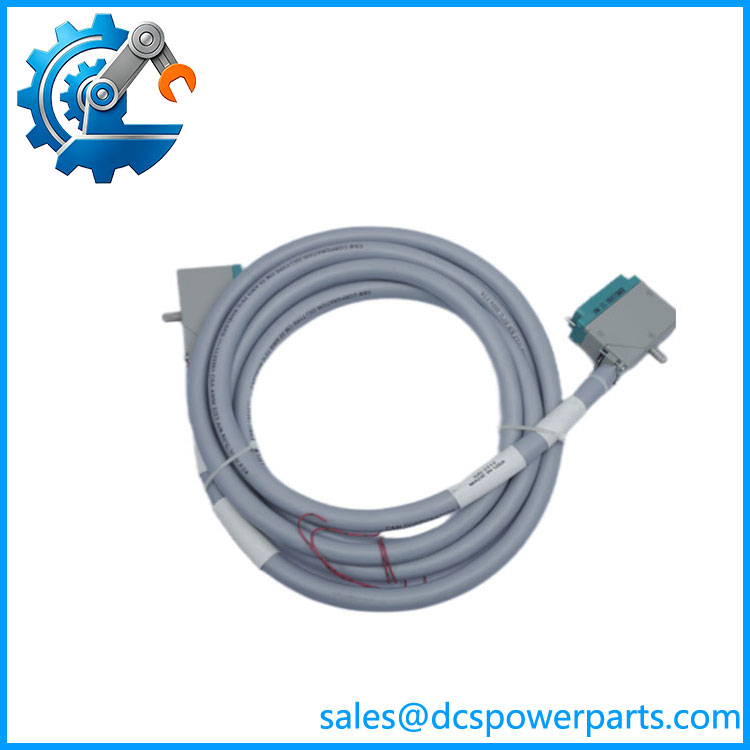
4000103-546
Application Scenarios & Field Pitfalls — The Engineer’s Perspective
Engineering Pain Point
The main procurement risk with 4000103-546 is insufficient identification. Several secondary catalogs label it simply as a “Control Module,” while other inventory pages place it beside Triconex communication and I/O hardware without establishing that it performs those functions.
For a safety-system spare, that level of ambiguity is not acceptable for determining interchangeability. The installed chassis, slot position, module label, firmware/hardware revision, and system documentation should all be checked before replacement.
Typical Applications
- Triconex SIS maintenance — replacement of failed or degraded system hardware.
- Process safety systems — spare-parts support for installed Triconex safety controllers.
- Legacy automation systems — maintenance of existing Triconex installations where the original hardware remains in service.
- Plant turnaround preparation — stocking identified replacement modules before scheduled maintenance.
- Obsolescence management — maintaining critical Triconex hardware where current production availability is limited.
Technical Pitfalls
1. Do not classify it as an analog or digital I/O module without confirmation.
The available references identify 4000103-546 as a control/system module, but I could not verify a reliable primary source specifying its I/O channel architecture.
2. Do not confuse the part number with nearby 4000103-series modules.
Other Triconex parts in this numbering family have different functions. For example, inventory references separately identify 4000103-520 and 4000103-550. Similar numbering is not evidence of electrical interchangeability.
3. Verify the controller generation.
Triconex hardware is architecture-specific. Tricon documentation describes TMR controller architectures and different module classes for processors, I/O, communication, and remote expansion. A replacement should therefore be matched to the installed controller generation rather than selected solely from a part-number search.
4. Check the complete module label.
Record the model/part number, hardware revision, serial number, PCB identification, and any secondary label before ordering. For legacy Triconex equipment, the suffix and hardware revision can be important when determining whether a replacement is acceptable.
5. Do not assume a secondary listing’s function is authoritative.
Current inventory pages variously describe this part as a control module or place it among communication hardware. That inconsistency is precisely why exact system identification is necessary.
6. Follow Triconex replacement procedures for safety equipment.
Triconex documentation describes module-level replacement procedures and emphasizes installing an identical module, correctly seating the module, and checking Pass/Active status after installation.
7. Investigate the original fault before replacing the module.
A Triconex module fault can sometimes originate from field wiring, connected equipment, communication cables, or another system component. Replacing the module without checking the surrounding fault conditions can result in a repeat failure.
8. Used inventory should be tested before being classified as ready-to-install.
For surplus 4000103-546 inventory, inspect connectors, board condition, module housing, identification labels, and evidence of corrosion or improper storage. Where practical, test the module in a compatible Triconex chassis and confirm normal diagnostic status.
Related Products
- TRICONEX 4000103-520 — same broad 4000103 numbering family; verify exact function and compatibility independently.
- TRICONEX 4000103-550 — another 4000103-series module; not automatically interchangeable.
- TRICONEX 4000094-350 — Triconex I/O module reference appearing in the same inventory family.
- TRICONEX 4000093-346 — related Triconex system/I/O hardware requiring application-specific verification.
- TRICONEX 3006 — Tricon main processor family hardware.
- TRICONEX CM3201 — communication module family; different function from the unidentified 4000103-546 control-module classification.
- TRICONEX AI3351S2 — analog input module; not a substitute unless the installed configuration specifically calls for this function.
- TRICONEX 3503EC1 — discrete input module; different I/O role.
- TRICONEX 3603T — digital output module; different output function.
- TRICONEX RXM4200 — remote extender hardware; used for remote I/O/chassis communication rather than ordinary control processing.
Procurement note: For TRICONEX 4000103-546, use the complete physical identification as the purchasing reference. Before declaring it interchangeable, verify the Triconex controller/chassis model, slot position, module revision, connector arrangement, firmware where applicable, and the exact function documented for the existing installation. The publicly available evidence is not strong enough to responsibly assign a channel count, voltage, protocol, or detailed electrical specification to this part.