Description
Product Overview
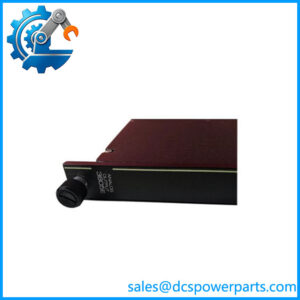
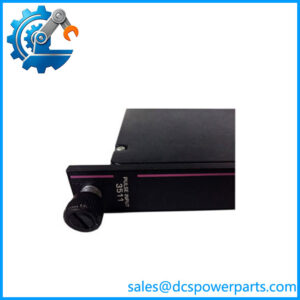
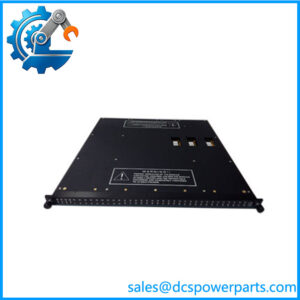
The TRICONEX 3607E is a 16-point TMR digital output module designed for Tricon safety-instrumented systems operating with nominal 48 VDC field loads. It is classified as a non-commoned digital output module, with a documented field-voltage range of 44–80 VDC and a maximum continuous output rating of 1 A per point. Each output has individual status indication, while the module provides PASS, FAULT, and ACTIVE diagnostic indications at the module level. Tricon documentation also specifies a dedicated 1.25 A fast-acting fuse per output on the field termination assembly.
For TRICONEX 3607E, the TMR architecture is the critical engineering characteristic. The module is part of the Tricon fault-tolerant I/O system rather than a conventional PLC output card. Its 16 output points are non-commoned, and the documented point isolation is 1500 VDC minimum. Output diagnostics include load/fuse monitoring, while diagnostic output testing can introduce a brief diagnostic pulse; the published specification gives a maximum diagnostic glitch duration of 2 ms, with 500 μs typical.
The TRICONEX 3607E is intended for systems in which 48 VDC discrete loads must be controlled while maintaining the fault-tolerance characteristics of the Tricon platform. Typical loads can include solenoids, relays, and other discrete field devices. Field termination is not an afterthought: Tricon documentation shows dedicated power, return, load, and fuse arrangements for each output point. That makes termination-panel selection and field wiring just as important as matching the 3607E catalog number.
Product Introduction
A 48 VDC safety output cannot be treated like an ordinary PLC transistor output. 3607E combines 16 non-commoned output points with TMR processing, individual point indication, and load/fuse diagnostics; the published rating is 1 A per point across a 44–80 VDC field range.
For a Triconex safety I/O replacement, confirm the termination panel, field voltage, output load, and Tricon system generation before commissioning. A physically compatible card is not necessarily electrically suitable for the installed load.
Key Technical Specifications
| Parameter | Value |
|---|---|
| Manufacturer | Triconex |
| Model | 3607E |
| Product Family | Tricon |
| Supported System | Tricon v9–v11 |
| Product Type | TMR Digital Output Module |
| Output Type | Digital / discrete |
| Number of Outputs | 16 |
| Output Configuration | Non-commoned |
| Nominal Voltage | 48 VDC |
| Voltage Range | 44–80 VDC |
| Maximum Current | 1 A per point |
| Surge Current | 5 A for 10 ms |
| Logic Power | <10 W |
| Load Leakage | 2 mA maximum |
| Point Isolation | 1500 VDC minimum |
| Field-Termination Fuse | 1.25 A fast-acting per output |
| Module Status | PASS / FAULT / ACTIVE |
| Point Status | Individual ON/OFF indication |
| Field Alarm | LOAD / FUSE |
| Diagnostic Toggle Rate | Every 100 ms |
| Diagnostic Glitch | 2 ms maximum; 500 μs typical |
| On-State Voltage Drop | <2 VDC typical @ 250 mA; <3 VDC maximum @ 1 A at backplane |
| Color Code | Light blue |
These values come from Tricon planning and installation documentation for the 3607E module.
Related Products
- 3604E — 16-point TMR non-commoned digital output module for 24 VDC applications. Its voltage range and current rating differ from the 3607E, making it the closer alternative when the field supply is 24 VDC rather than 48 VDC.
- 3603B — 16-point TMR digital output module for 120 VDC applications. It belongs to the same general Tricon DO family but is intended for a substantially higher field voltage.
- 3603E — 16-point TMR digital output version for 120 VDC with a commoned configuration. The commoning arrangement makes field wiring different from the non-commoned 3607E.
- 3601E — 16-point TMR digital output module for 115 VAC loads. It is appropriate for AC applications rather than the 48 VDC loads handled by 3607E.
- 3617E — 8-point TMR supervised digital output module for 48 VDC. It shares the 48 VDC voltage class but has half the number of output points and a supervised/commoned architecture.
- 3615E — 8-point TMR supervised, low-power digital output module for 24 VDC applications. It is intended for different load and supervision requirements.
- 3625A — 32-point TMR digital output family member for 24 VDC applications. Its point density is higher, but its field-voltage class is different from 3607E.
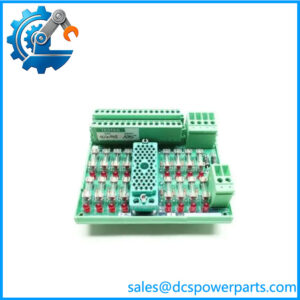
- 3607E field termination panel — The termination hardware must be matched to the 3607E’s 48 VDC, non-commoned output arrangement. Tricon documentation specifies individual field fusing and point-specific wiring.
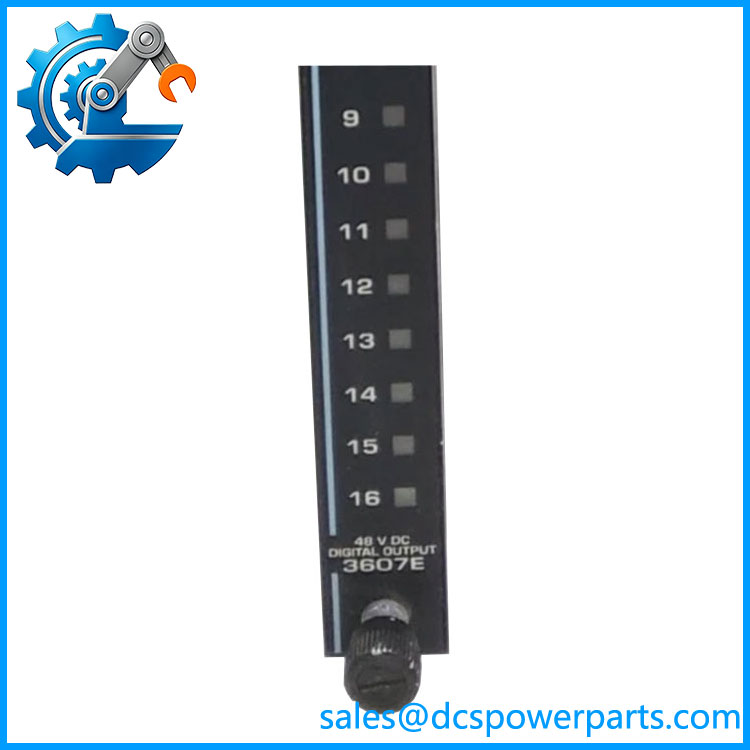
TRICONEX 3607E
Frequently Asked Questions
What is TRICONEX 3607E used for?
The 3607E is a 16-point, 48 VDC TMR digital output module for Tricon safety systems.
It is intended to control discrete field devices such as:
- Solenoids
- Relays
- Contactors
- Shutdown devices
- Other 48 VDC discrete loads
Its outputs are non-commoned, and the documented field-voltage range is 44–80 VDC.
Is TRICONEX 3607E a 48 VDC output module?
Yes. The nominal field voltage is 48 VDC, with a specified operating range of 44–80 VDC. Each point can handle up to 1 A, with a specified 5 A surge capability for 10 ms.
Do not substitute a 24 VDC Tricon output module simply because the mechanical format appears similar. The field supply is a fundamental selection parameter.
Can I use 3607E for a 24 VDC solenoid?
Not as a direct substitution.
The 3607E is specified for a 44–80 VDC field-voltage range. A conventional 24 VDC load falls outside that specified operating range. The 3604E is the Tricon family member intended for 24 VDC digital outputs.
Can I hot-swap the TRICONEX 3607E?
The Tricon platform supports online maintenance functions, but the answer should not be reduced to “yes” without checking the installed system.
Before removing a 3607E, verify:
- Tricon system version.
- I/O chassis configuration.
- Module status.
- Redundancy state.
- Field-load consequences.
- Termination-panel arrangement.
- Plant-approved maintenance procedure.
For a safety system, an online replacement procedure should be treated as a controlled maintenance activity, not routine PLC card removal.
Does 3607E have output diagnostics?
Yes. The module provides diagnostic coverage associated with its digital outputs, including load/fuse indication. The documented module status indicators are PASS, FAULT, and ACTIVE, while each output has an individual ON/OFF indicator.
The specification also identifies diagnostic output testing at a maximum toggle interval of every 100 ms and a diagnostic glitch duration of up to 2 ms.
This matters when the connected device is sensitive to short output pulses.
Does 3607E require individual field fuses?
Yes. Tricon documentation specifies one 1.25 A fast-acting fuse per output on the field termination assembly.
The field termination arrangement also provides the power and return connections associated with each output point. Do not assume an existing termination panel is suitable solely because it accepts a Tricon digital-output cable.
Can I replace 3607E with 3604E?
Only if the field application is being changed from the 3607E’s 48 VDC environment to the 3604E’s 24 VDC environment and the complete I/O design supports that change.
The two modules are both 16-point TMR, non-commoned digital-output modules, but their voltage classes differ: 3607E = 48 VDC nominal; 3604E = 24 VDC nominal.
That is an electrical-system change, not simply a module substitution.
How should a New Surplus 3607E be tested?
For a safety I/O module, a basic power-up check is insufficient.
Recommended acceptance procedure:
- Verify the exact 3607E model and hardware revision.
- Inspect the connector and module housing.
- Confirm compatibility with the installed Tricon system generation.
- Install it in a controlled Tricon test environment.
- Verify PASS, FAULT, and ACTIVE indications.
- Test all 16 output channels.
- Apply the correct 48 VDC field supply.
- Test representative loads at several current levels.
- Verify load/fuse diagnostics.
- Confirm output-state indication for every point.
- Check the expected diagnostic behavior.
- Inspect termination-panel fusing and wiring.
- Record module diagnostics and test results.
Procurement note: the most important acceptance criteria are not cosmetic condition or LED operation. Confirm the 48 VDC field range, 1 A/point capability, termination-panel compatibility, diagnostic behavior, and TMR system recognition before releasing the module for plant use.