Description
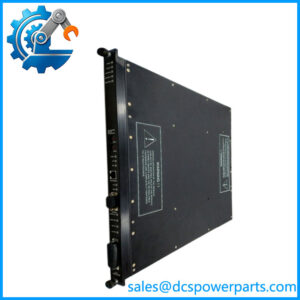
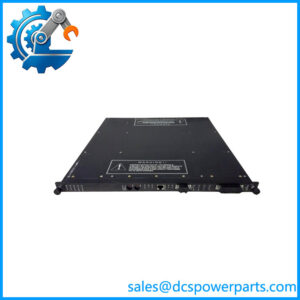
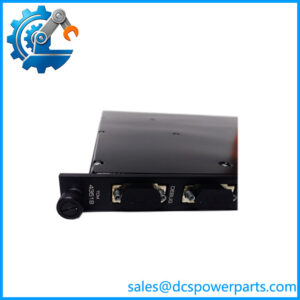
Triconex 3301S2 Digital Input Module
Product Overview
The Triconex 3301S2 is a 32-point TMR digital input module for the Triconex Tri-GP General Purpose control and safety platform. It monitors discrete 24 VDC field signals and supplies the resulting input states to the redundant processing architecture. The published Tri-GP documentation specifies 32 commoned input points, a nominal 24 VDC input, an operational range of 19.2–30 VDC, and an absolute maximum input voltage of 33 VDC.
At the signal level, each input uses a defined voltage threshold: 0–5 VDC is treated as the Off region, 6–14 VDC is the transition region, and 15–30 VDC is the On region. Input impedance is greater than 30 kΩ without the baseplate and approximately 3 kΩ with the baseplate installed. The input circuit has a time constant of 2.86 ms, corresponding to a -3 dB point of approximately 55 Hz. These figures are useful when checking field contact circuits, external relays, wiring resistance, and signal behavior rather than simply confirming that the source is nominally 24 VDC.
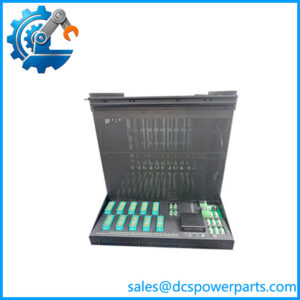
The Triconex 3301S2 is a Tri-GP TMR I/O component rather than a conventional PLC DI card. Its architecture uses triplicated I/O processing paths, with diagnostics and controller-level voting forming part of the overall high-integrity system. The standard installation uses the 2301S2 digital-input baseplate, while high-voltage applications use the 2302S2 baseplate arrangement with the applicable solid-state relay input termination hardware.
For a legacy installation, procurement should therefore verify the platform, baseplate, termination method, field voltage, module revision, and configuration before substitution. A 32-point 24 VDC rating alone does not establish interchangeability.
Product Introduction
Thirty-two commoned inputs make the 3301S2 a high-density discrete-input option for Tri-GP systems. It is intended for signals such as permissives, status contacts, shutdown indications, interlocks, alarms, and other binary field conditions where the I/O architecture requires TMR processing.
For legacy replacement work, the important distinction is between the normal 2301S2 direct-termination arrangement and the 2302S2 high-voltage configuration. The same module number does not eliminate the need to verify the installed field-interface hardware.
Key Technical Specifications
| Parameter | Value |
|---|---|
| Product Model | 3301S2 |
| Manufacturer / Brand | Triconex / Invensys |
| Product Series | Tri-GP General Purpose |
| Product Type | TMR Digital Input Module |
| Number of Inputs | 32 |
| Input Arrangement | Commoned |
| Nominal Input Voltage | 24 VDC |
| Operational Voltage Range | 19.2–30 VDC |
| Absolute Maximum Input Voltage | 33 VDC |
| Absolute Maximum Reverse Input Voltage | -0.6 VDC |
| Input Delay | ON-to-OFF or OFF-to-ON; time constant 2.86 ms |
| Input Bandwidth | -3 dB at approximately 55 Hz |
| Input Impedance, Module Only | >30 kΩ |
| Input Impedance, With Baseplate | Approximately 3 kΩ |
| Input Power | 0.2 W/point at 24 VDC; 0.5 W/point at 33 VDC |
| Input Threshold — Off | 0–5 VDC |
| Input Threshold — Transition | 6–14 VDC |
| Input Threshold — On | 15–30 VDC |
| Diagnostic | Force-to-Value Diagnostic (FVD) |
| FVD Test Duration | <2 ms/test |
| Standard Baseplate | 2301S2 |
| High-Voltage Baseplate | 2302S2 |
| Architecture | TMR |
The technical guide and Tri-GP planning documentation identify the 3301S2 as the standard 32-point commoned 24 VDC DI module.
Major Features / Practical Advantages
32-point discrete input density
The 3301S2 provides 32 digital input points in a single Tri-GP I/O position. The inputs are commoned, so this should not be represented as a module containing 32 individually galvanically isolated field circuits.
That distinction becomes important during replacement. If the existing installation uses separately isolated field interfaces, the isolation may come from external termination equipment rather than from the 3301S2 itself.
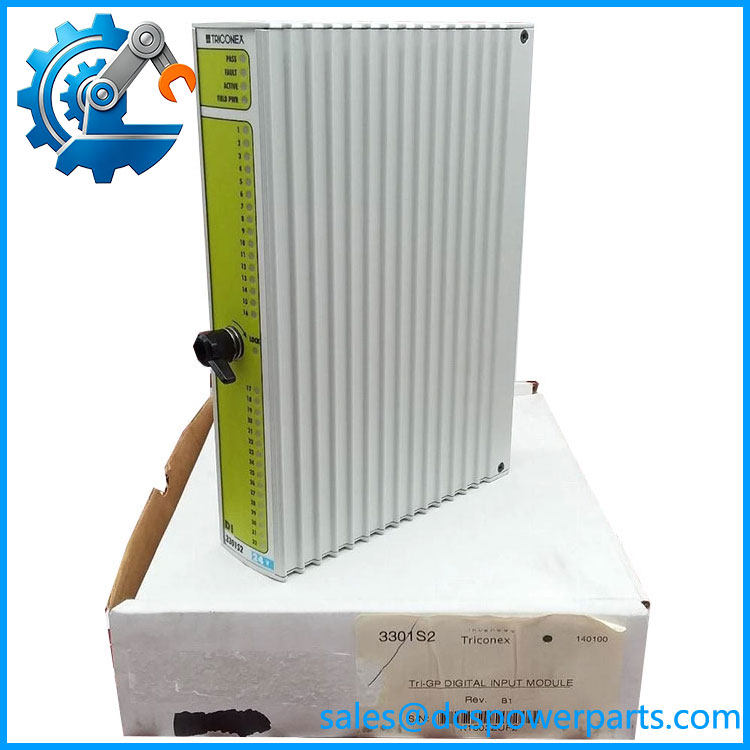
TRICONEX-3301S2
24 VDC field interface
The nominal input voltage is 24 VDC, with a documented operational range of 19.2–30 VDC. The absolute maximum input voltage is 33 VDC.
This covers the normal 24 VDC discrete instrumentation environment, but engineers should still check the actual voltage at the module terminals. Long cable runs, contact resistance, external relays, barriers, and field distribution problems can produce voltage conditions that are very different from the nominal power-supply rating.
Defined input thresholds
The module divides its input behavior into three voltage regions:
- 0–5 VDC: Off
- 6–14 VDC: Transition
- 15–30 VDC: On
The 6–14 VDC transition region is particularly relevant when diagnosing marginal field signals. A meter reading somewhere in this region should not automatically be interpreted as a stable logical state.
TMR signal processing
The Tri-GP digital-input architecture uses three independent electronic processing channels. Each channel processes the field-input data, while the redundant controller architecture performs voting before the application uses the resulting input state.
That architecture is fundamentally different from a standard single-path PLC DI card. The 3301S2 should therefore be selected based on its Tri-GP system compatibility, not simply because another 32-point 24 VDC DI module appears electrically similar.
Force-to-Value Diagnostic
The documented diagnostic method is Force-to-Value Diagnostic (FVD), with a test duration of less than 2 ms per test. FVD forms part of the module’s diagnostic coverage and allows the system to verify the input acquisition path rather than relying solely on normal field transitions.
For maintenance teams, this matters when troubleshooting a channel that appears electrically correct but does not behave correctly within the controller’s diagnostic architecture.
Standard and high-voltage installation options
The standard Tri-GP digital-input configuration uses the 2301S2 Digital Input Baseplate. The planning guide also identifies the 2302S2 High-Voltage DI Baseplate Kit, which includes the applicable external-termination equipment and interface cables for high-voltage digital-input applications.
Do not assume that a 3301S2 installation with a 2301S2 baseplate can simply be converted to a high-voltage arrangement by changing field wiring. The complete termination architecture must match the application.
Commoned field inputs
The commoned architecture is one of the most important specifications to preserve during a retrofit. Individual channel isolation should not be assumed. The module’s TMR electronic-channel isolation is a separate issue from galvanic isolation between individual field circuits.
Input response characteristics
The 2.86 ms time constant and approximately 55 Hz -3 dB response provide a defined input filtering characteristic. This helps prevent very fast electrical disturbances from being interpreted identically to normal process-state changes, while still providing appropriate response for conventional discrete field devices.
Related Products
- 2301S2 — Standard Tri-GP digital-input baseplate for the 3301S2, used for typical direct-termination applications.
- 2302S2 — High-voltage digital-input baseplate kit for the 3301S2, incorporating the external termination arrangement required for higher-voltage field inputs.
- 5301S2 — Digital Input TriPak containing one 3301S2 module and one 2301S2 digital-input baseplate.
- 5302S2-F — High-voltage Digital Input TriPak based on the 3301S2 and high-voltage baseplate arrangement.
- 3311S2 — High-resolution 32-point digital-input module. It retains the 24 VDC/commoned architecture but provides substantially faster input response than the 3301S2.
- 3351S2 — 32-point TMR analog-input module for continuous process signals rather than discrete states.
- 3361S2 — Combined analog-input/digital-input module providing 16 analog and 16 digital points. It is useful where mixed I/O density is required rather than 32 digital inputs.
- 3401S2 — 16-point TMR digital-output module. It drives field devices rather than receiving discrete field states.
- 3411S2 — 16-point supervised digital-output module. It is intended for supervised output applications and should not be treated as a DI substitute.
FAQ
Can I replace a 3301S2 with a 3311S2?
Not automatically. Both are 32-point commoned 24 VDC Tri-GP digital-input modules, but the 3311S2 is the high-resolution/high-speed version. Its input time constant is approximately 0.13 ms with a -3 dB point around 1.2 kHz, compared with approximately 2.86 ms and 55 Hz for the 3301S2.
A substitution should therefore be checked against the system configuration, application requirements, and installed baseplate.
Can I hot-swap the 3301S2?
The Tri-GP technical documentation identifies DI modules as supporting a hot-spare module and mechanical keying to prevent installation in an incorrectly configured baseplate. That does not mean every live replacement is automatically permissible. Follow the approved maintenance procedure for the installed system before removing an energized module.
Is the 3301S2 individually isolated on all 32 inputs?
No. The published specification identifies the inputs as 32 commoned points. Do not confuse the triplicated electronic processing channels with 32 individually isolated field inputs.
What voltage does the 3301S2 accept?
The nominal input is 24 VDC, with an operational range of 19.2–30 VDC and an absolute maximum input voltage of 33 VDC. The reverse-input absolute limit is -0.6 VDC.
Does the 3301S2 support high-voltage digital inputs?
The 3301S2 itself is documented as a 24 VDC DI module. Tri-GP high-voltage digital-input installations use the 2302S2 high-voltage baseplate kit and associated external termination equipment. The baseplate/termination architecture is therefore part of t