Description
Product Introduction (Non-Templated)
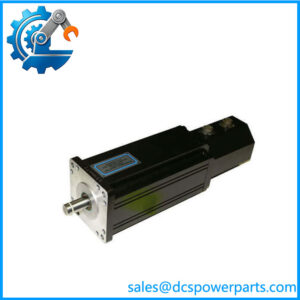
Axis binding on a high-speed pick-and-place machine at two in the morning will halt an entire production run faster than a blown main breaker. Precision motion control systems demand miniature actuators capable of executing micro-stepping profile corrections without thermal runaway—which is precisely where this compact servo motor enters the picture.
Maintenance technicians swapping out tired drives on legacy automated equipment rely on this exact motor frame to restore tight positional tolerances. Matching the exact suffix ensures the internal encoder feedback and holding brake circuits integrate smoothly into the existing amplifier loop without requiring software parameter rewrites.
DCS PLC Servo Drive Supplier | Saul Electrical+ 1
Key Technical Specifications
- Manufacturer: Sanyo Denki
Servo Supplier
- Series: SANMOTION P3 Series
www.dcssaul.com
- Rated Output Power: 100 W
www.xydplcdcs.com+ 1
- Voltage Class: 100 VAC
www.xydplcdcs.com+ 1
- Rated Current: 2.7 A
DCS PLC Servo Drive Supplier | Saul Electrical
- Rated Speed: 3,000 RPM
DCS PLC Servo Drive Supplier | Saul Electrical+ 1
- Maximum Speed: 4,500 RPM
DCS PLC Servo Drive Supplier | Saul Electrical+ 1
- Holding Brake: Equipped (24 VDC brake supply)
DCS PLC Servo Drive Supplier | Saul Electrical+ 1
- Shaft Diameter: 8 mm
DCS PLC Servo Drive Supplier | Saul Electrical+ 1
- Operating Temperature: 0 °C to +40 °C (+32 °F to +104 °F)
Servo Supplier
- Weight: ~0.65 kg (1.43 lb)
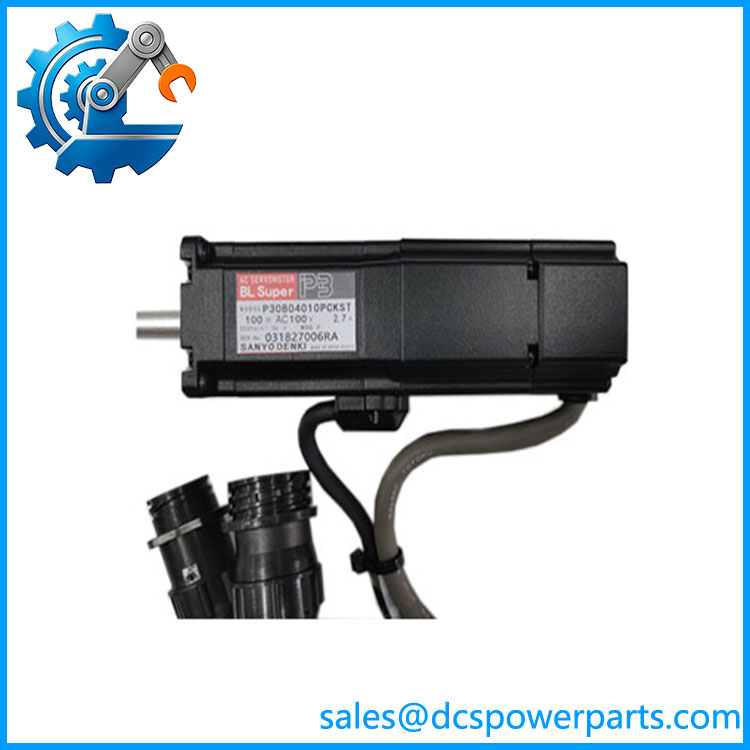
P30B04010PCKST
Application Scenarios & Pain Points
When microscopic debris jams a ball screw on a cleanroom assembly line, unexpected motor stall currents can fry an unrated driver circuit before safety interlocks can react.
- Semiconductor Handling: Deployed on multi-axis wafer transfer arms where sub-millimeter placement accuracy prevents costly substrate damage.
www.xydplcdcs.com
- Medical Packaging Machinery: Installed in automated blistering stations demanding rapid-fire indexing under strict thermal limits.
- Electronics SMT Assembly: Used on high-speed component feeder heads to execute high-frequency reciprocating motion profiles.
A precision tooling facility in Ohio experienced frequent axis positioning drift on an aging PCB router during long production shifts. Swapping the failing thermal-fatigued motor with this verified Sanyo Denki unit stabilized the feedback loop instantly, eliminating scrap parts and saving thousands in unplanned downtime.
www.xydplcdcs.com
Related Products
- Sanyo Denki P30B04010 (Standard Variant): Base 100W motor model without the specific brake or connector configuration of the PCKST suffix.
- SANMOTION P3 Series Amplifier: Compatible motion drive unit required to feed closed-loop commutation currents to the motor windings.
- Panasonic MSMD011G1U: Alternative 100W low-inertia servo motor used in similar compact multi-axis frame layouts.
- Mitsubishi HF-KP13: 100W AC servo motor option often found in comparable Asian-built machinery cells.
- Yaskawa SGMAH-01A1A21: 100W Sigma-II series compact servo motor sharing similar physical flange dimensions.
The Engineer’s Guide: Field Pitfalls to Avoid
- WARNING: Voltage Class Mismatch. Assuming a 100 VAC motor variant can safely accept a raw 200V-class amplifier output will instantly destroy the internal stator windings. How to avoid: Cross-reference the nameplate voltage class against the drive output parameters before applying power.
- WARNING: Forcing Misaligned Couplings. Hammering a tight mechanical coupling onto the delicate 8 mm steel shaft bends the internal rotor assembly and ruins encoder bearing alignment. How to avoid: Heat thermal shrink fits gently or use precision pullers, ensuring zero axial shock load hits the shaft tip.
- WARNING: Unprotected Brake Circuit Wiring. Connecting the 24VDC holding brake directly to unsuppressed relay lines generates inductive voltage spikes that can corrupt controller logic. How to avoid: Install a dedicated flyback diode across the brake coil circuit and separate the brake wiring bundle from high-frequency motor power leads.
Frequently Asked Questions (FAQ)
- Can I substitute a standard non-brake motor variant with this PCKST model directly?Well, technically the physical frame matches, but the presence of the integrated 24VDC holding brake means your machine controller must supply an auxiliary brake release signal and wiring harness.
DCS PLC Servo Drive Supplier | Saul Electrical
- What are the primary indicators that the encoder feedback has failed inside this motor?Typical symptoms include sudden overcurrent fault codes on the amplifier, erratic jittering at zero speed, or immediate position-following error trips upon startup.
DCS PLC Servo Drive Supplier | Saul Electrical
- Is this 100W motor compatible with modern network-enabled servo amplifiers?Compatibility depends entirely on whether your amplifier supports the specific encoder feedback protocol wired into the motor’s terminal connector. Always check your drive compatibility chart.
www.xydplcdcs.com
- What type of documentation accompanies a verified surplus or refurbished unit?Reliable industrial suppliers provide detailed insulation megger test results, winding resistance verification logs, and a standard 12-month operational warranty.
PLC Module,DCS Controller,ABB,GE,BENTLY
- How can I test the motor windings manually before mounting it to the mechanical load? Disconnect all cables and measure phase-to-phase resistance using a calibrated digital multimeter; balanced ohms across all three phases confirm healthy stator coils, while an isolation megger test verifies zero leakage to the frame ground.