Description
Product Introduction (Non-Templated)
Unexpected voltage drops across safety output channels can force an entire emergency shutdown loop into a spurious trip state, halting critical hydrocarbon processing units mid-shift. Keeping high-integrity output circuits stably energized requires precise voltage routing right above the termination assemblies—which is precisely where this hardware steps in.
Engineers handling safety system lifecycle upkeep or emergency control room retrofits rely on this specific distribution assembly to manage loop power cleanly. Integrating it into existing architectures prevents common ground-reference drift during heavy switching loads, maintaining the strict fault-tolerance required in modern high-availability environments.
Key Technical Specifications
- Voltage Range: 22 Vdc to 120 Vdc
- Supply Current: 60 A max
- Mounting Type: DIN rail (mounted above relevant I/O connectors)
- Conductor Clamping Range: 0.5 mm² to 2.5 mm²
- Operating Temperature: 0 °C to +60 °C (+32 °F to +140 °F)
- Storage Temperature: -25 °C to +70 °C (-13 °F to +158 °F)
- Relative Humidity: 10% to 95% non-condensing
- Dimensions (HxWxD): 70 mm x 90 mm x 50 mm
- Weight: 106 g (0.23 lb)
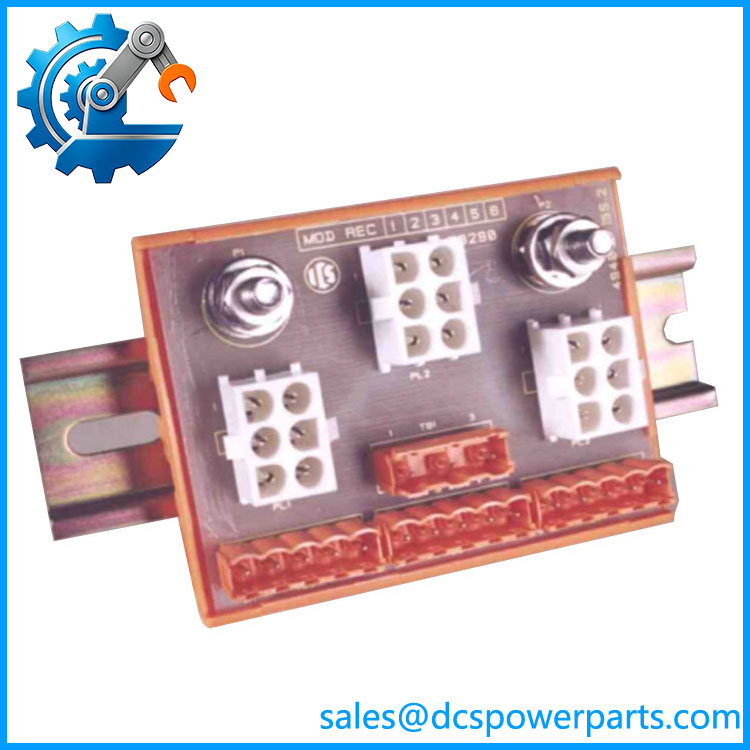
T8290C
Application Scenarios & Pain Points
When an offshore production platform experiences salt-air corrosion on legacy terminal blocks, secondary power distribution failures can mask true field input states and endanger personnel.
- Petrochemical Refining: Deployed across emergency blowdown valve assemblies where a transient voltage sag on the 24Vdc rail risks failing a partial stroke test.
- Power Generation: Used inside turbine emergency trip cabinets to route isolated logic power cleanly to redundant digital output cards.
- Pipeline Compression: Installed on remote compressor station racks to handle local power distribution feeding high-draw solenoid actuators.
A natural gas processing plant in West Texas faced an unexpected DC bus fluctuation during a severe cold snap, threatening a total facility lockout. Swapping out a degraded distribution block with a verified unit restored stable loop voltage to the safety rack within an hour, avoiding a multi-million-dollar flaring event.
Related Products
- T8451: Trusted 24Vdc Digital Output Module (32-channel)—directly powered and supplied by this PDU variant.
- T8471: Trusted 120Vdc Digital Output Module—alternative high-voltage output card utilizing the upper limits of the T8290C voltage spectrum.
- T8110B: Trusted TMR Main Processor Module—manages core system diagnostics adjacent to the power and I/O rails.
- T8292: Trusted Power Distribution Unit (Alternative variant)—configured with integrated Miniature Circuit Breakers (MCB) for alternate circuit protection layouts.
- T8431: Trusted TMR Analog Input Module—complementary card type used in the same safety chassis ecosystem for analog monitoring.
- T8311: Trusted Communications Module (TCM)—handles network traffic and peer-to-peer data links across the safety network.
- T8461: Trusted 24/48Vdc Digital Output Module—another high-density output card sharing similar physical DIN-rail layout requirements.
The Engineer’s Guide: Field Pitfalls to Avoid
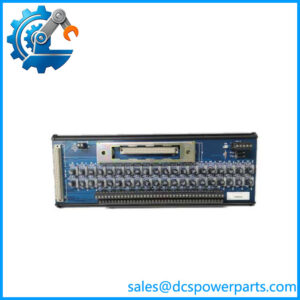
- WARNING: Incorrect Wire Clamping Range. Squeezing conductors outside the 0.5 mm² to 2.5 mm² specification range creates high-resistance joints that overheat under load. How to avoid: Strip wires precisely to length and use calibrated ferrules to guarantee solid mechanical retention in the white and orange terminal blocks.
- WARNING: Mixed Voltage Bus Overload. Accidentally applying 120Vdc sources into terminals wired for lower 24Vdc logic loads can instantly fry downstream channel components. How to avoid: Double-check your loop drawings and verify connector color codes—white for 24–120V source feeds, orange for the 0V reference—prior to energizing the cabinet main breaker.
- WARNING: Hot-Work ESD Transients. Handling the unit near unshielded backplane components without proper grounding can inject static charges into active safety racks. How to avoid: Always wear a tested wrist strap and ensure the DIN rail itself has a low-impedance earth bond before snapping the module into position.
Frequently Asked Questions (FAQ)
- Can I hot-swap this power distribution unit while the safety cabinet is live? Well, technically the chassis supports modular maintenance, but pulling power distribution blocks under load risks sparking or dropping critical channel power. It is always safer to isolate the specific loop branch or follow strict plant hot-work safety procedures.
- What is the exact functional difference between the white and orange terminal connectors?The white connectors handle the incoming 24Vdc to 120Vdc sourcing power feeds, while the orange connectors act as the dedicated 0V reference returns for the distribution network.
- Is this part compatible with older legacy non-C revisions of the Trusted system? Compatibility depends on your specific chassis backplane batch, though standard form factors match. Check your system’s hardware configuration file in TriStation to ensure firmware and physical power ratings align.
- What verification documentation comes with a surplus or factory-sealed unit?Certified suppliers typically provide full traceability paperwork, compliance certificates, and a standard 12-month operational warranty covering manufacturing defects.
- How do I verify if a failure is coming from the T8290C rather than the output module? Measure the voltage directly across the white input and orange reference terminals using a calibrated multimeter. If the source voltage reads nominal but downstream output cards show a fault, the issue likely resides in the module configuration or internal fusing rather than this distribution block.