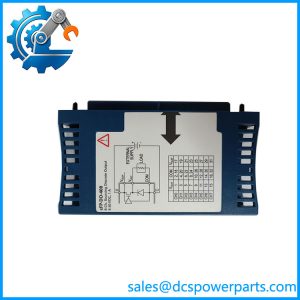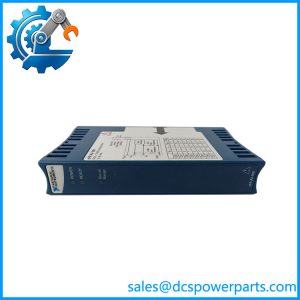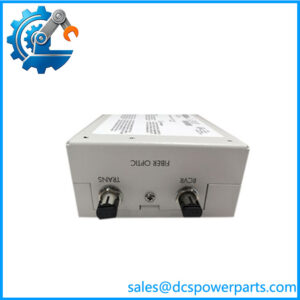
Description
Key Technical Specifications
| Parameter | Specification |
|---|---|
| Product Model | |
| Manufacturer | National Instruments (NI) |
| Product Type | 4-Channel Universal Input Module |
| System | NI SCXI |
| Analog Input Channels | 4 |
| Output Range | ±5 V |
| Gain | 1, 2, 5, 10, 20, 50, 100, 200, 500, 1,000, 2,000 |
| Gain Accuracy | 0.15% of full scale |
| Input Resistance | 1 GΩ normal operation |
| Input Bias Current | ±80 pA |
| Filtering | 4 Hz or 10 kHz, jumper-selectable, 3-pole RC |
| Input Protection | 250 Vrms maximum, continuous |
| Channel Isolation | 250 Vrms continuous channel-to-channel / channel-to-earth |
| RTD Excitation | 0.15 mA ±0.04% or 0.45 mA ±0.2% |
| Strain Gauge Excitation | 3.333 V ±0.04% or 10 V ±0.2% |
| Bridge Support | Quarter-, half-, and full-bridge |
| Operating Temperature | 0 to 50°C |
| Storage Temperature | -20 to 70°C |
| Relative Humidity | 10–90% noncondensing |
| Power Dissipation | 7.5 W maximum |
| Dimensions | 3.0 × 17.2 × 18.8 cm |
| Weight | 667.3 g |
| Rear Connector | 50-pin male ribbon cable |
| Front Connector | 32-pin DIN C |
| Safety | IEC 61010-1, EN 61010-1, UL 61010-1, CSA 61010-1 |
The specifications above are based primarily on the NI user manual.
Product Introduction
The National Instruments is a four-channel universal input module for the NI SCXI data acquisition platform, designed for measurement systems that require signal isolation, selectable amplification, filtering, and sensor excitation. Each channel can accommodate a range of sensor types, including strain gauges, RTDs, thermocouples, millivolt sources, voltage signals, and current signals. NI also supports multiplexed and parallel operating modes, allowing the module to be integrated into larger SCXI measurement systems.
The module uses independently configurable isolation amplifiers with jumper-selectable gains from 1 through 2,000 and selectable 4 Hz or 10 kHz low-pass filtering. Its internal excitation and bridge-completion functions make it particularly useful for older laboratory, test-bench, machinery measurement, and industrial data acquisition installations where the original SCXI architecture must remain operational.
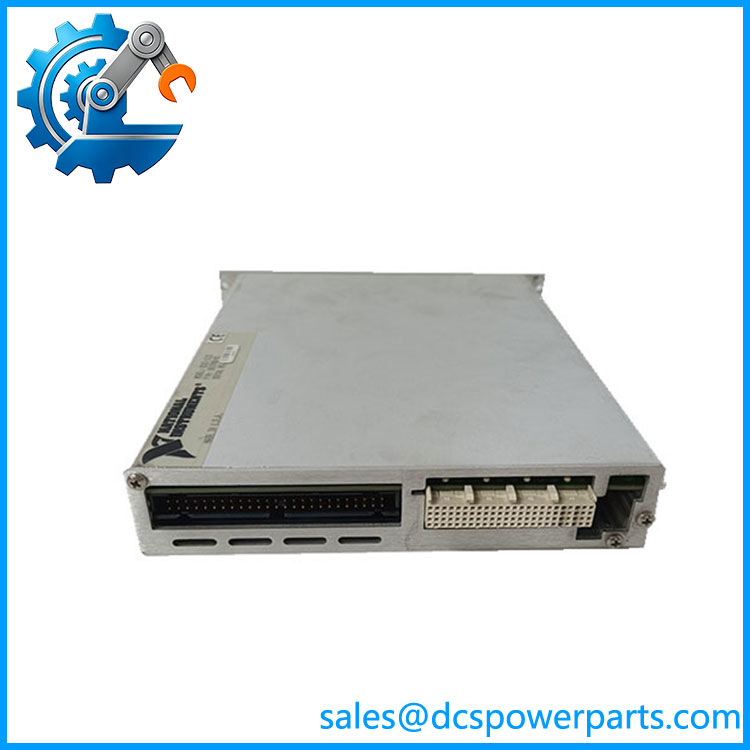
SCXI-1121
Application Scenarios & Field Pitfalls — The Engineer’s Perspective
Engineering Pain Point
The is typically encountered when an existing measurement system still depends on the SCXI platform and replacing the entire acquisition architecture would create unnecessary engineering and software work. The real issue is usually not whether the module can read a sensor; it is whether the existing gain, filter, excitation, terminal block, cabling, and DAQ interface configuration can be reproduced correctly.
For replacement work, treat the as a configured measurement component rather than a generic four-channel analog input card. Its approximately 45 user-configurable jumpers control gain, filtering, excitation, bridge completion, and signal referencing, so the configuration of the failed unit should be documented before installing a replacement.
Typical Applications
- Strain measurement: Quarter-, half-, and full-bridge strain-gauge circuits with selectable excitation.
- RTD measurement: Resistance temperature measurements using the module’s internal excitation current.
- Thermocouple and low-level measurement: Isolated amplification of low-level sensor signals before acquisition by the DAQ hardware.
- Industrial test and research systems: Legacy SCXI installations used for machinery testing, laboratory instrumentation, validation rigs, and multi-sensor acquisition.
- Multi-channel SCXI systems: Multiple modules can be multiplexed into a DAQ channel to increase the number of analog signals handled by the acquisition system.
Technical Pitfalls to Avoid
1. Do not treat the module as a plug-and-play ±5 V analog card.
The gain and filtering are jumper-configured. A replacement with different jumper positions can produce completely different measurement scaling or bandwidth.
2. Check the terminal block and sensor wiring.
The works with several SCXI terminal assemblies, including configurations used for cold-junction compensation. NI documentation identifies SCXI-1320, SCXI-1321, and SCXI-1328 as compatible terminal blocks for CJC applications.
3. Verify the excitation and bridge configuration.
For strain-gauge and RTD applications, the excitation settings directly affect the measurement circuit. The documented strain-gauge excitation values are 3.333 V or 10 V, while RTD excitation can be configured for 0.15 mA or 0.45 mA.
4. Check the acquisition software and legacy driver environment.
The is an older SCXI platform component and NI currently lists the model as no longer available. A replacement module does not by itself resolve compatibility problems caused by an aging DAQ controller, cabling, terminal block, or software stack.
Related Products
- SCXI-1120 — Isolated analog input module for voltage and current measurement; useful where the application does not require the ‘s integrated sensor excitation and bridge functions.
- SCXI-1122 — Multiplexed isolated analog input module intended for applications requiring a different channel architecture.
- SCXI-1140 — Simultaneous sample-and-hold module suited to applications where synchronized acquisition across channels is important.
- SCXI-1100 — General-purpose analog input module for higher-channel-count SCXI signal acquisition.
- SCXI-1320 — SCXI terminal block commonly used with the for signal connection and sensor applications, including CJC configurations.
- SCXI-1321 — Terminal block option supporting installations and thermocouple-related measurement configurations.
- SCXI-1328 — Alternative SCXI terminal block with integrated temperature sensing for applicable thermocouple configurations.
- SCXI-1000 — SCXI chassis platform used to house and interconnect SCXI modules.
- SCXI-1001 — Higher-capacity SCXI chassis option for larger multi-module acquisition systems.
Procurement Note
For a replacement , the most important checks are the complete part number, board revision, jumper configuration, terminal block type, installed SCXI chassis, DAQ interface, and existing software environment. NI’s official product page identifies the as no longer available, so a replacement should be evaluated against the original system configuration rather than substituted solely by channel count.