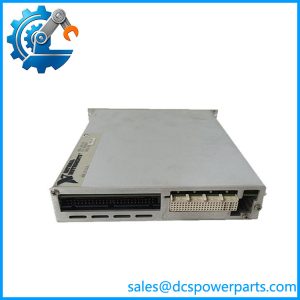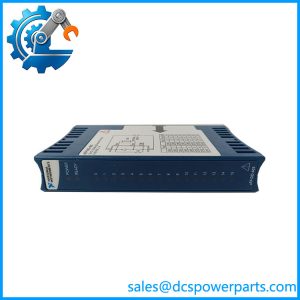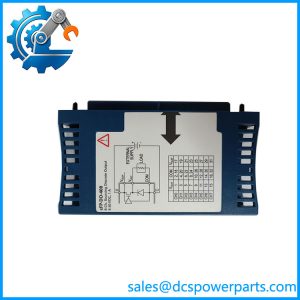
Description
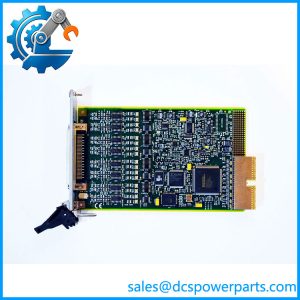
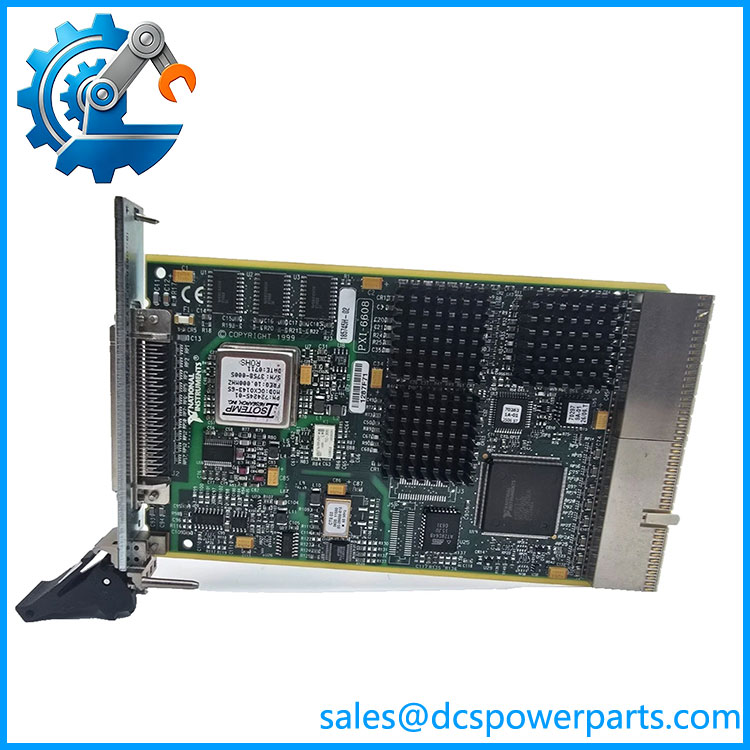
NI PXI-6608 Product Description
Key Technical Specifications
| Parameter | Specification |
|---|---|
| Manufacturer | National Instruments |
| Model | PXI-6608 |
| Product Type | PXI Counter/Timer Module |
| Counter/Timers | 8 up/down counter/timers |
| Counter Resolution | 32-bit |
| Maximum Count | 4,294,967,295 |
| Maximum Counter Timebase | 80 MHz |
| Internal Timebases | 80 MHz, 20 MHz, 100 kHz |
| Precision Reference | 10 MHz OCXO |
| OCXO Stability | 75 ppb over one year |
| Digital I/O | 32 channels |
| Digital I/O Compatibility | TTL/CMOS |
| Digital I/O Transfer | Static |
| Digital Input Impedance | 25 kΩ to 500 kΩ |
| Counter Functions | Event count, period, frequency, pulse width, encoder, pulse generation |
| Encoder Modes | X1, X2, X4 quadrature |
| External Base Clock | 0–20 MHz |
| Connector | 68-pin SCSI |
| Bus | PXI / CompactPCI |
| GPS Synchronization | Supported with suitable GPS timing input |
| Lifecycle | No longer available |
The NI 660x specification identifies the PXI-6608 as having eight 32-bit up/down counter/timers and 32 TTL/CMOS-compatible digital I/O channels. Counter inputs include Gate, Source, HW_Arm, Aux, A, B, and Z functions, allowing the board to handle encoder and timing applications beyond simple event counting.
Product Introduction
The NI PXI-6608 is a precision counter/timer module designed for PXI-based automated test, motion measurement, encoder acquisition, frequency measurement, and timing applications. Its eight 32-bit counter/timers can perform event counting, period and pulse-width measurement, frequency measurement, pulse generation, pulse-train generation, and quadrature encoder position measurement. It also provides 32 static TTL/CMOS digital I/O channels.
The defining feature of the NI PXI-6608 is its 10 MHz oven-controlled crystal oscillator. NI documents the OCXO as having 75 ppb stability over one year, and the module can drive the PXI backplane clock when installed in the appropriate PXI timing position. This makes the board useful when several measurement modules must share a stable timing reference rather than relying only on the standard PXI chassis clock.
PXI-6608
Application Scenarios & Field Pitfalls — The Engineer’s Perspective
Engineering Pain Point
A counter/timer card is easy to misclassify during replacement because it may appear to be another digital I/O board. The PXI-6608 is different: its primary value comes from hardware timing, counter resources, encoder functions, and the OCXO reference. Replacing it with a general-purpose digital I/O module can leave the test application without the timing hardware it actually depends on.
Typical Applications
- Rotary encoder measurement — X1, X2, and X4 quadrature position measurement.
- Frequency and period measurement — tachometer, pulse-frequency, and rotating-equipment test applications.
- Motion-control test — pulse generation, event counting, and position-related measurements.
- Manufacturing test systems — deterministic timing and synchronization between multiple PXI instruments.
- GPS-referenced measurement — synchronization of the PXI-6608 real-time clocks to an external GPS timing source. NI documents timing accuracy down to approximately 400 ns when the module is combined with a suitable GPS receiver.
Technical Pitfalls
1. The PXI-6608 is not an analog measurement card.
It does not replace modules such as the PXI-4461 simply because both are PXI instruments. The 6608 is intended for counter/timer, timing, encoder, and digital I/O functions.
2. The OCXO can be a critical part of the test architecture.
NI documents the 10 MHz OCXO at 75 ppb stability over one year and allows it to be used as the PXI backplane clock. If the original system depends on the 6608 as its timing reference, removing the board can affect synchronization across other PXI instruments.
3. PXI slot position may matter.
The PXI-6608 can override the PXI CLK10 signal. NI specifically identifies slot 2/star-trigger positioning when the OCXO is used to provide the high-stability clock to the PXI backplane. Check the original chassis slot arrangement before relocating the module.
4. Do not confuse 32 digital I/O channels with 32 counter channels.
The module has eight counter/timers and 32 static digital I/O channels. The digital I/O resources do not provide the same hardware timing functionality as the counter subsystem.
5. Encoder wiring must match the configured counter mode.
The counter subsystem supports X1, X2, and X4 quadrature encoding with Channel Z reloading. A replacement should therefore be checked against the application’s encoder configuration, signal routing, and indexing requirements rather than only its channel count.
6. GPS synchronization requires external timing equipment and software support.
The PXI-6608 itself does not contain a GPS receiver. NI’s documented GPS application uses an external receiver capable of supplying PPS and/or DC-level IRIG-B, together with appropriate NI-DAQ software support.
7. Legacy software is a procurement issue.
NI currently lists the PXI-6608 as no longer available. For an existing test station, verify the chassis controller, operating system, NI-DAQ/DAQmx environment, LabVIEW application, configuration files, and driver compatibility before replacing a failed unit.
8. Calibration matters when frequency accuracy is important.
The OCXO’s stability specification should not be interpreted as the total measurement uncertainty of an installed test system. External reference accuracy, counter configuration, measurement interval, signal quality, cabling, and calibration condition all contribute to the final result.
Related Products
- NI PXI-6602 — same general NI 660x counter/timer family with eight 32-bit counter/timers, but without the PXI-6608’s precision OCXO timing feature.
- NI PCI-6602 — PCI implementation of the 6602 counter/timer architecture.
- NI PCI-6601 — four-channel counter/timer device for applications requiring fewer counter resources.
- NI PCIe-6612 — newer PCI Express counter/timer platform with a different bus architecture.
- NI PXIe-6612 — PXIe counter/timer module for newer PXIe-based systems.
- NI PXIe-6614 — higher-channel-count PXIe counter/timer hardware.
- NI PXI-6652 — PXI timing and synchronization module; it serves a different role from the 6608 but may appear in systems requiring shared timing.
- NI PXI-6653 — PXI timing/synchronization hardware for multi-instrument timing applications.
Procurement note: For a replacement PXI-6608, record the complete part number, hardware revision, chassis model, slot position, connector/cable assembly, encoder or pulse signal type, counter configuration, software/driver version, and whether the OCXO is being used as the PXI backplane reference. The OCXO function is one of the main reasons a legacy PXI-6608 may still be retained in an established test platform.