Description
Product Overview
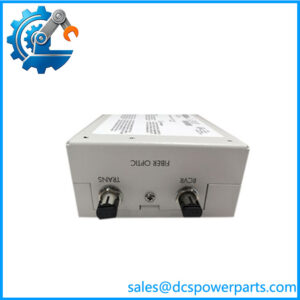
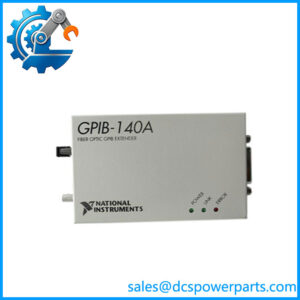
National Instruments GPIB-140A 186135G-01 is a fiber-optic extender designed to extend IEEE-488/GPIB communication beyond the practical limitations of conventional copper GPIB cabling. Rather than converting GPIB into a conventional Ethernet or serial network, the GPIB-140A preserves the GPIB communication environment while using optical fiber as the long-distance transmission medium. This makes NI GPIB-140A 186135G-01 useful when test instruments must be separated physically from the controlling computer or instrumentation rack.
The primary value of National Instruments GPIB-140A is the combination of long-distance communication and galvanic isolation. Optical transmission removes the direct electrical connection between the two GPIB segments, which can be valuable in test systems where ground-potential differences or electrical noise interfere with conventional copper communication. The unit is intended for applications such as automated test equipment, scientific instrumentation, production test, and distributed measurement systems. Available technical records identify the GPIB-140A as a fiber-optic GPIB extender, with 186135G-01 being one of the associated NI part numbers.
For engineers maintaining an existing IEEE-488 test system, NI GPIB-140A 186135G-01 is more accurately considered a communication infrastructure component than a data-acquisition card. It does not replace a GPIB controller or measurement instrument; instead, it provides the optical link between GPIB segments. The exact electrical version must be checked before procurement because the 186135G-01 suffix identifies a particular hardware/power configuration.
Technical Specifications
| Parameter | Specification |
|---|---|
| Manufacturer | National Instruments |
| Model | |
| Part Number | 186135G-01 |
| Product Type | Fiber-Optic GPIB Extender |
| Bus Standard | IEEE-488 / GPIB |
| Transmission Medium | Fiber optic |
| Communication Architecture | GPIB-to-GPI optical extension |
| Input Voltage | 120 VAC only for 186135G-01 |
| Primary Function | Long-distance GPIB communication extension |
| Electrical Isolation | Provided through optical transmission |
| Typical Use | ATE, instrumentation, laboratory test, production test |
| Series | NI GPIB interface / extender family |
| Lifecycle | Legacy / discontinued hardware |
The 120 VAC-only specification is specifically associated with the 186135G-01 version in an available parts listing. Other part numbers exist, so the suffix should be retained when specifying a replacement.
Some secondary sources quote different maximum fiber distances and transmission figures for the . Because those figures vary between listings, they should not be treated as interchangeable specifications without the applicable NI manual for the exact hardware revision.
Main Features and Advantages
Fiber-Optic GPIB Extension
The addresses one of the practical limitations of IEEE-488 systems: the relatively short distance available with conventional GPIB cables. By moving the communication link onto optical fiber, the instruments can be physically separated from the controller while retaining the GPIB environment.
Electrical Isolation
The optical link eliminates a direct copper electrical path between the two GPIB sections. This is useful when instruments are installed in different cabinets, test cells, or electrically noisy environments.
For engineers troubleshooting intermittent GPIB communication, this isolation can be particularly valuable. Ground loops and potential differences can otherwise introduce difficult-to-reproduce communication faults.
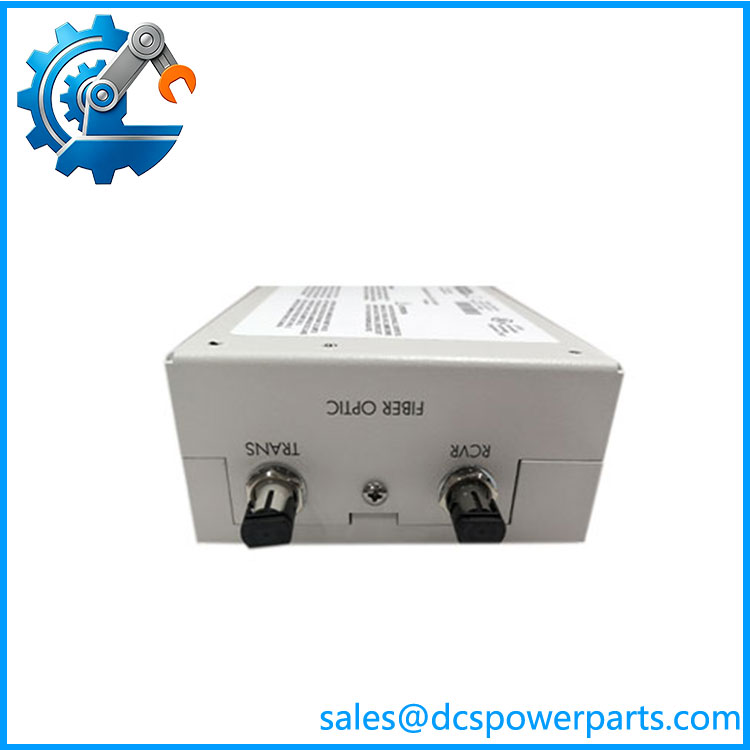
GPIB-140A 186135G-01
Compatibility With Existing GPIB Systems
The is intended to extend existing IEEE-488 instrumentation rather than require a wholesale migration to another communication protocol. This can be useful in laboratories and production test systems containing expensive legacy instruments that continue to perform adequately.
High-Speed Serial Fiber Transmission
Available technical documentation for the family describes high-speed serial fiber transmission, including figures of approximately 1.1 MB/s under IEEE-488.1 and up to 2.8 MB/s with HS488, depending on the operating configuration.
These figures should be treated as family-level performance information until confirmed against the exact 186135G-01 documentation.
Application Scenarios
Automated Test Equipment
The can separate a test controller from instruments distributed across a test cell while maintaining GPIB connectivity.
Aerospace and Defense Test
Long instrument-to-controller distances and electrical isolation can be useful in large test installations where instrumentation and computing equipment cannot conveniently share the same cabinet.
Semiconductor and Electronics Test
Automated test systems may contain multiple GPIB instruments located around a production or laboratory environment. Fiber extension provides greater physical-layout flexibility.
Industrial Measurement
Older industrial test systems may still rely on instruments. The provides a way to extend such systems without immediately replacing the instrumentation.
Research Laboratories
Research equipment often remains operational for many years. Maintaining an optical GPIB link can allow older instruments to remain integrated into a centralized measurement setup.
Related Products
- — Fiber-optic GPIB extender platform.
- 186135E-01 — Another part-number variant.
- 186135C-01 — Another part-number variant.
- 186135F-01 — Another part-number variant.
- /GPIB controllers — Provide the host-side GPIB control function; they serve a different purpose from the .
- GPIB instrumentation — Oscilloscopes, DMMs, power supplies, signal generators, analyzers, and other test equipment can form the instrument side of the system.
Engineer’s Guide: Field Pitfalls
⚠️ Do Not Confuse With a GPIB Controller
The is an extender, not a conventional PCI/PXI GPIB controller.
A controller manages instruments and initiates GPIB transactions. The provides the communication extension between two GPIB segments.
⚠️ Verify the Complete Part Number
alone is not enough for procurement.
NI produced multiple part-number variants, including 186135E-01, 186135C-01, 186135F-01 and 186135G-01.
For replacement purposes, specify:
rather than simply ordering a generic .
⚠️ Check the Power Configuration
The available parts record identifies 186135G-01 as 120 VAC only.
Do not assume another variant has the same power requirement.
⚠️ Fiber Compatibility Matters
An optical GPIB extender depends on the correct fiber connection between the paired units. Before commissioning a replacement, verify the fiber type, connectors, optical condition, and link status.
⚠️ Test Both Ends as a Pair
A system normally requires a corresponding extender at the remote end. If communication fails, troubleshoot the complete optical link rather than replacing the local unit immediately.
Check:
- Local GPIB cable
- Local extender
- Optical fiber
- Remote extender
- Remote GPIB cable
- Instrument/controller configuration
Frequently Asked Questions
What is NI 186135G-01?
It is a National Instruments fiber-optic GPIB extender, with 186135G-01 identifying a particular hardware variant. It extends /GPIB communication through an optical link.
Is a data acquisition card?
No. It is a communication extender. It does not provide analog inputs, analog outputs, or conventional DAQ channels.
Does it use /GPIB?
Yes. The device is specifically designed around the instrumentation bus.
What is special about 186135G-01?
The suffix identifies the specific NI hardware variant. Available parts data identifies 186135G-01 as a 120 VAC-only version of the .
Does one extend a GPIB network by itself?
For an optical link, the practical configuration uses a pair of compatible extender units, one at each end of the fiber connection. The GPIB equipment connects to the respective GPIB interfaces.
What should I check when buying a used 186135G-01?
Request:
- Actual photographs of the front and rear panels
- Complete 186135G-01 identification
- Power-input verification
- GPIB connector inspection
- Fiber-optic port inspection
- Optical link test
- GPIB communication test
- Confirmation that both GPIB directions have been tested
- Test report
- Warranty terms
A unit that merely powers on should not be considered fully tested.
Is the suitable for a modern Ethernet-based test system?
Not as a direct Ethernet replacement. Its purpose is to extend systems. If the existing instruments are GPIB-based and still required, however, the can be useful for maintaining that architecture.
Is still a current NI product?
It should be treated as legacy test-and-measurement hardware. For a production test system dependent on this device, maintaining a tested spare and preserving the exact optical/GPIB configuration is advisable.