Description
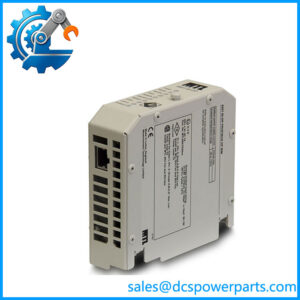
MTL / GE 8851-LC-MT | PAC8000 SafetyNet Logic Controller
Product Overview
The MTL 8851-LC-MT is a PAC8000 SafetyNet Logic Controller designed for safety-related logic applications within the PAC8000 platform. It executes the SafetyNet application program and provides the controller-level processing required by SafetyNet I/O. GE’s original PAC8000 documentation identifies the 8851-LC-MT specifically for logic-control applications in an SIL 2 environment and lists a subset of IEC 61131-3 programming languages, online configuration, controller redundancy with bumpless transfer, and dual-redundant high-speed Ethernet connections.
The 8851-LC-MT should not be confused with a standard PAC8000 process controller or a conventional I/O module. It occupies the safety-controller position in the architecture. A single controller can communicate with up to 64 local I/O modules, while the Ethernet interfaces provide controller-to-controller and host communication. The available documentation also identifies two RS-485 interfaces and a 12 VDC supply derived from the PAC8000 power-supply architecture.
For legacy plant maintenance, this distinction is important. A failed 8851-LC-MT can affect execution of the safety application and communication with an entire SafetyNet I/O group, so replacing it requires more than matching the catalog number. The controller revision, Workbench compatibility, application backup, redundancy state, carrier type, and installed SafetyNet I/O should all be checked before commissioning a replacement. Historical GE documentation also records specific firmware releases for this controller, including firmware 1.26, showing that firmware revision is a meaningful procurement parameter.
Product Introduction
A SafetyNet controller is not simply another CPU in a PLC rack. The 8851-LC-MT executes safety application logic and communicates with the associated SafetyNet I/O architecture, making controller revision and software compatibility important during a legacy replacement.
The documented architecture supports up to 64 local I/O modules, dual-redundant Ethernet communication, and optional redundant controllers with bumpless transfer. Configuration and application management are performed through Workbench.
Key Technical Specifications
| Parameter | Specification |
|---|---|
| Product Model | 8851-LC-MT |
| Manufacturer / Brand | MTL / GE |
| Product Type | SafetyNet Logic Controller |
| System | SafetyNet |
| Safety Application | SIL 2 |
| Safety Architecture | 1oo1D |
| Standard | IEC 61508 |
| Local I/O Capacity | Up to 64 I/O modules |
| Ethernet | Dual-redundant high-speed Ethernet |
| Ethernet Connector | RJ45, according to available product documentation |
| Serial Interfaces | 2 × RS-485 |
| Controller Redundancy | Optional, with bumpless transfer |
| Configuration Software | Workbench |
| Event Logging | Up to 8,000 events |
| Supply | 12 VDC from 8913-PS-AC architecture |
| Typical Current | Approximately 0.4 A |
| Maximum Current | Approximately 0.5 A |
| Hazardous-Area Application | Zone 2 / Class I Division 2 configurations are documented |
| Installation | Compatible SafetyNet controller carrier |
| Operating Accuracy | Not applicable; this is a logic controller |
| Lifecycle | Legacy / discontinued |
The 12 VDC supply, 0.4 A typical / 0.5 A maximum consumption, 64-module capacity, redundant Ethernet, RS-485 interfaces, and 8,000-event logging figures come from available SafetyNet technical material. Some third-party listings provide conflicting dimensions and environmental specifications, so those values should be checked against the exact controller revision rather than treated as universal.
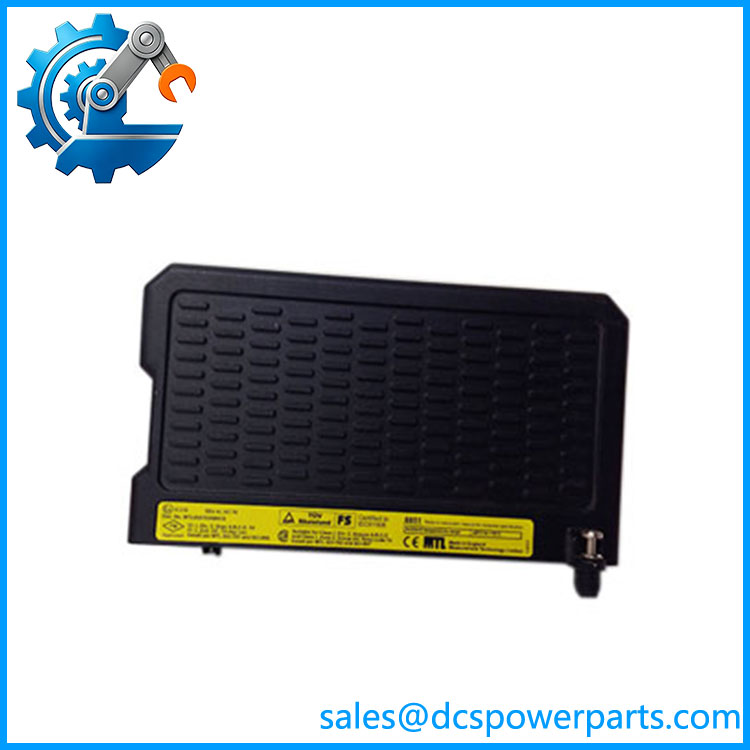
8851-LC-MT
Major Features / Advantages
1. SafetyNet Logic Execution
The main role of the 8851-LC-MT is execution of the SafetyNet application. GE’s documentation describes the controller as intended for SIL 2 logic-control applications and supporting a subset of IEC 61131-3 languages.
That makes it fundamentally different from an ordinary process CPU. The application should be treated as safety-related logic, with controlled software revisions and configuration management.
2. 1oo1D Safety Architecture
The controller uses a 1oo1D architecture, combining a single processing path with diagnostic coverage. The published SafetyNet material identifies SIL 2 application capability under IEC 61508.
For procurement, the important point is that the SIL designation belongs to the properly engineered SafetyNet system and application. A loose controller should not be described as independently making an entire installation SIL 2.
3. Up to 64 Local I/O Modules
The 8851-LC-MT can communicate with up to 64 local I/O modules on the Railbus architecture. This gives the controller a defined position above the SafetyNet I/O modules rather than directly replacing them.
When diagnosing a system with multiple missing I/O modules, check controller diagnostics, Railbus status, carrier connections, and power distribution before assuming multiple I/O cards have failed simultaneously.
4. Dual-Redundant Ethernet
The controller provides dual-redundant high-speed Ethernet connections and supports peer-to-peer communication between controllers. GE’s release documentation explicitly identifies these communication capabilities as part of the 8851-LC-MT feature set.
This is particularly relevant when the controller is installed as part of a redundant SafetyNet arrangement. Network redundancy and controller redundancy are related but separate engineering functions; do not assume that two Ethernet connections automatically mean two redundant CPUs.
5. Optional Controller Redundancy
The SafetyNet architecture supports redundant controllers with bumpless transfer. The 8751-CA-NS controller carrier is specifically documented as accepting two 8851-LC-MT controllers.
During replacement, determine whether the existing installation uses one controller or a redundant pair. A replacement strategy that ignores the carrier and controller state can create unnecessary downtime.
6. Online Configuration and Firmware Management
The controller is configured through . Historical GE release documentation shows dedicated firmware releases for the 8851-LC-MT and identifies specific Workbench compatibility requirements for certain firmware functions.
This matters with legacy stock. Two modules carrying the same catalog number may not necessarily have the same firmware revision. Record the installed revision before removing a functioning controller whenever plant procedures permit.
Related Products
- 8751-CA-NS — SafetyNet controller carrier capable of mounting two 8851-LC-MT controllers and supporting associated controller connections.
- 8913-PS-AC — power supply associated with the 12 VDC supply architecture used by the 8851-LC-MT.
- 8410-NS-PS — SafetyNet power-supply monitor module used with the controller carrier for monitoring applicable power supplies.
- 8811 SafetyNet I/O modules — SafetyNet I/O family communicating with the 8851-LC-MT controller.
- 8841-LC-MT — SafetyNet Logic Workbench used for developing/configuring SafetyNet applications; it is software rather than a replacement controller.
- SafetyNet Workbench — Engineering environment used for configuration and application management.
- 8922-RB-IS — Railbus signal isolator used in applicable I/O architectures.
FAQ
What is the 8851-LC-MT used for?
It is the SafetyNet Logic Controller for the platform. It executes the SafetyNet application and manages communication with associated SafetyNet I/O modules.
Is 8851-LC-MT a standard PLC CPU?
Not in the conventional sense. It is a SafetyNet safety logic controller designed for safety-related applications. Its architecture, engineering software, and I/O ecosystem are specific to SafetyNet.
How many I/O modules can one 8851-LC-MT support?
The documented maximum is 64 local I/O modules. The actual number of channels depends on the particular I/O modules installed.
Can I hot-swap the 8851-LC-MT?
Available documentation describes live maintenance/hot replacement capabilities for the SafetyNet controller architecture, including hazardous-area applications under the applicable installation conditions. However, do not treat that as permission to remove a controller from any live safety system without following the site’s approved procedure. The actual carrier, redundancy state, hazardous-area classification, and maintenance rules matter.
Does 8851-LC-MT support firmware version 1.26?
Yes. Historical GE release documentation specifically identifies firmware release 1.26 for the 8851-LC-MT. It also states that the upgrade uses the Workbench programming environment and that the release replaces previous 8851-LC-MT firmware versions.
For an existing installation, however, firmware should be matched to the installed Workbench version and project requirements rather than upgraded simply because a newer file is available.
Will replacing the controller erase the SafetyNet application?
Do not assume that the replacement controller will contain the existing application. The 8851-LC-MT executes an application downloaded through Workbench, so a replacement unit should be checked for its installed application/configuration state before commissioning. Maintain a verified application backup as part of the replacement procedure.
How should I verify a New Surplus 8851-LC-MT?
Verify the complete 8851-LC-MT marking, hardware/firmware revision, controller carrier compatibility, connector condition, diagnostic status, and available functional-test records. If the existing system is redundant, verify that the replacement controller can be incorporated into the existing redundancy arrangement before installation.
New Surplus describes inventory condition; it does not by itself establish authenticity, firmware compatibility, or SIL-system suitability. Supplier warranty terms should be confirmed separately.
Procurement Note
The 8851-LC-MT is a safety controller, not an ordinary processor card. For a legacy replacement, the minimum verification set should include the controller revision, Workbench compatibility, SafetyNet application backup, carrier model, redundancy arrangement, I/O architecture, and applicable hazardous-area installation requirements. Historical firmware documentation confirms that controller firmware and Workbench versions can be linked, so software compatibility should be checked before the replacement reaches the cabinet.