Description
Key Technical Specifications
| Parameter | Specification |
|---|---|
| Manufacturer | Motorola / Emerson Motorola |
| Model | MVME162PA-344E |
| Board Family | MVME162P4 / MVME162PA |
| CPU | Motorola MC68040 |
| CPU Speed | 32 MHz nominal in Motorola documentation |
| Memory | 16 MB SDRAM |
| Serial Interfaces | 2 SIO |
| IndustryPack Interfaces | 4 DMA-capable IP ports |
| Ethernet | Integrated Ethernet |
| ASIC | Second-generation Petra ASIC |
| Bus Architecture | VME |
| SCSI | Not included in the -344E configuration |
| Application | Embedded industrial control / computing |
Motorola’s MVME162P4 documentation identifies the -344E configuration as a 32 MHz MC68040 controller with 16 MB SDRAM, two SIO channels, four DMA IndustryPack interfaces, and Ethernet. The documentation also explains that adding “PA” to the model indicates the second-generation Petra ASIC while retaining the underlying board characteristics.
One procurement detail deserves attention: some secondary catalogs describe the board as 33 MHz, while the Motorola documentation specifies 32 MHz. For a technical product page, I would use Motorola’s 32 MHz figure rather than repeat the conflicting reseller value.
Product Introduction
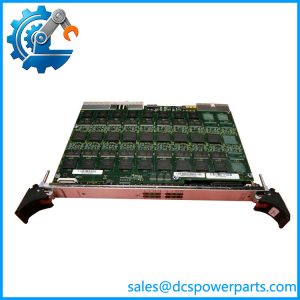
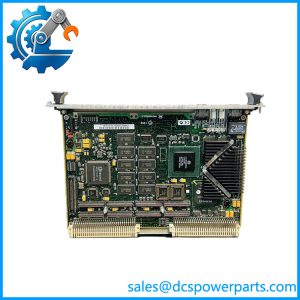
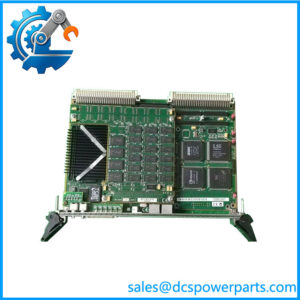
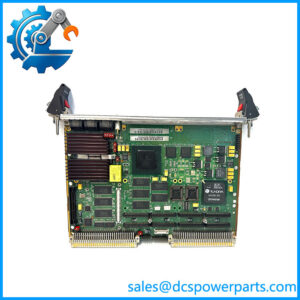
The Motorola MVME162PA-344E is a legacy VME embedded controller built around the MC68040 processor. It combines VMEbus computing with 16 MB of memory, two serial channels, four DMA-capable IndustryPack interfaces, and integrated Ethernet. The PA designation identifies the second-generation Petra ASIC version of the MVME162P4 architecture.
In an industrial control cabinet, this board functions more like an embedded computer than a conventional PLC CPU module. It can host application-specific control software and communicate with IndustryPack peripherals, serial devices, Ethernet equipment, and the VME backplane. Because the platform is obsolete, software image, boot configuration, IP modules, and the exact VME system are often just as important as the CPU board itself.
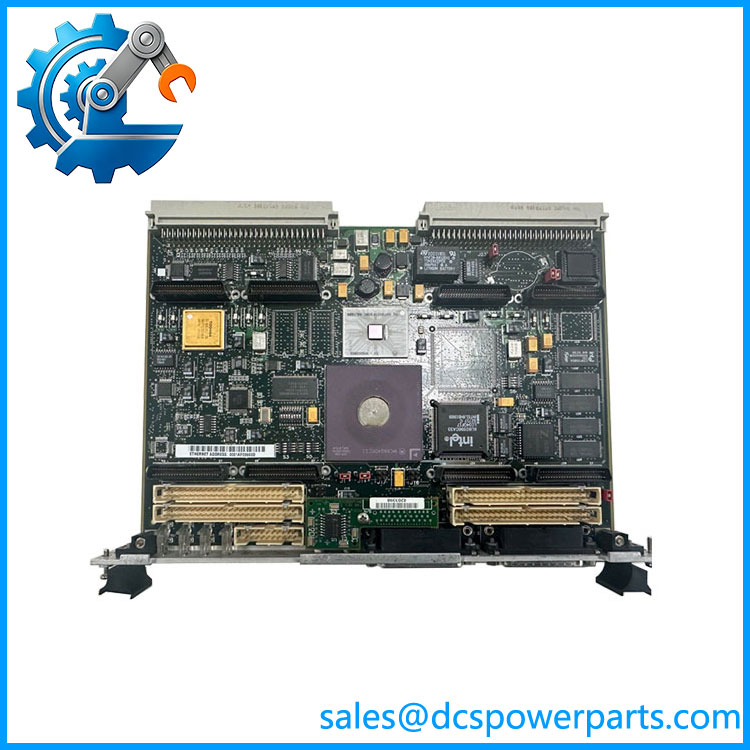
MVME162PA-344E
Application Scenarios & Field Pitfalls
Engineering Pain Point
The main maintenance risk with an MVME162PA-344E is assuming that any MVME162 board with an MC68040 processor is an acceptable substitute. The MVME162 family contains many configurations with different memory sizes, processor variants, SCSI availability, Ethernet capability, serial-channel arrangements, and IndustryPack configurations.
Typical Applications
- Industrial machine controllers — VME-based embedded computers coordinating custom I/O and motion hardware.
- Process-control equipment — legacy supervisory or dedicated control computers using VME backplanes.
- Test and measurement systems — embedded data acquisition and instrument-control applications using IndustryPack modules.
- Specialized OEM machinery — proprietary control platforms where the VME CPU executes vendor-specific application software.
Technical Pitfalls to Avoid
- Do not confuse -344E with -344SE. The -344SE adds SCSI to the Ethernet configuration, while the -344E is the Ethernet version without SCSI. Motorola’s model table explicitly distinguishes these configurations.
- Check the PA designation. Motorola states that the PA version uses the second-generation Petra ASIC. An older non-PA MVME162P board should not automatically be considered an equivalent replacement.
- Verify the IndustryPack configuration. The four DMA IP interfaces are an important part of this controller’s application capability. The connected IP modules and their software drivers should be documented before replacing the CPU board.
- Preserve the software environment. A technically compatible CPU board can still fail a replacement project if the boot ROM configuration, application image, VME address mapping, or attached IP hardware is different.
- Watch for incorrect clock specifications. Current secondary listings commonly state 33 MHz, while the Motorola reference identifies the -344E as 32 MHz. Use the original technical documentation when writing or validating a procurement specification.
Related Products
- MVME162P-344E — closely related first-generation Petra configuration with MC68040, 16 MB SDRAM, four DMA IP interfaces, two SIO channels, and Ethernet. The PA version uses the second-generation Petra ASIC.
- MVME162PA-344 — same general CPU/memory/IP architecture but without the Ethernet feature; not a direct functional replacement when Ethernet is required.
- MVME162PA-344S — adds SCSI instead of Ethernet; useful only when the application specifically requires the SCSI configuration.
- MVME162PA-344SE — combines SCSI and Ethernet; closest feature-rich member of the same -344 family.
- MVME162PA-242E — 25 MHz MC68040 configuration with Ethernet and a different IP/SIO arrangement; not a drop-in performance equivalent.
- MVME162PA-244LE — 25 MHz 68LC040 version with Ethernet, 16 MB memory, serial and IP interfaces; processor architecture differs from the -344E.
- MVME162PA-252SE — 32 MB configuration with SCSI and Ethernet; useful when additional memory and both interfaces are required.
- MVME167PA-36SE — later/different VME 68040 controller family with substantially different memory and system architecture; not an automatic substitute.
Procurement Check
For MVME162PA-344E, specify the complete model, not simply “MVME162 CPU board.” Confirm PA revision, processor, 16 MB memory, Ethernet presence, four IndustryPack interfaces, two serial channels, Petra II ASIC, and the installed VME software/application environment.
The strongest technical reference identifies the -344E as 32 MHz / 16 MB / 2 SIO / 4 DMA IP / Ethernet. The biggest practical replacement risk is not the processor itself; it is losing compatibility with the existing VME backplane, IndustryPack modules, boot configuration, and application software.