Description
Kongsberg TRX32 303088
Product Introduction
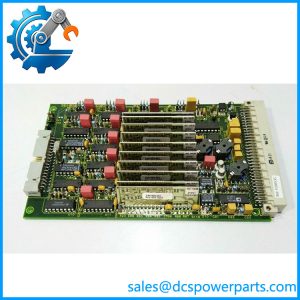
In a Kongsberg HiPAP transceiver cabinet, the TRX32 is not simply another interface PCB. Kongsberg TRX32 303088 is the 32-channel transceiver board responsible for the transmitter and receiver electronics associated with individual transducer elements. Kongsberg’s HiPAP documentation specifies a total of 32 transmitters and 32 receivers, with each transmitter/receiver pair connected through cabling to a specific element in the transducer. The board also contains computing capability for its assigned processing functions.
The Kongsberg TRX32 303088 is documented as a spare PCB for the Model x81 transceiver used with HiPAP 501/451/351 systems, while the current HiPAP instruction manual covers the broader 501/451/351/101 architecture. The board includes status LEDs, external synchronization, serial development/debug interfaces, Ethernet, and JTAG. That makes exact board identification important when maintaining an installed acoustic positioning system; it should not be substituted based solely on a generic description such as “32-channel I/O card.”
Key Technical Specifications
| Parameter | Specification |
|---|---|
| Manufacturer | Kongsberg Maritime |
| Product Model | TRX32 |
| Part Number | 303088 |
| Product Type | Transceiver PCB |
| Application | HiPAP acoustic positioning system |
| Associated Systems | HiPAP 501 / 451 / 351 / 101 |
| Transmitter Channels | 32 |
| Receiver Channels | 32 |
| Transmitter/Receiver Arrangement | 32 transmitter/receiver pairs |
| Transducer Connection | Each pair associated with a specific transducer element |
| On-Board Processing | Computing capability provided on the board |
| Ethernet | Front-panel Ethernet interface |
| External Synchronization | Dedicated interface provided |
| Serial I/O | Serial interfaces for development/debugging |
| JTAG | JTAG connector |
| Status Indication | LEDs for Ethernet, I/O activity and power-supply status |
| Installation | Plug-in PCB |
| Mechanical Retention | Two board ejectors |
| Related Spare | TRX32 filter board 304337 |
Kongsberg’s documentation provides the strongest evidence for the 32-transmitter/32-receiver architecture and the board-level interfaces.
Major Features and Advantages
32 Transmit/Receive Channels
The defining characteristic of the is its 32-channel acoustic transceiver architecture. Kongsberg describes the board as containing 32 transmitters and 32 receivers. Each transmitter/receiver pair corresponds to an individual transducer element.
That is fundamentally different from a conventional digital I/O card. The board participates directly in the acoustic signal chain of the HiPAP transceiver, so channel integrity, cabling, transducer configuration, and the associated transceiver hardware all matter during troubleshooting.
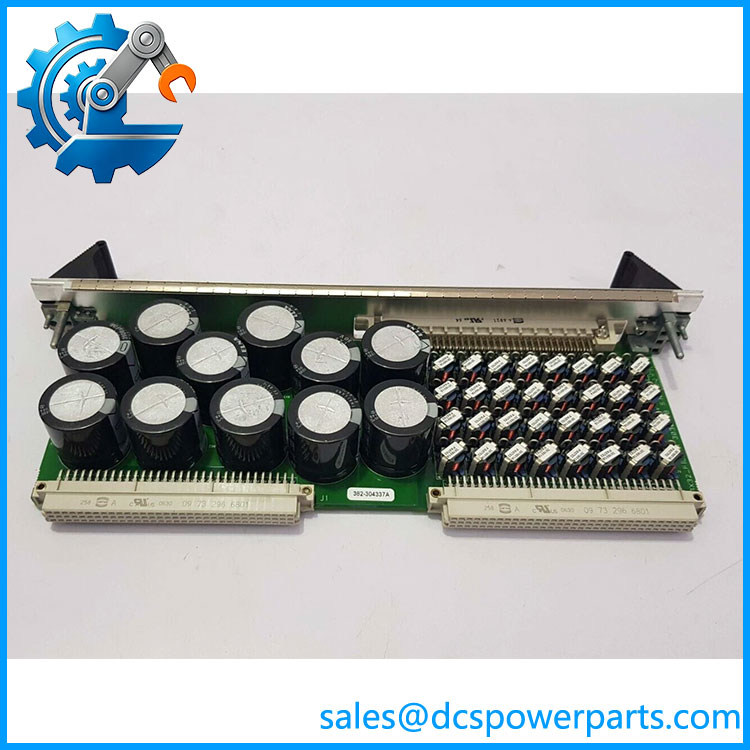
Kongsberg TRX32 303088G
Integrated Computing Capability
The is not only an analog front-end board. Kongsberg specifies that the board also contains computing power. This is consistent with the board’s Ethernet, serial, synchronization, and JTAG interfaces.
For maintenance teams, this means that a board-level failure can affect more than a single transmitter channel. Before replacing the PCB, check whether the observed fault is isolated to a transducer channel, power rail, communication path, configuration, or the itself.
Dedicated HiPAP Architecture
The belongs to Kongsberg’s HiPAP transceiver architecture. The documentation identifies it in the Model x81 transceiver spare-parts list as “PCB , 501”, part number 303088, alongside the filter board 304337 and the associated power-supply boards.
This relationship is useful when purchasing a spare. A quotation for ” 303088″ should be checked against the complete installed transceiver configuration rather than evaluated as an independent generic PCB.
Front-Panel Diagnostic Interfaces
The board provides several useful service interfaces:
- Ethernet activity indication
- I/O activity and power-supply indication
- External synchronization connection
- Serial I/O for development and debugging
- JTAG service interface
These are explicitly identified in the Kongsberg board description.
Application Scenarios & Field Considerations
The primary application is Kongsberg HiPAP high-precision acoustic positioning equipment.
- Underwater acoustic positioning: The forms part of the transceiver electronics used to transmit and receive acoustic signals through the transducer.
- HiPAP 501 systems: Kongsberg’s spare-parts documentation identifies 303088 as the PCB for the HiPAP 501 transceiver architecture.
- HiPAP 451/351/101 architecture: The current instruction manual describes as the 32-channel transmitter/receiver board used in the broader HiPAP family.
- Marine and subsea positioning: The surrounding HiPAP system is intended for high-precision acoustic positioning applications where transducer channels and timing are central to system performance.
A field technician seeing a failed should resist the temptation to swap boards immediately. A defective channel can also originate in the transducer, cable, filter board, power supply, connector, or system configuration. The is one element of a larger transceiver chain.
Related Products
- Kongsberg 304337 — filter PCB associated with the transceiver architecture.
- Kongsberg 304605 — PSU-48V DC power-supply PCB listed alongside in the HiPAP spare-parts section.
- Kongsberg 382-079671 — PSU-MAIN power-supply PCB listed in the same transceiver spare-parts architecture.
- Kongsberg 318101 — DS-518A industrial managed Ethernet switch used in the documented transceiver system.
- Kongsberg HiPAP 501 — high-precision acoustic positioning system using the documented transceiver architecture.
- Kongsberg HiPAP 451 — related HiPAP system architecture.
- Kongsberg HiPAP 351 — related HiPAP system architecture.
- Kongsberg HiPAP 101 — included in the current instruction-manual family.
These parts belong to the same equipment architecture, but they are not interchangeable replacements for 303088.
Engineer’s Guide — Field Pitfalls to Avoid
1. Do not classify as a PLC DI/DO card
Some secondary listings incorrectly describe 303088 as a configurable digital I/O module. Kongsberg’s own documentation identifies it as a 32-channel transmitter/receiver board, with 32 transmitters and 32 receivers.
That distinction is critical when troubleshooting and purchasing.
2. Match the complete part number
The Kongsberg spare-parts documentation identifies 303088 specifically as the PCB for the applicable HiPAP transceiver. Do not substitute another -related PCB simply because its description contains “.”
3. Do not confuse 303088 with filter board 304337
Kongsberg lists 303088 PCB and 304337 PCB Filter as separate spare parts. They perform different functions within the transceiver.
4. Check the transducer cabling
Because each transmitter/receiver pair is associated with a specific transducer element, incorrect or damaged cabling can present as a channel-level problem. Kongsberg’s architecture makes the transducer connection part of the diagnostic path.
5. Inspect power and system-level faults first
The contains multiple power-related monitoring indicators. A board showing abnormal power status should be investigated together with the associated transceiver power-supply boards rather than automatically classified as a processor failure.
6. Preserve configuration and revision information
For marine positioning equipment, a replacement PCB should be compared against the failed board for hardware revision, installed firmware/configuration where applicable, connectors, and board markings. Do not assume that two boards carrying “” have identical service configurations.
FAQ
What is Kongsberg 303088?
It is a 32-channel transmitter/receiver PCB used in Kongsberg HiPAP transceiver systems. The board contains 32 transmitters and 32 receivers, with each transmitter/receiver pair associated with a particular transducer element.
Is 303088 a digital I/O module?
No. The authoritative Kongsberg documentation identifies it as a transceiver board, not a conventional PLC or marine automation DI/DO module. Some secondary listings incorrectly classify it as configurable digital I/O, so procurement descriptions should be checked against the Kongsberg manual.
Which Kongsberg system uses part number 303088?
Kongsberg’s spare-parts documentation lists 303088 as “PCB , 501” for the HiPAP 501 transceiver system. The current manual covers the HiPAP Model 501/451/351/101 family.
How many channels does the have?
It has 32 transmitter channels and 32 receiver channels, arranged as 32 transmitter/receiver pairs.
What interfaces are available on the ?
The documented board has an Ethernet connector, external synchronization interface, serial I/O interfaces for development/debugging, and a JTAG connector. LEDs provide Ethernet, I/O activity, and power-supply status information.
What is the difference between 303088 and 304337?
Kongsberg’s spare-parts list identifies 303088 as the PCB and 304337 as the filter PCB. They are separate boards in the transceiver architecture and should not be treated as equivalent spares.
What should procurement verify before buying 303088?
Verify the Kongsberg part number 303088, board designation, HiPAP system model, hardware revision, board condition, connectors/ejectors, and associated transceiver configuration. If the board is offered as used or refurbished, request actual photographs and test evidence for the specific board rather than relying on a generic description.
Procurement Takeaway
Kongsberg 303088 is a HiPAP transceiver PCB, not a generic PLC I/O module. Kongsberg documentation establishes the core architecture: 32 transmitters + 32 receivers, one transmitter/receiver pair per transducer element, plus on-board computing and service interfaces.
For replacement procurement, the most important checks are the 303088 part number, HiPAP system compatibility, board revision, physical condition, and relationship to the 304337 filter and associated power-supply boards. Kongsberg’s own spare-parts documentation lists these components within the same transceiver architecture.