Description
Product Introduction (Non-Templated)
Cargo tank measurements become difficult to troubleshoot when radar level data, temperature inputs, and pressure readings stop reaching the vessel’s monitoring system. The Kongsberg GLK-300 serves as the Signal Processing Unit (SPU) in the GL-300 tank monitoring system, processing information from connected tank instrumentation and providing communication and intrinsically safe power barriers for field devices.
Installed in a safe area, this unit supports marine cargo monitoring applications where dependable measurement data is essential for loading, discharge, and inventory calculations. For a legacy tank gauging repair, verify the installed system configuration and hardware revision before purchasing a replacement; a matching model number alone does not confirm commissioning compatibility.
Key Technical Specifications
| Parameter | Specification |
|---|---|
| Manufacturer | Kongsberg Maritime |
| Model | GLK-300 |
| Product Type | Signal Processing Unit (SPU) |
| System Family | GL-300 tank monitoring system |
| Primary Function | Processing data from radar tank gauges and associated tank instrumentation |
| Connected Equipment | Radar Tank Gauge (RTG), cargo temperature instrumentation, and pressure transmitters, according to system configuration |
| Communication | Dual high-speed Ethernet is documented for certain system configurations; verify the applicable system version |
| Installation Location | Safe area |
| Field Interface | Provides communication and intrinsically safe power barriers for field instrumentation |
| Typical Application | Marine cargo tank gauging and monitoring |
| Power Supply | Confirm from the unit’s nameplate and applicable technical manual |
| Operating Temperature | Confirm from the applicable OEM documentation |
| Certification | GLK-300 has published ATEX/IECEx certification documentation; verify the certificate revision and installation conditions for the specific unit |
The GLK-300 is documented as part of Kongsberg’s GL-300 tank monitoring architecture. Exact electrical ratings, terminal assignments, environmental limits, and network configuration should be established from the installed unit’s documentation rather than inferred from the system name.
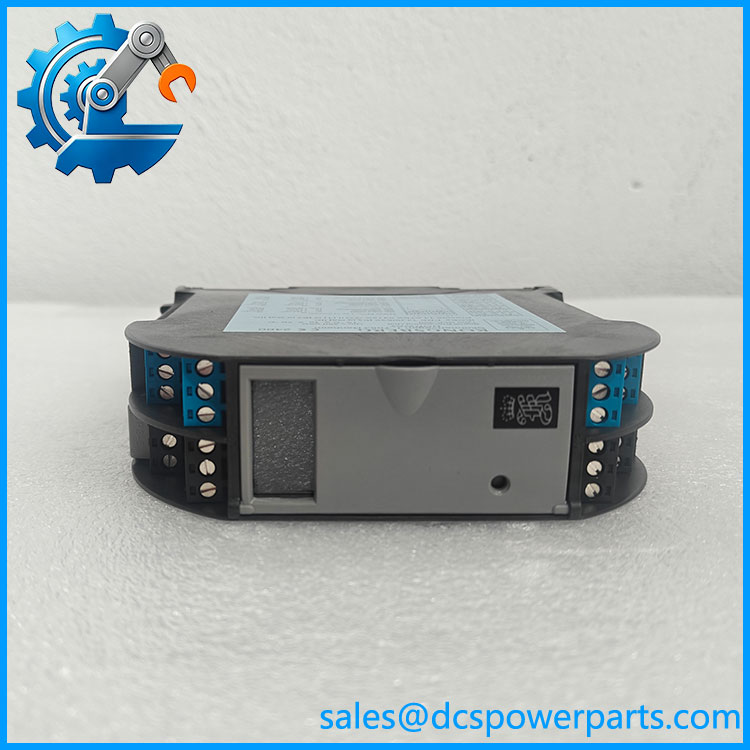
GLK-300
Application Scenarios & Pain Points
When cargo measurements become unreliable during loading or discharge, vessel crews need to distinguish an instrument fault from a processing or communication problem. The GLK-300 sits between the tank instrumentation and the monitoring architecture, so its configuration matters as much as its physical condition.
- Oil and product tankers: Processes tank measurement information from the GL-300 arrangement using the GLA-300/P radar tank gauge and associated instrumentation.
- Chemical tankers: Supports tank monitoring configurations using the appropriate GLA-300/H gauge and associated cargo measurement equipment.
- Asphalt and bitumen carriers: Forms part of the GL-300 arrangement designed for high-temperature cargo applications, where the specified radar gauge and installation arrangement are important.
- LNG and specialized gas tank monitoring: GLK-300 is also identified in Kongsberg gas tank gauging documentation. Confirm the exact system variant, associated instruments, and applicable hazardous-area certification before replacement.
Field case — illustrative scenario: During a scheduled tanker maintenance period, intermittent tank readings could prompt an investigation of the radar gauge, temperature input, network connection, and signal processing unit. A verified replacement can be considered if testing isolates the fault to the SPU, but swapping the unit without checking configuration and field wiring risks extending the outage.
Related Products
The following components belong to the same general tank gauging architecture. Their inclusion does not mean they can substitute directly for the .
- — The signal processing unit itself. Confirm the complete identification label and configuration when sourcing a spare.
- GLA-300/P — Radar tank gauge used in oil and product tanker configurations. Measures tank level; it does not replace the SPU.
- GLA-300/H — Radar tank gauge for specified chemical tanker applications. The antenna and installation arrangement differ from other GL-300 gauge variants.
- GLA-300/HS — Radar gauge designed for slop tanks or still-pipe installations. Check the tank geometry and gauge arrangement before selecting it.
- GC-300 — Cargo Temperature Unit for connecting temperature sensors to the tank monitoring system. It handles temperature measurement rather than the ‘s central signal processing role.
- GC-306 — Alternative cargo temperature instrumentation designed to connect more temperature sensors in supported configurations. Confirm the relevant system design before substitution.
- RCU502 — Remote Controller Unit identified in Kongsberg tank monitoring documentation. Confirm the specific system architecture and interface requirements before using it in a replacement project.
- GLA-310/5 — A radar tank gauge family appearing in Kongsberg’s broader tank gauging documentation. It should not be treated as a drop-in GL-300 replacement without a documented migration path.
The Engineer’s Guide: Field Pitfalls to Avoid
Warning 1: Assuming network compatibility from the model number
The is documented with dual high-speed Ethernet in certain system configurations. Network topology, controller interface, and software configuration can vary across installations.
How to avoid it: Record the existing connections and configuration, identify the receiving controller, and verify the applicable system documentation before reconnecting cables. Confirm data acquisition and alarm behavior during commissioning.
Warning 2: Overlooking intrinsic-safety requirements
The provides intrinsically safe power barriers for connected field instrumentation. Incorrect wiring or an unsuitable replacement can compromise the approved installation arrangement.
How to avoid it: Verify the applicable hazardous-area documentation, certificate conditions, wiring drawings, and field-device requirements. Do not bypass barriers or alter connections outside the approved design.
Warning 3: Replacing the SPU before checking the connected instruments
A missing or incorrect tank reading can originate from the radar gauge, temperature unit, pressure transmitter, wiring, or communication path—not necessarily the processing unit.
How to avoid it: Record the original symptoms, inspect connectors for corrosion and damaged contacts, and review available diagnostics. After replacement, verify each relevant measurement channel and confirm that the vessel’s monitoring system receives valid data.
Frequently Asked Questions (FAQ)
1. What does the Kongsberg signal processing unit do?
The processes measurement information from the GL-300 tank monitoring system. Depending on the installed configuration, this includes data from radar tank gauges, cargo temperature units, and pressure transmitters. It also provides communication and intrinsically safe power barriers for field instrumentation.
2. Can I replace a faulty without changing the radar tank gauges?
Potentially, yes, if the replacement is compatible with the installed system and its connected instruments. The radar gauge model, wiring, controller interface, configuration, and hardware revision must be checked first. A replacement SPU should be commissioned and tested against the actual installed arrangement before the tank measurements are accepted for operational use.
3. How do I verify that a used or surplus is suitable for service?
Request the complete model and serial-number label, clear photographs, a description of the unit’s condition, and a test report linked to that specific unit.
The inspection should include connector condition, visible corrosion, signs of overheating, and any documented repair history. Where practical, arrange a functional test against an appropriate test setup. A power-on check by itself does not establish correct measurement processing or hazardous-area suitability.
4. Does the have ATEX or IECEx certification?
Kongsberg publishes certification documentation for the signal processing unit, including IECEx documentation and an ATEX certificate listing.
Certification must be checked against the specific installation conditions and the applicable certificate revision. Do not assume that a damaged, modified, or incorrectly installed unit retains the required compliance status.
5. What warranty is available when purchasing a replacement ?
Warranty coverage depends on the supplier and the condition of the unit. New surplus equipment may not carry the original manufacturer’s warranty, and refurbished equipment may have different coverage terms.
Before placing an order, obtain written confirmation of the warranty period, covered failures, return authorization procedure, and available replacement arrangements. For a vessel awaiting departure, clarify how quickly a defective replacement would be addressed.
6. How quickly can a Kongsberg be delivered?
Delivery depends on verified inventory, unit condition, testing requirements, and the destination port or service location. The existence of a product listing does not guarantee that a tested unit is ready to ship.
For urgent procurement, ask the supplier to confirm physical stock, inspection status, test documentation, dispatch timing, and estimated transit time. If the vessel has a scheduled sailing, work backward from the commissioning deadline rather than relying on an unconfirmed lead-time estimate.
7. What information should I provide when requesting a replacement quotation?
Provide these details to improve part matching and reduce commissioning risk:
- The complete model, serial number, and revision markings.
- The vessel’s tank monitoring system configuration.
- The connected radar gauge and cargo temperature unit models.
- Available rack, wiring, and communication drawings.
- The reported fault symptoms and relevant diagnostic indications.
- Required unit condition, testing evidence, warranty, and delivery deadline.
Procurement recommendation: Treat the Kongsberg as a system-specific tank monitoring component, not a generic marine controller. Confirm the exact configuration, intrinsic-safety requirements, and functional test scope before accepting a replacement for service.