Description
Key Technical Specifications
| Parameter | Specification |
|---|---|
| Product Model | CE3CPU-1131 |
| Manufacturer | Berghof Automationstechnik |
| Order Number | 2031000 |
| Product Series | CANtrol |
| Controller Type | Programmable Cell Controller |
| Processor | Motorola 68360 |
| Processor Frequency | 33 MHz |
| CMOS RAM | 2 MB |
| Flash Memory | 2 MB |
| Ethernet Interface | 1 × RJ45 |
| CAN Interface | 1 × Min-D CAN |
| Serial Interface | 1 × RS232 |
| Programming Runtime | CP1131 |
| Base Controller Runtime | CPC++ |
| Operating System | Real-Time Operating System |
| Communication Software | CAN / CANopen |
| Supply Voltage | 24 VDC nominal |
| System Supply Tolerance | 18–32 VDC |
| Protection Class | IP20 (CANtrol system specification) |
| Operating Temperature | 0 to 50°C (horizontal installation) |
| Relative Humidity | 5–95%, non-condensing |
Important technical distinction: The CE3CPU-1131 is the CP1131-runtime version of the CE3CPU controller. Its documented order number is 2031000. Do not confuse it with newer Berghof CE3 controllers using ARM or Intel processors; those are different hardware generations.
Product Introduction
Berghof CE3CPU-1131 CANtrol Programmable Controller
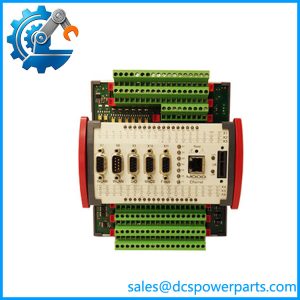
The Berghof CE3CPU-1131 is a programmable industrial cell controller from the CANtrol automation family. It uses a Motorola 68360 processor operating at 33 MHz, with 2 MB CMOS RAM and 2 MB flash memory. Its communication interfaces include RJ45 Ethernet, CAN, and RS232, while the CP1131 runtime supports IEC 61131-based industrial control programming.
The controller combines real-time processing with CAN/CANopen communication capabilities. It is suited to legacy machine-control installations where maintaining the original application software and communication architecture is more important than replacing the entire control platform.
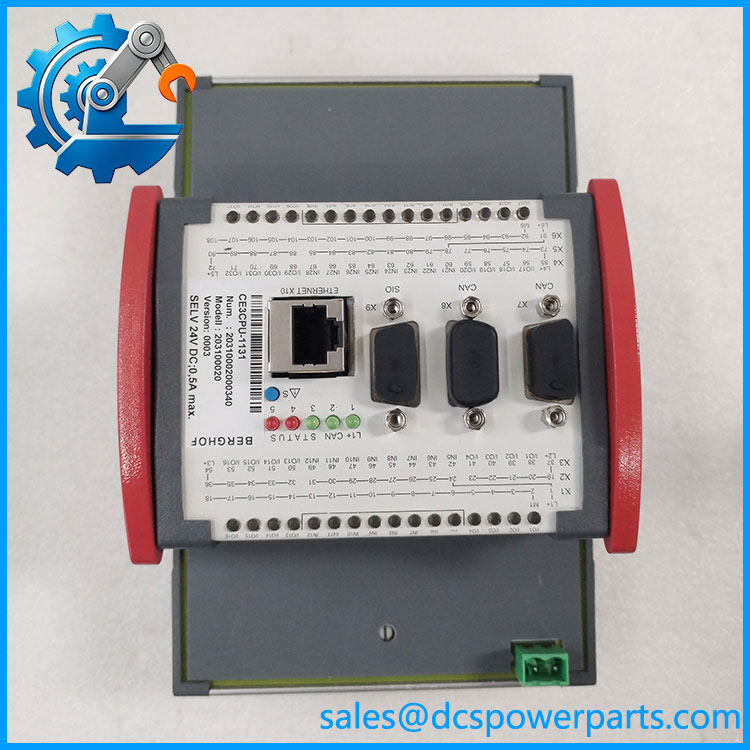
CE3CPU-1131
Application Scenarios & Field Pitfalls (The Engineer’s Perspective)
Engineering Pain Point
An older production machine may still operate reliably, but its original controller becomes difficult to replace when the application depends on a specific runtime environment and established CAN communication network.
The CE3CPU-1131 addresses this type of maintenance requirement. It provides the processing and communication functions needed by the original CANtrol architecture. Replacing it with a different-generation PLC without accounting for the CP1131 runtime, application software, and communication configuration can turn a straightforward hardware replacement into a major engineering project.
Typical Applications
- Industrial Manufacturing: Central machine control and coordination of distributed I/O over CAN networks.
- Automotive Equipment: Real-time control of automated assembly equipment and machine subsystems.
- Packaging Machinery: Sequence control, machine communication, and coordination of peripheral devices.
- Material Handling: Controller-level coordination of conveyor systems and distributed automation equipment.
- Special-Purpose Machinery: Embedded control applications using IEC 61131 programming and CANopen communication.
Technical Pitfalls to Avoid
1. CP1131 Runtime Compatibility
This is the first thing I would check.
The -1131 is not simply a with a different label. Its distinguishing feature is the additional CP1131 runtime system.
Before replacement:
- Confirm the original application was developed for .
- Verify programming-tool and runtime compatibility.
- Check application backup availability.
- Confirm the controller can load and execute the existing project.
A controller that powers up successfully may still be unable to execute the original machine application.
2. CAN Bus Configuration and Termination
The CAN interface is important to the CANtrol system architecture.
Incorrect termination, node addressing, or baud-rate settings can prevent communication with distributed I/O devices.
Check the following:
- CAN node identification.
- Configured CAN baud rate.
- Network termination at the appropriate bus endpoints.
- Cable shielding and grounding.
- CANopen device configuration, where applicable.
Do not assume the replacement automatically inherits the original network configuration.
3. Memory and Application Backup
The documented controller has 2 MB CMOS RAM and 2 MB flash memory.
For legacy equipment, application backup is especially important. Before removing an operational controller, preserve the existing program, communication settings, and configuration data wherever possible.
Also verify the retention requirements of the original application. Do not assume that all runtime data and application parameters will transfer automatically to a replacement CPU.
Procurement and Quality Inspection
For replacement procurement, request:
- Clear photographs of the complete model identification.
- Confirmation of order number 2031000.
- Inspection of the RJ45 and CAN connectors.
- Verification of the RS232 interface.
- Power-up and diagnostic LED test results.
- Confirmation that the runtime is present.
- Application loading or runtime execution test evidence, if available.
For legacy equipment, functional testing matters more than cosmetic condition. A clean enclosure does not establish that the CPU, memory, or communication interfaces are working.
Related Products
The following products belong to the Berghof CANtrol automation family and provide related controller, communication, and I/O functions.
| Model | Product Description | Compatibility and Application |
|---|---|---|
| Base programmable cell controller | The non- vers the . Uses the CPC++ runtime and is intended for C-based application development. | |
| C1CPU-4S | CANtrol cell controller | An alternative controller platform in the CANtrol family. Check application compatibility and interface requirements before considering substitution. |
| C2CPU-2S-01-8/8-SC-1131 | CANtrol controller with integrated I/O | Provides eight digital inputs and eight bidirectional digital I/O points, together with runtime support. Suitable for applications requiring integrated field I/O. |
| C2CPU-2S-03-8/8-SC-1131 | CANtrol controller with integrated I/O | Similar to the -01 version but with a different serial-interface arrangement, including two RS232C interfaces. |
| CEDIO 16/16-0,5-1131 | Integrated digital I/O controller | Combines 16 digital inputs and 16 bidirectional digital I/O points with runtime support. Suitable for applications requiring integrated control and I/O. |
| CDIO 16/16-0,5-1131 | Digital I/O cell controller | Provides integrated digital input/output functions with runtime support. An alternative architecture for applications with greater local I/O requirements. |
| QDIO 16/16-0,5 | Digital I/O expansion module | Provides 16 digital inputs and 16 bidirectional 24 VDC digital I/O channels. Used to expand compatible CANtrol systems through E-bus. |
| QDIO 16/16-0,5N | Low-side switching digital I/O expansion | Provides 16 digital inputs and 16 bidirectional digital I/O points with low-side switching. Functional configuration differs from the standard QDIO version. |
| QCAN | E-bus/CAN adapter | Converts the E-bus CAN interface of a CPU module to a Min-D CAN connection. Useful for supported CAN network expansion arrangements. |
| QAIO 16/4-V | Analog I/O expansion module | Provides 16 differential analog voltage inputs and four analog voltage outputs, each with 12-bit resolution. Used for analog process measurement and control. |
Final Engineering Recommendation
Tghof is a legacy CANtrol controller whose main procurement consideration is runtime compatibility, not simply processor specifications.
Before approving a replacement, confirm three things:
- The original controller uses the runtime.
- The existing CAN network and distributed I/O configuration can be retained.
- The replacement has the correct 2031000 identification and passes functional testing.
Do not substitute a newer Berghof CE3-series controller based on the shared CE3 naming alone. Processor architecture, runtime environment, memory organization, and communication interfaces must all be checked against the original installation.