Description
Product Overview
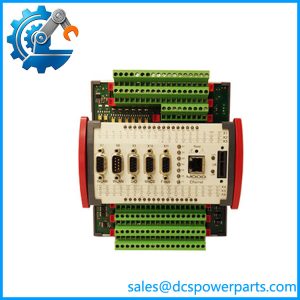
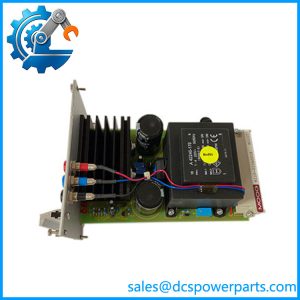
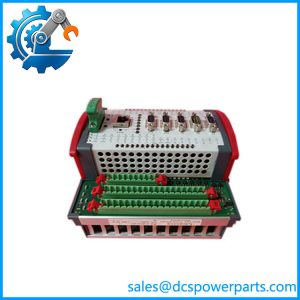
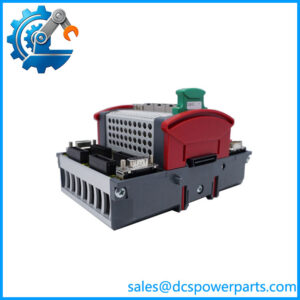
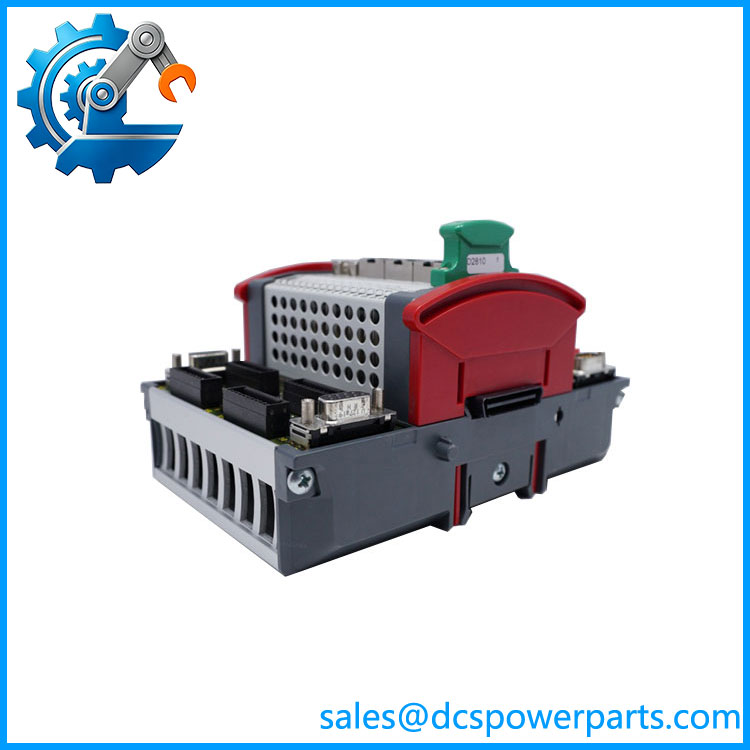
The MOOG D136-002-002 is an MSC II Motion Controller designed for the MOOG M3000 automation platform, providing centralized control for complex electric and hydraulic motion applications. The controller combines PLC functionality, motion processing, communication management, and closed-loop regulation within a single DIN rail-mounted unit. The MOOG D136-002-002 is typically used in applications where precise position, velocity, and force control are required, including hydraulic actuators, industrial machinery, test systems, and high-performance automation equipment.
Built around a 32-bit PowerPC processor with floating-point capability, the D136-002-002 provides the processing resources required for advanced motion calculations and synchronized axis control. The unit includes 128 MB RAM, 32 MB Flash EEPROM, Ethernet communication, two CAN/CANopen interfaces, USB ports, and four position sensor interfaces supporting incremental encoder, SSI, or EnDat feedback devices. This architecture allows engineers to manage motion sequences, feedback loops, and machine-level control tasks without requiring a separate motion processor.
The MOOG D136-002-002 is maintained in many long-service industrial installations where replacing the complete motion platform would create unnecessary engineering changes. Common applications include hydraulic press control, injection molding systems, aerospace simulation equipment, turbine actuator systems, and industrial positioning machines. Replacement planning should include verification of MACS application software, controller configuration files, connected I/O modules, communication topology, and motion axis parameters. To be completely transparent, a motion controller replacement is not a simple plug-in exchange; the hardware may start normally while incorrect application parameters can still produce unsafe axis behavior.
Product Introduction (Non-Templated)
When an aging motion platform begins showing controller faults, the challenge is preserving validated machine behavior rather than only restoring power. The MOOG D136-002-002 provides an MSC II processing platform for systems requiring synchronized servo control and high-speed feedback handling.
With 24 VDC operation, four position sensor interfaces, Ethernet communication, and CAN connectivity, this controller is commonly selected for M3000 system maintenance, hydraulic motion control, and legacy automation replacement projects.
Key Technical Specifications
| Parameter | Value |
|---|---|
| Product Model | D136-002-002 |
| Manufacturer | MOOG |
| Product Type | MSC II Motion Controller |
| Automation Platform | M3000 Automation System |
| Processor | 32-bit PowerPC RISC with Floating Point Unit |
| Memory | 128 MB RAM |
| Flash Memory | 32 MB Flash EEPROM |
| Power Supply | 24 VDC (18–36 VDC) |
| Current Consumption | Approx. 0.3 A idle / 0.8 A full load |
| Position Interfaces | 4 channels |
| Supported Feedback | Incremental encoder, SSI, EnDat |
| Digital I/O | 4 configurable channels |
| Communication Interfaces | Ethernet, 2 × CAN/CANopen, USB |
| Fieldbus | Application dependent |
| Programming Environment | MOOG MACS / IEC 61131-3 based programming |
| Mounting | DIN rail NS35/7.5 |
| Protection Rating | IP20 |
| Operating Standard | IEC 61131-2 |
| Application | Servo motion, hydraulic control, multi-axis automation |
| Condition | New Surplus, Factory Sealed |
Related Products
- MOOG D136-002-001 — MSC II controller variant with EtherCAT master interface. Used when EtherCAT-based motion communication is required instead of the standard configuration.
- MOOG D136-002-003 — MSC II controller version with expanded EtherCAT master capability and additional EtherCAT communication options. Suitable for systems built around EtherCAT motion networks.
- MOOG D136-002-005 — MSC II variant combining PROFIBUS-DP slave and EtherCAT master communication. Used for mixed fieldbus architectures requiring integration with existing PLC systems.
- MOOG D136-001-007 — MSC I motion controller family member designed for applications requiring fewer feedback channels and different system configurations.
- MOOG D136-001-008 — MSC controller version without PROFIBUS-DP interface. Used where alternative communication methods are preferred.
- MOOG D137-001-011 — QAIO analog expansion module for M3000 systems. Provides additional analog signal processing capability for motion applications requiring expanded I/O.
- MOOG D138-002-002 — Motion software/license component used with compatible MOOG controllers to enable advanced motion functions such as synchronized axis control.
D136-02-005
Frequently Asked Questions (FAQ)
1. Is the MOOG compatible with my existing M3000 motion system?
Compatibility depends on the complete M3000 configuration.
Verify:
- Existing MSC controller model
- MACS software version
- Application program backup
- Connected expansion modules
- Communication network design
A replacement controller requires matching hardware and software configuration.
2. Can I hot-swap this?
The is not normally treated as a hot-swappable PLC I/O module.
Typical replacement procedure:
- Save the current controller application
- Record communication settings
- Shut down machine power safely
- Replace the controller
- Restore application parameters
- Perform axis calibration and functional testing
Motion systems require controlled restart procedures.
3. Does the support firmware v3.1?
Firmware compatibility depends on the MSC II hardware revision and MACS development environment.
Check:
- Controller firmware revision
- MACS software release
- Application libraries
- Connected expansion hardware
A firmware match alone does not guarantee application compatibility.
4. Will I lose my motion program when replacing the ?
The controller hardware does not automatically transfer application data from another unit.
Before replacement:
- Upload the existing application
- Save axis parameters
- Record communication settings
- Backup calibration data
After installation, restore the project and verify motion behavior.
5. How can I verify a New Surplus MOOG is authentic?
Recommended inspection points:
- Confirm MOOG identification label
- Verify ordering code
- Inspect DIN rail housing and terminals
- Check connector condition
- Review available test documentation
For motion equipment, configuration history is as important as physical condition.
6. Can the support a legacy motion system upgrade?
Yes, when the existing equipment is based on the MOOG platform.
Typical applications:
- Servo controller replacement
- Hydraulic actuator system maintenance
- Press machine restoration
- Test stand control upgrades
The existing axis configuration should be reviewed before installation.
7. What should engineers check before commissioning this controller?
Key checks include:
- Verify 24 VDC supply quality
- Confirm encoder or transducer wiring
- Load correct MACS application
- Check CAN/Ethernet communication
- Validate axis limits
- Perform controlled motion testing
These checks help prevent incorrect actuator movement during startup.