Description
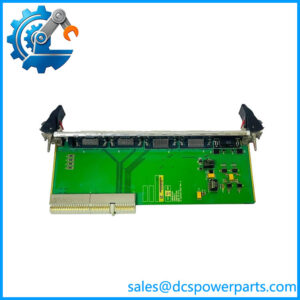
KEBA FB201 | PLC Board / CPU Module | Legacy Machine Control
Key Technical Specifications
| Parameter | Specification |
|---|---|
| Manufacturer | KEBA |
| Model | FB201 |
| Product type | PLC board / CPU module |
| System role | Machine-control processing |
| Installation | Rack mount |
| Status indication | Status indicators reported |
| Weight | Approximately 0.45 kg / 0.99 lb |
| Dimensions | Approximately 27 × 20 × 3 mm as listed by one repair supplier; verify against the physical card |
| Power supply | Not reliably documented publicly |
| Communication interfaces | Not reliably documented publicly |
| I/O configuration | Not reliably documented publicly |
| Programming environment | KEBA-specific system environment; exact platform should be verified |
| Manufacturer status | Discontinued |
KEBA FB201 is consistently listed by industrial repair/component sources as a PLC module / CPU card and as a discontinued product. The available documentation is not sufficient to safely publish detailed electrical or I/O specifications.
Product Introduction
The KEBA FB201 is a legacy PLC board associated with KEBA industrial machine-control systems. Available industrial component records identify it as a rack-mounted PLC module or CPU card, with status indicators for operational diagnostics. Its role should therefore be considered part of the control-processing architecture rather than that of a conventional standalone 24 VDC digital I/O module.
The limited public documentation for this older hardware makes the complete identification particularly important. A replacement should be matched against the installed KEBA controller architecture, board revision, rack position, connectors, application program and machine-specific configuration rather than selected solely from the FB201 designation.
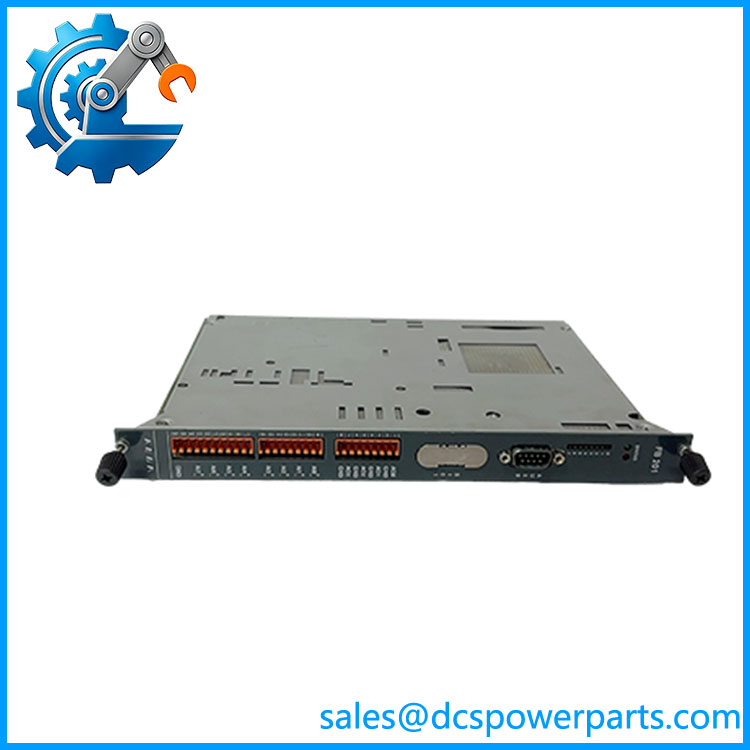
FB201
Application Scenarios & Field Pitfalls — Engineer’s Perspective
Engineering Pain Point
The biggest issue with FB201 is that the designation is not unique across industrial automation documentation. Siemens documentation, for example, uses as a software function block for safety programs, while KEBA is physical PLC hardware.
Typical Applications
- Legacy KEBA machine control — maintaining older automation equipment using KEBA PLC hardware.
- Industrial machinery — replacement of a failed controller board in an existing KEBA control cabinet.
- Machine retrofit projects — retaining the original control architecture when complete system replacement is not practical.
- Maintenance spare inventory — holding a tested replacement for discontinued KEBA equipment.
Technical Pitfalls to Avoid
- Do not confuse KEBA with Siemens . Siemens uses as a programmable software function-block designation, not as this KEBA hardware part.
- Do not assume generic 24 VDC I/O specifications. Current reseller pages provide broad descriptions but do not establish reliable -specific voltage, channel-count or communication specifications.
- Match the complete board. Check PCB revision, connectors, rack position, installed firmware/software and machine application before approving a replacement.
- Preserve the application program and parameters. A physically compatible CPU board may still require the correct machine-specific software and configuration to restore operation.
Related Products
- KEBA CP200 Series — related KEBA controller family for machine automation.
- KEBA CP240 — controller hardware from the broader KEBA machine-control ecosystem.
- KEBA CP300 Series — later KEBA controller family with different hardware architecture.
- KEBA E-16ANALOG/B — analog I/O hardware used with compatible KEBA control systems.
- KEBA DI8/DO8 — digital I/O hardware for machine-control applications.
- KEBA DI16/DO16 — higher-density digital I/O option.
- KEBA KeTop — operator-interface family commonly associated with KEBA machine-control systems.
- KEBA KeDrive — servo-drive family used in motion-control applications.
These products should not be considered direct substitutes for without confirming the installed KEBA platform and application architecture.
Procurement Note
When sourcing , specify:
KEBA — PLC Board / CPU Module
Then verify the PCB revision, rack configuration, connector arrangement, firmware, machine application and installed KEBA controller platform.
One important database rule: do not list simply as a generic “I/O module.” The stronger available evidence identifies it as a PLC board / CPU module, while the exact electrical and communication specifications remain insufficiently documented publicly.