Description
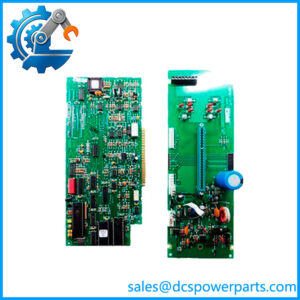
KEBA AR281 | Analog Control Card | KEMRO PLC Measurement Module
Key Technical Specifications
| Parameter | Specification |
|---|---|
| Manufacturer | KEBA |
| Model | AR281 |
| Product Type | Analog control / measurement card |
| Host System | EC/CC100-A03 / KEMRO control platform |
| Processor | Intel 80960KB RISC |
| Processor Clock | 25 MHz |
| DRAM | 4 MB |
| Flash Memory | 1 MB |
| SRAM | 16 KB |
| Analog Inputs | 8 |
| Analog Input Range | -10 V to +10 V |
| Analog Input Resolution | 14 bit |
| Serial Measurement Inputs | 3 |
| Digital Inputs | 2 |
| Analog Outputs | 7 |
| Analog Output Range | -10 V to +10 V |
| Analog Output Resolution | 12 bit |
| Typical Output Application | Valve amplifier / servo-valve control |
| Module Connection | Plug-in control card |
| Product Status | Legacy / discontinued |
The legacy KEBA technical documentation specifically describes AR281 as an analog control card with an Intel 80960KB RISC processor running at 25 MHz. It lists eight ±10 V analog inputs with 14-bit resolution, three serial inputs, two digital inputs, and seven ±10 V analog outputs with 12-bit resolution.
Product Introduction
The KEBA AR281 is a processor-based analog control card designed for older KEBA KEMRO / EC/CC100-A03 automation systems. It combines analog measurement, digital sensing, serial transducer acquisition, and analog control outputs on one plug-in card. The card was used for machine-control functions where pressure, position, force, speed, and related process variables had to be acquired and converted into control commands.
For replacement work, the important point is that KEBA AR281 is more than a conventional analog input module. Its onboard processor and application-specific signal handling make the card part of the control architecture. The original documentation also shows configuration switches for addressing, boot mode, and analog-input operating modes, so a replacement should be checked against the existing application and card configuration rather than treated as a generic I/O substitute.
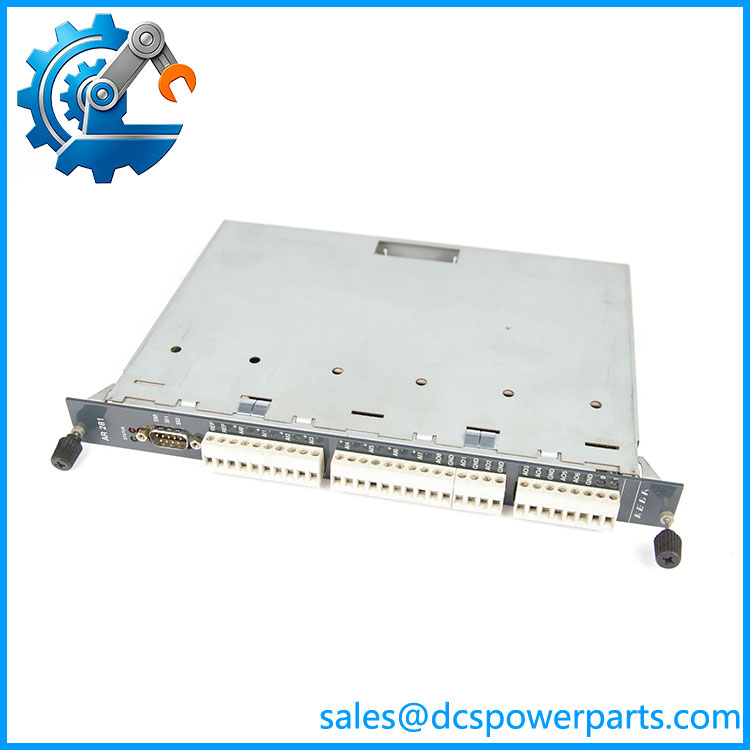
AR281
Application Scenarios & Field Pitfalls — Engineer’s Perspective
Engineering Pain Point
An AR281 failure can affect both measurement and machine-control functions because the card handles multiple analog signal paths and contains its own processing hardware. A mechanically identical replacement with different firmware, memory configuration, addressing, or input jumper settings may not behave as the original card.
Typical Applications
- KEBA KEMRO / EC/CC100-A03 machine controllers
- Injection molding machine control
- Hydraulic pressure and clamping-force measurement
- Position and stroke transducer acquisition
- Servo-valve and valve-amplifier control
- Machine speed and process-profile control
The technical manual specifically references applications including hydraulic pressure, mold-cavity pressure, clamping force, stroke measurement, valve-amplifier control, ramp/profile processing, and software servo-valve control.
Technical Pitfalls to Avoid
- Do not confuse with a modern generic analog I/O module.
The original documentation identifies it as an analog control card with an Intel 80960KB processor. Its role is therefore tied to the legacy KEBA control architecture. - Verify the analog input configuration before replacement.
The documentation describes selectable input arrangements and configuration jumpers for the eight analog inputs. Check the existing card’s jumper positions and coding-switch settings before commissioning the replacement. - Verify the complete application hardware, not only the number.
is associated with the EC/CC100-A03 environment and can operate with related modules such as the SR161/A. The rack, bus arrangement, application software, and connected transducers should all be checked during replacement. - Be careful with simplified channel descriptions.
Current reseller pages variously describe as an analog input module, analog I/O module, or “8xAIN + 5xAOUT” module. The older technical documentation provides the more detailed architecture and should take precedence when specifications conflict.
Related Products
- KEBA AR181 — Earlier-generation analog control card associated with the architecture; the technical manual identifies AR181 as the predecessor to .
- KEBA SR161/A — Sub-control module that can be coupled through the IEB bus with /AR181 systems.
- KEBA TT081 — Temperature measurement and control module for thermocouple-based applications in the same legacy control environment.
- KEBA CU313 — KEBA PLC/control board found in related machine-control installations; verify the exact CPU and rack generation before substitution.
- KEBA EC100-A03 — Legacy KEBA control-system platform associated with .
- KEBA CC100-A03 — Control-system environment in which documentation is specified.
- KEBA CR162 — Legacy KEMRO-BUS main rack associated with EC100/CC100-A03 systems.
- KEBA PS244 / PS243 — Power-supply modules listed for the associated CR162 rack architecture.
Procurement & Replacement Check
Before purchasing a , verify:
- Exact marking:
- Original KEBA article number, if available
- EC/ or compatible host system
- revision and hardware configuration
- Coding-switch/address setting
- Analog-input jumper configuration
- Boot/Flash configuration
- Connected pressure, position, force, or stroke transducers
- Application software and machine backup
- Condition of the card edge connector and mating rack
- Availability of a tested replacement rather than an unverified pulled card
Recommended procurement description:
KEBA Analog Control Card, KEMRO EC/ PLC System, Intel 80960KB RISC Processor, 8-Channel ±10 V Analog Input, 7-Channel ±10 V Analog Output, Legacy Machine-Control Module.
The key identification point is that is a processor-based analog control card for a legacy KEBA machine-control platform, not simply a standalone modern analog input module. For a field replacement, matching the host KEMRO/EC/CC100 architecture and the original configuration is critical.