Description
Product Overview
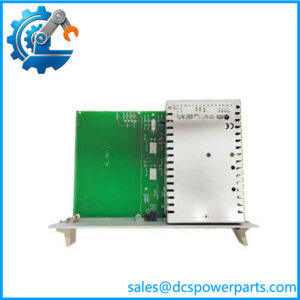
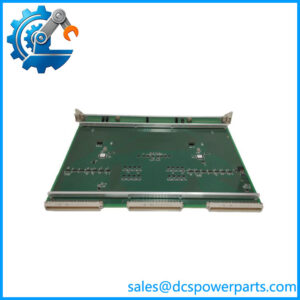
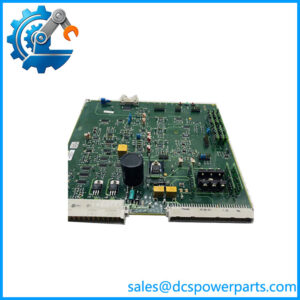
ICP232 is a rack-mounted control board that sits on an Alstom VME backplane and acts as a processing and communication node for the surrounding drive or power-conversion equipment. Its order code 029.359325 identifies the assembled board — populated, with its firmware — and the board is supplied in the familiar Alstom form of a plug-in card with a front panel, edge connectors and an extraction handle, roughly 267 mm long, 191 mm deep and 25 mm thick.
The single most expensive mistake made with this part number is reading its name. ICP232 is a model index in a family of 232-series boards used in Alstom drive cabinets; it is not a reference to RS-232, and the board is not a serial interface card. Its interfaces, as recorded against the part in inventory documentation, are the VME backplane, Ethernet, CAN and local I/O. A buyer who orders it expecting a two-channel serial card receives a backplane processor and discovers the error at installation, not at quotation.
What the board does in the system is what a controller node does anywhere: it executes the control logic that the rack’s other boards feed, it moves data between the backplane and the cabinet’s Ethernet and CAN networks, and it presents the drive’s state to the operator station and to the plant network above. In an Alstom drive or converter, that means the board is in the path between measurement and firing — which sets the standard for how it must be handled. Configuration, firmware revision and slot position are part of its identity in a way that a passive I/O card’s are not.
The board also carries a lineage that matters for sourcing. Alstom’s power-conversion business passed into GE, so this is a GE Power Conversion legacy part now, supported by the installed base rather than by an active catalogue. Documentation is thin, described specifications come largely from inventory records rather than from a datasheet, and the practical sourcing question is not “is it available” but “does the offered board carry the firmware revision this cabinet expects”.
One honest limit up front: no OEM datasheet for 029.359325 was located. The figures below come from inventory-level documentation and from the board’s physical format, which is sufficient to identify the product and completely insufficient to guarantee a firmware match. That match has to be confirmed against the cabinet.
Technical Specifications
| Parameter | Value |
|---|---|
| Product model | ICP232 |
| Part number | 029.359325 (alternate reference 029.359325/07) |
| Manufacturer | Alstom (GE Power Conversion heritage) |
| Product type | Control / communication processor board |
| Bus interface | VME backplane |
| Network interfaces | Ethernet, CAN |
| Local I/O | Digital and analog channels per cabinet integration |
| Processor class | ~225 MHz |
| Board format | Rack plug-in card with front panel and handles |
| Dimensions | 267 mm × 191 mm × 25 mm |
| Mass | ~0.4 kg |
| Power | Supplied from the rack backplane |
| Country of manufacture | Germany |
| Operating environment | Drive or converter cabinet interior; verify against the cabinet’s rating |
| Configuration | Firmware and parameters matched to the drive’s software revision |
| Calibration | None required at board level |
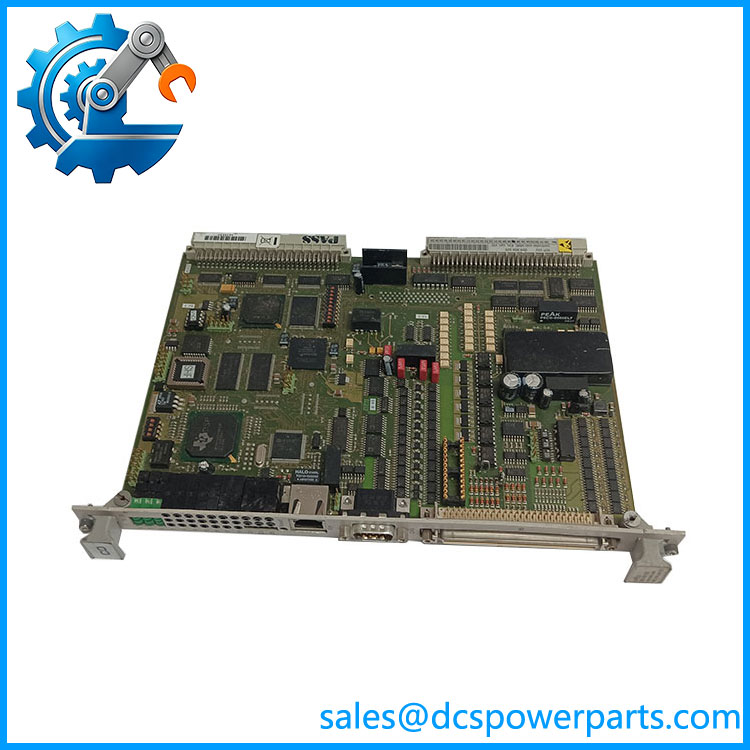
ICP232 029.359325
Key Features and Advantages
A processor on the backplane, not an adapter on a cable: because ICP232 is a VME node, the control logic it executes runs at backplane speed and the cabinet’s wiring stays short. That is why Alstom drive architectures of this generation could put real control inside the power cabinet rather than in a separate controller enclosure — and why replacing the board is a system event rather than a plug-in convenience.
Three network paths for three different jobs: the VME backplane carries the deterministic traffic to the rack’s own boards, Ethernet carries the supervisory and engineering traffic, and CAN carries the field-level devices. Separating them means a saturated plant network does not disturb the drive’s internal cycle, which is exactly the failure mode that makes single-network drive controllers unpopular with maintenance teams.
Board-level I/O that shortens the signal path: local digital and analog channels let the board act directly on limit switches, enable signals and reference values instead of routing them through another module. In a cabinet where every extra interface is another connector to corrode, that is a reliability argument as much as a cost one.
Firmware as part of the part number: this board is ordered as an assembly, and the assembly includes the program it runs. A replacement with a different revision will fit, power up, and then behave differently from the board it replaced — different communication timing, different parameter defaults, sometimes a different fault response. The version string on the label, not the model number, decides whether the swap works.
A form factor that dictates handling: a 267 mm plug-in card with gold edge fingers is a mechanical device as much as an electronic one. Insertion force, connector alignment and backplane seating determine whether it runs for a decade or produces intermittent crashes that are blamed on software for months.
Heritage that changes the support path: parts from the Alstom-to-GE transition are supported by GE’s legacy organisation and by the surplus market, which means the technical answer usually comes from the people who kept the cabinets running rather than from a current data sheet.
Applications
Alstom drive and converter cabinets in metals: main drive and section drive control in rolling mills, where the board executes the loop control and hands references to the firing electronics on the same backplane.
Power conversion and excitation equipment: converters and generator excitation systems where the board bridges measurement, control output and the plant network, and where its CAN link reaches the power-stage devices.
Legacy industrial automation on Alstom platforms: process lines, packaging and conveying equipment built around Alstom control racks, still running because the mechanics are sound and the electronics are supported as spares.
Marine and heavy-industry drives: propulsion and large auxiliary drives where a cabinet-mounted controller with local I/O avoids a separate control room and its cabling.
Plant life extension programmes: installations where the choice is between re-engineering the control architecture and replacing a single processor board, and where the economics strongly favour the board.
Spares and repair benches: workshops that keep a known-good ICP232 to prove a suspect cabinet, which is the fastest way to separate a board fault from a backplane, firmware or wiring fault.
Related Products
029.359325/07 — alternate reference recorded against the same board; confirm which build the cabinet holds before ordering. SPU232 — signal-processing / processor module reported alongside ICP232 in Alstom drive cabinets. DIZ232 — digital input module of the same 232-series family. PIB101 — measurement interface board used in the same Alstom drive and converter racks. DATEL .2-5V (029.361114) — a completely different product, an RS-232 to RS-485/422 converter; the name collision that produces most wrong deliveries. Alstom VME rack / backplane — the carrier that supplies power, slot addressing and the bus the board runs on. Alstom drive control cabinet (ALSPA / MV3000 heritage) — the system the board belongs to and the reference for firmware matching. GE Power Conversion legacy spares channel — the successor support route for Alstom-origin boards of this generation.
Installation and Maintenance
Before installation: treat this as a controlled swap rather than a part replacement. Record the firmware and parameter revision of the board being removed, confirm the replacement carries the same revision, and photograph the slot, the cabling and the front-panel connections before extraction. Power the rack down before inserting or removing a VME board — this generation of backplane is not hot-swap — and check the edge fingers for contamination or bent contacts before seating. Seat the board fully with even pressure and secure the front panel; a partially seated produces faults that look like software.
Maintenance practice: the failures worth chasing are mechanical and thermal before they are electronic. Reseat and inspect edge connectors at planned outages, verify the cabinet’s forced-air path and filter condition, and log any intermittent communication or crash event with the board’s slot and revision so that patterns become visible. Back up the drive’s parameter set and the board’s configuration before any swap, and keep a known-good board as a reference unit rather than relying on a replacement to prove itself. If a cabinet misbehaves after a board change, restore the original board before changing anything else — the fastest way to confirm the replacement was the cause.
Warranty and Quality
Every (029.359325) is supplied with the part number and any build suffix stated and confirmed, because this board is ordered as an assembly whose firmware is part of what the buyer receives. Units are inspected for edge-connector condition, front-panel and handle integrity, and evidence of backplane-side damage, and are checked for correct revision marking before dispatch; they carry a 12-month repair, replacement or refund commitment. Support concentrates on the two questions that decide whether the part works in the cabinet: confirming it is the VME control board and not the similarly named serial converter, and matching firmware and build revision to the drive’s software before installation rather than after a commissioning failure.