Description
Product Overview
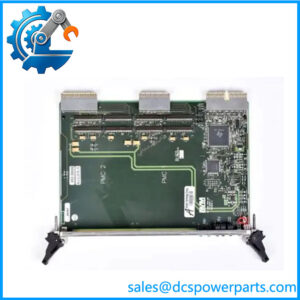
CIF 80-PB is a Hilscher fieldbus card for the 3U CompactPCI (Eurocard 3 HE) slot — the industrial-PC bus that turbine control chassis, rugged embedded computers and telecom-grade cabinets used instead of desktop PCI. Its job is narrow and complete: it holds the entire PROFIBUS protocol stack on its own EC-1 communication controller, presents that stack to the host as an 8 kByte dual-port memory window, and speaks PROFIBUS on an optically isolated RS-485 port behind a 9-pin D-sub on the front panel.
The PB in the name means PROFIBUS, and the specific card is a combi master: it can act as a PROFIBUS DP master with the DPV1 extension and it can also run PROFIBUS FMS services. That single letter combination is where most procurement mistakes begin, because the same physical board exists as CIF 80-DPS — a DP slave. Both are 3U CompactPCI, both look alike from the front, both fit the same slot, and only one of them can master a network. A slave card installed where a master was expected produces a rack that powers up, loads its driver, reports itself healthy, and never exchanges a single cyclic frame with the drives and remote I/O on the bus.
The architecture explains why cards of this generation are still in service. Because the protocol runs on the card’s own controller, the host software only reads and writes process data through the dual-port memory; scan timing, slave diagnostics and bus arbitration cost the host nothing. A 2005-vintage industrial PC with a modest processor can therefore master a full PROFIBUS segment at 12 Mbaud, which is exactly why plants with ageing turbine-control and embedded chassis keep buying this card rather than re-engineering the cabinet around a modern gateway.
One detail distinguishes the CIF 80 from every other card in the family: its front panel carries an HS LED, and no other CIF model has one. HS is hot swap, a CompactPCI feature the card was built to use — blue while it is being inserted or removed and during initialisation, off when initialisation is complete. That is not a marketing line; it is in Hilscher’s hardware installation manual, and it is the practical reason a failed card can be replaced in a live chassis in minutes rather than at the next outage.
The card belongs to a superseded generation. Hilscher’s later netX-based cifX family replaced the EC1-based CIF cards, and the drivers published for this hardware are the Windows 2000/XP/Vista generation — the Vista driver in polling mode only. Buying one in 2026 is a decision about keeping an installed system running, not about building a new one, and the constraint to respect is the host’s operating system, not the card’s electrical specification.
Technical Specifications
| Parameter | Value |
|---|---|
| Model | CIF 80-PB |
| Manufacturer | Hilscher, Germany |
| Product type | PROFIBUS fieldbus communication card, master |
| Bus format | 3U CompactPCI (Eurocard 3 HE) |
| Fieldbus function | PROFIBUS FMS / DP combi master, DPV1 extension |
| Communication controller | EC-1 |
| Dual-port memory | 8 kByte |
| Process I/O data | 7 kByte total |
| Slave capacity | Up to 125 slaves, max. 244 bytes per slave |
| Transmission rate | 9.6 kBaud to 12 Mbaud |
| Fieldbus interface | RS-485, optically isolated, 9-pin D-sub female, EN 50170 |
| Diagnostic interface | RS-232C, non-isolated |
| Status LEDs | RDY, RUN, STA, ERR, plus HS (hot swap) unique to CIF 80 |
| Supply | 5 V from the CompactPCI backplane, ~650 mA (3.3 V rail also used) |
| Dimensions | 160 × 100 × 20 mm |
| Operating temperature | 0 °C to 55 °C |
| Configuration software | SyCon, CIF Device Driver, OPC server, DOS toolkit, Windows CE driver |
| Status | Discontinued by the manufacturer |
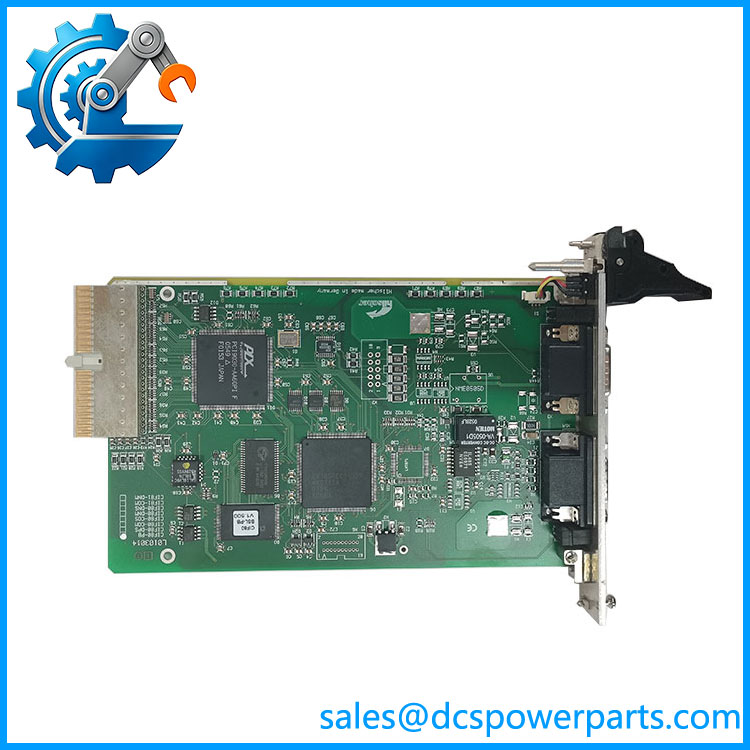
CIF80-PB
Key Features and Advantages
Master and slave are different cards: PB is the combi master; -DPS is the slave. Since both occupy the same CompactPCI slot and share a front panel layout, the model suffix on the label is the only thing standing between a working network and a card that cannot talk. Checking that suffix against the cabinet drawing is the first step of any replacement, and it is cheaper than the commissioning session that follows a wrong delivery.
Protocol on the card, host left alone: the EC-1 runs the stack, and the host reads and writes an 8 kByte window. On a chassis whose CPU is already loaded with turbine control or embedded application code, that is the difference between adding a fieldbus and destabilising the machine — the communication work simply does not appear in the host’s timing budget.
Capacity that has to be budgeted, not assumed: 125 slaves at 244 bytes each sounds like 30 kB, but the card’s process image is 7 kB. Real installations therefore trade slave count against per-slave data length, and a network designed at the edge of both limits will fail in a way that looks like a driver problem. Sizing the process image before the network is built is the discipline this card demands.
Hot swap as a documented feature, not a hope: the HS LED exists only on the CIF 80 because CompactPCI supports live insertion. With the chassis configured for hot swap, a card can be pulled, replaced and re-initialised without powering down a controller that may be running a turbine — and the LED tells the technician whether initialisation has actually finished before the system is trusted again.
Diagnostics on two levels: the four front-panel LEDs give the immediate picture — ready, running, bus status, error — while a separate non-isolated RS-232C port carries the configuration and diagnostic connection used with SyCon. That separation means a bus problem can be examined with a service laptop without touching the production network, which on a live plant is worth more than the port costs.
One driver across the whole family: Hilscher’s CIF Device Driver serves every card format in the series, so a plant that already runs a CIF 50-PB in a desktop IPC and a CIF 104-PB in a PC/104 box can drop a CIF 80-PB into a CompactPCI chassis without a second software stack, a second configuration method or a second training course.
Applications
Gas and steam turbine control chassis: CompactPCI-based controllers where the PROFIBUS segment reaches valve positioners, remote I/O and auxiliary drives, and where the master card is part of the machine’s original architecture rather than an add-on.
Embedded industrial computers on VME/CompactPCI backplanes: chassis used in power stations and heavy industry where a fieldbus segment has to be added to a computer that has no PCI slots available.
Legacy DCS and SCADA front ends: host computers connecting to PROFIBUS instruments, actuators and drives, where the alternative to this card is replacing the computer and the application with it.
Test benches and simulator racks: CompactPCI chassis used for turbine, drive and protection simulators, where a PROFIBUS master is needed to exercise real field devices against a simulated plant.
Marine and offshore automation cabinets: engine-room and power-management systems built on rugged CPCI hardware, where a documented hot-swap card is an operational advantage on a vessel that cannot easily be shut down.
Spares for discontinued systems: the practical case for most purchases today — replacing a failed card in an installed chassis where the driver set, the configuration file and the operator’s familiarity all belong to the EC1 generation.
Related Products
CIF 80-DPS — the DP slave version in the identical CompactPCI format; the card most often confused with CIF 80-PB. CIF 80-CO — CANopen variant of the same CompactPCI card. CIF 80-DN — DeviceNet variant of the same CompactPCI card. CIF 50-PB — PCI sibling with the same EC-1 architecture for desktop and rack-mount industrial PCs. CIF 104-PB — PC/104 version for embedded single-board computers. CIF 104C-PB — PCI-104 version for stacked embedded systems. CIF 30-PB — ISA-bus predecessor, jumper-configured, 8 kByte DPRAM. PMC-PB — PMC mezzanine version for VME and CPCI carrier boards. cifX generation (netX-based) — Hilscher’s later replacement family; the upgrade path, not a drop-in substitute. SyCon-PB — Hilscher’s network configuration and diagnostic tool shipped with the card’s software set. CIF-OPC — OPC server option for exposing the card’s process data to SCADA clients. KAB-PB — PROFIBUS cable set used for commissioning the segment.
Installation and Maintenance
Before installation: confirm the card is the master (PB) and not the slave variant, then check that the chassis slot is a CompactPCI slot with the 3.3 V and 5 V rails the card expects, and that the host operating system falls within the driver generation this hardware supports. Record the existing card’s configuration file before removal — the network’s slave list and parameter set live in SyCon, not on the card — and note the front-panel LED behaviour of a healthy card so that a replacement can be judged against a known reference. On a chassis configured for hot swap, follow the enclosure’s live-insertion procedure; on one that is not, power the chassis down before touching the slot.
Maintenance practice: the card itself has no wear items, so the failures to look for are environmental and mechanical — dust in the front-panel connector, contact contamination on the edge fingers, and a backplane slot that has been disturbed. Verify the RS-485 segment’s termination and shielding before condemning the card, since a bus error flagged by the ERR LED is more often cable and termination than silicon. When a spare is fitted, confirm that the driver recognises it and that the process image matches the configured network, then watch the HS LED through the initialisation before returning the segment to service. Keep the SyCon project file archived with the chassis documentation; a replacement card restored with the wrong project is a healthy card that masters nothing.
Warranty and Quality
Every CIF 80-PB is supplied as Hilscher’s CompactPCI PROFIBUS combi master, with the model and its master-versus-slave identity confirmed on the label before dispatch, because the visual similarity to CIF 80-DPS makes that check the most valuable part of the transaction. Units are inspected for edge-connector condition, front-panel connector integrity and evidence of backplane damage, and are tested for recognition by the CIF Device Driver where a suitable host is available. They carry a 12-month repair, replacement or refund commitment. Support covers the questions this legacy card raises in practice: distinguishing the master from the slave variant, confirming driver and operating-system compatibility before installation, and advising on process-image sizing and SyCon project recovery so that a chassis built around this generation keeps running.
免费
今天 16:39