Description
Product Overview
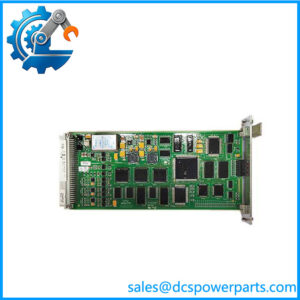
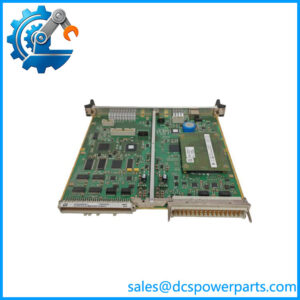
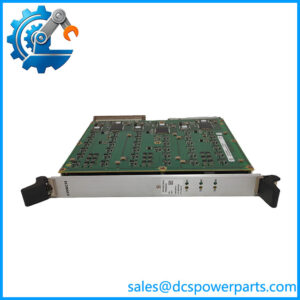
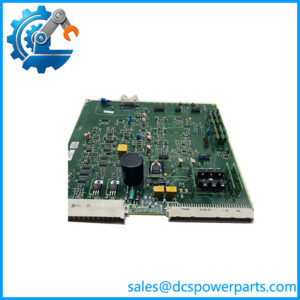
The ALSTOM N895313512X N95313012D SUP-AL N895313000R is a legacy ALSTOM control-system module associated with cabinet supervision, alarm handling, and auxiliary-system monitoring. The four identifiers are commonly grouped together in ALSTOM spare-part references: N895313512X, N95313012D, SUP-AL, and N895313000R. The “SUP-AL” designation is particularly useful when identifying the board from older cabinet drawings or maintenance records.
Functionally, the ALSTOM N895313512X should not be treated as a generic PLC CPU simply because some secondary listings describe it that way. Other records identify the same assembly specifically as a supervision/alarm module, while an ALSTOM spare-parts list places N895313512X/N895313000R under auxiliary system power modules. That evidence points toward a cabinet-level supervisory role rather than a conventional standalone controller.
For an installed ALSTOM control system, the N895313512X N95313012D is best evaluated as a system-dependent module. Its actual function depends on the host cabinet, associated wiring, rack/interface hardware, and the control architecture in which SUP-AL is installed. This is important during a legacy replacement: a matching label is necessary, but the board revision, connector arrangement, cabinet position, and associated alarm/power circuits should also be checked. Published secondary specifications claiming 220 V operation, 60 kHz output, PXIe compatibility, or multi-core processing are internally inconsistent and should not be treated as confirmed engineering specifications.
Key Technical Specifications
| Parameter | Value |
|---|---|
| Manufacturer | ALSTOM |
| Primary Part Number | |
| Associated Part Number | N95313012D |
| Module Designation | SUP-AL |
| Additional Part Number | N895313000R |
| Product Type | Supervision / Alarm Module |
| System Role | Cabinet supervision and auxiliary-system monitoring |
| Application | ALSTOM industrial control systems |
| Architecture | System-dependent control module |
| Host Interface | Verify rack/cabinet interface from installed system |
| Field Interface | Verify terminal/connector configuration |
| Number of Channels | Not reliably confirmed |
| Input Voltage | Not reliably confirmed |
| Output Voltage | Not reliably confirmed |
| Communication Protocol | Not reliably confirmed |
| Operating Temperature | Not reliably confirmed |
| Mounting | Cabinet/rack dependent |
| Firmware | System/revision dependent |
| Condition | New Surplus, subject to inspection and functional testing |
Specification caution: The available online descriptions are unusually inconsistent. One source calls a PXIe controller with Ethernet, USB, serial interfaces, and a multi-core processor; another identifies the same part family as a supervision/alarm module; another places it under auxiliary system power modules.
For engineering procurement, I would therefore not publish a nominal voltage, current, communication protocol, or CPU specification as fact without a photograph of the actual nameplate/PCB and the associated ALSTOM system documentation.
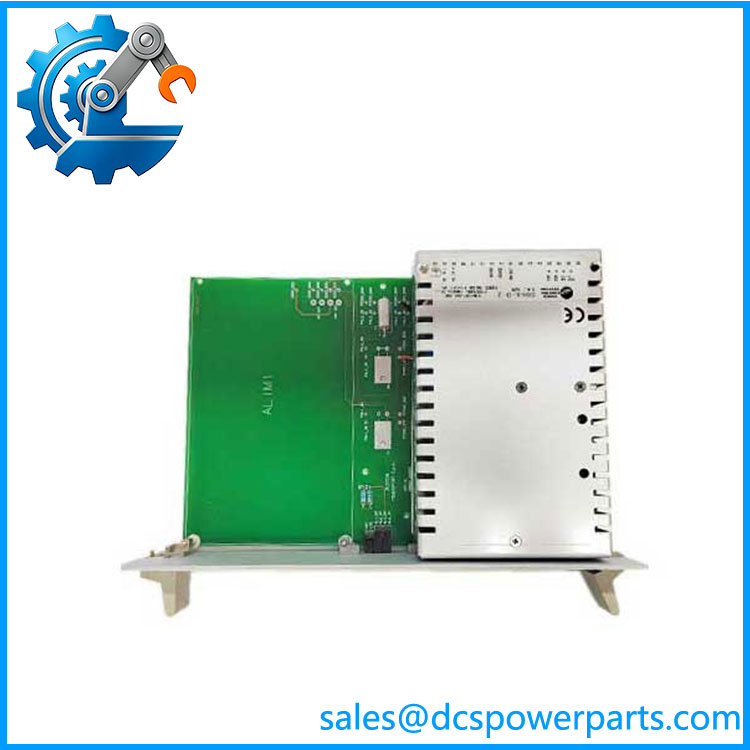
N895313512X
Related Products
- ALSTOM N895600512D / N895600051C / ECPU_1 / N895600200Q — Central processor module in the same legacy ALSTOM control ecosystem. Unlike SUP-AL, ECPU_1 is associated with primary control processing.
- ALSTOM N895609510K / N895609010R / E32OUT / N895609100P — Digital output module used for control outputs. It complements supervisory hardware but performs an I/O function rather than cabinet supervision.
- ALSTOM N897066510E / N897066010M / AOVD / N897066000A — Analog output module. Appropriate where analog command signals are required; not a direct replacement for SUP-AL.
- ALSTOM N897093511D / N897093051D / DIAGNOSTICA / N897093400H — Diagnostic module used for system monitoring and fault analysis. It is complementary to SUP-AL but has a different diagnostic function.
- ALSTOM N897092520B / N897092057Y / TRENO / N897092500E — Legacy ALSTOM train-control module. It belongs to the same broader hardware ecosystem but serves a different application.
- ALSTOM 12004-102-01 / VPS BOARD / VER.C — Power/interface board in the ALSTOM control architecture. It can be related to the cabinet power and interface structure surrounding SUP-AL.
- ALSTOM SDK-C0147 / 12004-101-00 / SBS04M17C — Legacy control/interface module from the same general ALSTOM hardware family. Its slot and function must be verified before considering substitution.
Frequently Asked Questions
1. What is ALSTOM N95313012D SUP-AL N895313000R used for?
Available records associate it with ALSTOM cabinet supervision, alarm, and auxiliary-system monitoring. The SUP-AL designation is the clearest functional identifier in the available references.
It should not automatically be classified as the main PLC/DCS CPU.
2. Can I replace with another ALSTOM control module?
No—not without checking the complete hardware identification.
At minimum, compare:
- designation
- N95313012D part number
- N895313000R marking
- SUP-AL designation
- Hardware revision
- Cabinet/rack position
- Connector arrangement
- Associated wiring
- System software/configuration
ALSTOM’s ECPU_1, E32OUT, AOVD, and DIAGNOSTICA modules are physically related in the broader system but perform different functions.
3. Does support firmware v3.1?
There is no sufficiently reliable documentation available to confirm a firmware v3.1 specification for this module.
For a replacement, record the original hardware revision and host-system software revision. Do not infer firmware compatibility from the part number alone.
4. Can I hot-swap the SUP-AL module?
Do not assume that it is hot-swappable.
The module is associated with cabinet supervision and alarm functions, so removing it can affect alarm annunciation or auxiliary-system monitoring even if the primary control CPU remains operational.
Use the plant’s approved maintenance procedure, isolate the appropriate power where required, and verify alarm functionality after replacement.
5. Will replacing SUP-AL cause me to lose my control logic?
The SUP-AL assembly should not be treated as the primary application-logic CPU. Available ALSTOM references separately identify ECPU_1 as a central processor module.
The replacement concern is configuration and monitoring behavior. Confirm alarm assignments, cabinet interfaces, and any board-specific settings before returning the system to service.
6. Why are specifications for inconsistent online?
Because several secondary listings appear to have copied generic or unrelated technical data into the same product record.
For example, one listing describes the unit as a PXIe controller with Ethernet/USB/serial interfaces and a multi-core processor, while other references identify it as SUP-AL supervision/alarm hardware or an auxiliary-system power module.
For procurement, those conflicting generic specifications should be ignored. The complete ALSTOM part-number chain and the physical unit should determine identification.
7. How should I verify a New Surplus ?
For this particular legacy module, I recommend checking:
- label
- marking
- marking
- SUP-AL designation
- PCB revision
- Connector arrangement
- Board condition
- Rack/cabinet compatibility
- Power-interface requirements
- Alarm/supervision functionality
- System diagnostics after installation
Procurement judgment: The part-number combination is well established as an ALSTOM product identifier, but the public technical data is not sufficiently consistent to support invented electrical specifications. A nameplate photograph and the original cabinet documentation are the right way to close the remaining identification gap.