Description
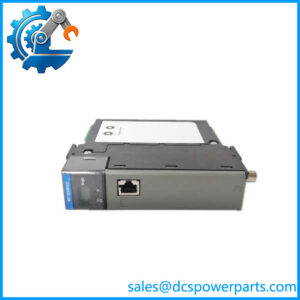
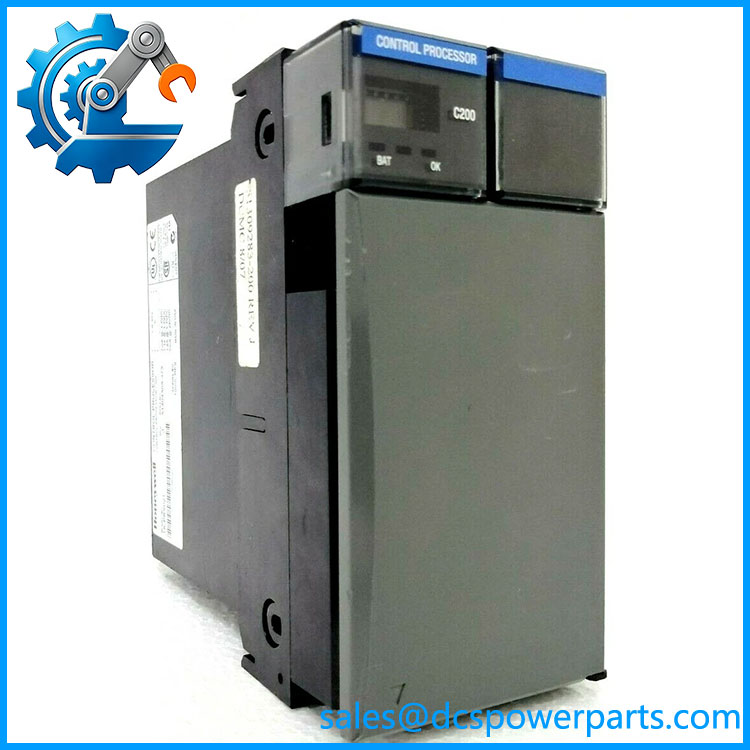
Honeywell TK-PRS021 51404305-375 C200 Control Processor
Key Technical Specifications
| Parameter | Specification |
|---|---|
| Manufacturer | Honeywell |
| Model | TK-PRS021 |
| Part number | 51404305-375 |
| Controller family | Experion PKS C200 |
| Chassis platform | Series-A |
| Module type | Control processor |
| Chassis occupancy | Two slots |
| Power source | Series-A chassis backplane |
| Internal power rails | +5 VDC and +3.3 VDC; confirm revision-specific limits |
| Control environment | Control Execution Environment (CEE) |
| Engineering tool | Compatible Control Builder version |
| I/O connectivity | Local Series-A I/O and PMIO through the appropriate interface hardware |
| Network connectivity | Depends on the installed network interface modules |
| Redundancy | System-dependent; requires compatible supporting hardware |
| Processor revision | Verify physical label; available records show revision-dependent units |
| Operating temperature | Verify against the applicable Honeywell hardware manual |
| Protection rating | Verify chassis and module documentation |
| Replacement compatibility | Confirm part number, hardware revision, firmware, chassis, and controller configuration |
A Sandia technical report documents the TK-PRS021 model with part number 51404305-375 and identifies it as the C200 control processor. Detailed electrical and environmental limits should be taken from the documentation applicable to the actual revision rather than inferred from listings for other TK-PRS021 part numbers.
Product Introduction
The Honeywell TK-PRS021, part number 51404305-375, is the control processor used in the Experion PKS C200 architecture. It executes the configured control logic and process strategies and coordinates data exchange with the system’s I/O and communication hardware. Installed in a compatible Series-A chassis, it forms a central part of the controller execution path.
For maintenance teams, matching the processor designation is only the first step. Hardware revision, firmware compatibility, application configuration, chassis type, and network interfaces all affect replacement planning. Before removing a processor, confirm the control strategy backup, controller status, redundancy arrangement, and approved maintenance procedure. Do not assume a replacement will automatically load the correct application or match the existing firmware.
TK-PRS021 51404305-375
Application Scenarios & Field Pitfalls — The Engineer’s Perspective
Engineering Pain Point
A processor fault can affect many control loops at once, but not every controller-wide communication or I/O alarm points to a failed CPU. Backplane power, network-interface modules, I/O-link hardware, configuration mismatches, and firmware differences can produce similar symptoms. Check controller diagnostics and the wider chassis before authorizing a processor swap.
Typical Applications
- Continuous process control in Honeywell Experion PKS C200 installations.
- Execution of configured regulatory control and logic strategies.
- Coordination of local Series-A I/O and remote PMIO through compatible interface modules.
- Maintenance of legacy control systems where the installed C200 processor must be replaced or retained as a critical spare.
Technical Pitfalls to Avoid
- Verify the complete part number. Confirm
51404305-375; do not substitute the-475or another suffix without documented compatibility. - Record the hardware revision. The part number alone does not establish firmware compatibility or the correct replacement procedure.
- Protect the running application. Back up the control strategy and relevant configuration before planned maintenance. Confirm how the replacement will obtain its application and controller settings.
- Check the chassis power budget. Verify backplane supplies and loading before attributing startup or reset problems to the processor.
- Confirm the redundancy architecture. If the system uses a standby processor, check the supporting redundancy hardware and switchover procedure. Do not pull an energized processor unless the applicable Honeywell procedure explicitly permits it.
- Inspect network and I/O interfaces. Verify FTE or ControlNet-related hardware and the PMIO link, where fitted, before replacing the CPU.
- Commission under an approved test plan. Confirm controller execution, I/O availability, alarms, communications, and process behavior before returning the system to normal operation.
Related Products
These components are associated with the Honeywell Series-A / architecture. They have different functions and are not automatic substitutes for TK-PRS021.
- TK- — 51404305-475: Related processor part number; confirm revision and system compatibility before substitution.
- TK-IOLI01 — 51403427-175: I/O Link Interface Module used to connect compatible control hardware with PMIO.
- TK-FTEB01: Fault Tolerant Ethernet-related hardware; confirm its exact role in the installed chassis.
- TK-CCR014: ControlNet communication interface option cited in product documentation; verify the required network configuration.
- TC-CCN014: ControlNet interface variant listed for related configurations; confirm media and hardware requirements.
- TK-PRR021: Redundancy-related module referenced in secondary technical listings; verify the exact hardware arrangement against Honeywell documentation before specifying it.
- Controller Chassis: The Series-A chassis provides the physical slots and backplane power for the processor and associated modules.
- C300 Controller: A different Honeywell controller family; it is not a direct plug-in replacement for the processor.
Procurement Note
For Honeywell TK- 51404305-375, request a clear photograph of the module label showing the full part number and hardware revision. Confirm the installed chassis, firmware, controller configuration, network interfaces, and redundancy arrangement. Ask the supplier to identify the exact revision being offered and verify it against the site’s approved spare-parts record. Schedule replacement and functional validation under the applicable Honeywell maintenance procedure; physical fit alone does not establish system compatibility.