Description
Product Overview
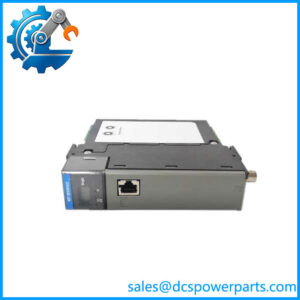
The Honeywell CC-PAIH02 is a 16-channel high-level analog input module with HART capability for the Experion PKS Series-C I/O platform. It accepts voltage and current signals from transmitters and sensing devices, converts those signals through a 16-bit A/D converter, and transfers the resulting process values into the control system. Honeywell’s Series-C specification identifies supported input ranges as 0–5 V, 1–5 V, 0.4–2 V, and 4–20 mA through a 250 Ω load, making the module suitable for common transmitter and instrumentation loops.
Within an Experion PKS installation, Honeywell CC-PAIH02 provides more than basic analog acquisition. HART communication allows the control system to access digital information from compatible intelligent field instruments while the analog loop continues carrying the primary process variable. Honeywell specifies extensive self-diagnostics, open-wire detection, non-incendive field-power conditioning, fast loop scanning, and optional redundancy. The module provides 16 channels, arranged as 12 single-ended and 4 differential inputs in the documented Series-C configuration.
A critical compatibility point with Honeywell CC-PAIH02 is the IOTA. The module can be installed with different IOTA arrangements, including CC-TAIX01/11, CC-GAIX21/11, and CC-TAID01/11, with the exact signal capabilities depending on the selected IOTA. Honeywell specifically documents CC-PAIH02 with CC-TAID01/11 when voltage inputs are required across all 16 channels.
There is also a procurement issue worth flagging: Honeywell published a technical notification in 2024 concerning a CC-PAIH02 component delamination reliability risk. For a replacement going into a continuously operating process unit, checking the module’s manufacturing/revision information and test history is therefore sensible rather than accepting the model number alone.
Product Introduction
Incorrect IOTA selection can make an otherwise good analog input module unsuitable for the intended field wiring. Honeywell CC-PAIH02 supports 16 analog channels and HART communication, but its available voltage and differential-input arrangements depend on the associated IOTA configuration.
For an Experion PKS DCS replacement, confirm the IOTA, channel wiring, transmitter type, HART requirement, and module revision before installation. This is especially important when replacing older Series-C hardware in an operating plant.
Key Technical Specifications
| Parameter | Value |
|---|---|
| Manufacturer | Honeywell |
| Model | CC- |
| Part Number | 51405038-375 |
| Product Type | High-Level Analog Input with HART |
| Platform | Experion PKS Series-C I/O |
| Number of Channels | 16 |
| Channel Configuration | 12 single-ended / 4 differential |
| Input Type | Voltage or current |
| Current Input | 4–20 mA through 250 Ω |
| Voltage Inputs | 0–5 V, 1–5 V, 0.4–2 V |
| A/D Resolution | 16 bits |
| Input Scan Rate | 50 ms |
| Common-Mode Rejection | 70 dB, DC–60 Hz |
| Normal-Mode Rejection | 19 dB at 60 Hz |
| Normal-Mode Filter | Single-pole RC, −3 dB at 6.5 Hz |
| Maximum Differential Input | ±30 V without damage |
| Channel-to-Channel Crosstalk | −60 dB, DC–60 Hz |
| Voltage Input Impedance | >10 MΩ |
| Hardware Accuracy | ±0.075% of full scale at 23.5°C ±2°C; ±0.15% from 0–60°C |
| HART | Supported |
| Open-Wire Detection | Supported |
| Field Power | Non-incendive, individually protected current-limiting circuits |
| Non-Redundant IOTA | CC-TAIX01, CC-GAIX21, CC-TAID01 |
| Redundant IOTA | CC-TAIX11, CC-GAIX11, CC-TAID11 |
| Condition | New Surplus, subject to inspection and testing |
The core electrical specifications above are taken from Honeywell’s Series-C I/O specification.
Related Products
- CC-PAIH01 — Earlier high-level analog input with HART. CC- provides expanded differential-input capability compared with the earlier configuration.
- CC-PAIX02 — High-level analog input without HART. It provides similar analog acquisition functions but is intended for applications where HART communication is not required.
- CC-PAIX01 — Earlier non-HART high-level analog input. Differential capability is more restricted than CC- in the documented architecture.
- CC-PAIN01 — High-level analog input without HART and with a different IOTA family. It is suitable where HART functionality is not required.
- CC-PAIH51 — Series-C HART analog input using the CC-TAIX51/CC-TAIX61 IOTA family. It is related functionally but belongs to a different hardware configuration.
- CC-TAIX01 — Non-redundant IOTA supporting CC-. It provides the field termination/interface arrangement for applicable Series-C installations.
- CC-TAIX11 — Redundant IOTA option for CC-. Use it where the Experion architecture requires redundant I/O.
- CC-TAID01 — Non-redundant 9-inch IOTA that enables the documented CC- voltage-input arrangement across channels 1–16.
- CC-TAID11 — Redundant counterpart to CC-TAID01. It is relevant when both the CC- and field termination architecture are configured for redundancy.
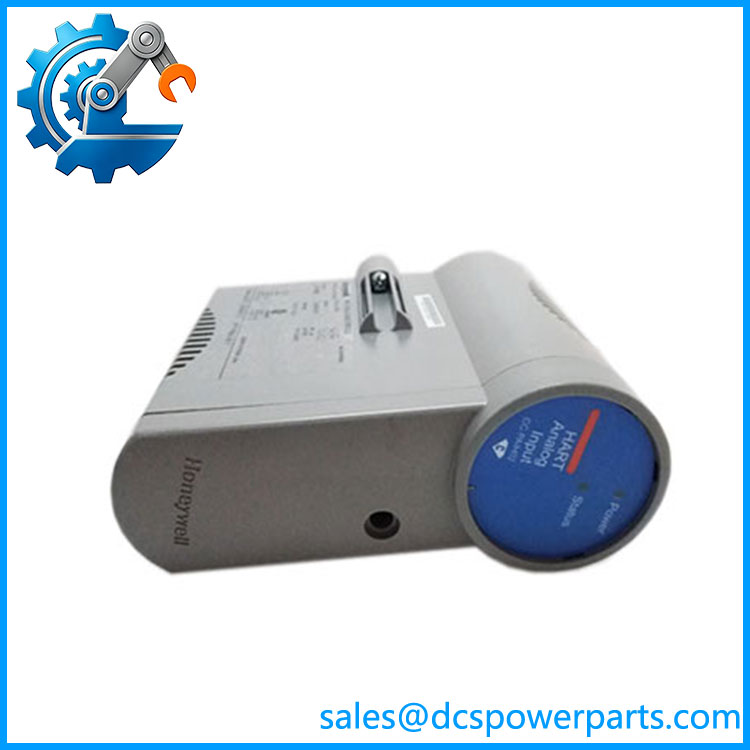
CC-PAIH02
Frequently Asked Questions
What is Honeywell CC- used for?
CC- is a 16-channel high-level analog input module with HART for Honeywell Experion Series-C I/O. It accepts transmitter voltage/current signals and converts them into digital process values for the control system.
It is intended for process instrumentation rather than discrete field signals.
Does CC- support 4–20 mA HART transmitters?
Yes. The module supports 4–20 mA through a 250 Ω input path and HART communication. Honeywell also specifies HART support for multivariable instruments and diagnostic/configuration data.
For a HART installation, confirm that the field termination/IOTA arrangement and Experion configuration support the required HART function.
Can CC- accept voltage signals?
Yes, but the exact capability depends on the IOTA configuration.
Honeywell specifies 0–5 V, 1–5 V, and 0.4–2 V ranges. With the appropriate CC-TAIDx1 IOTA, voltage inputs can be configured across channels 1–16. With CC-TAIXx1, the voltage-input arrangement is more restricted.
This is one reason the IOTA should be matched before approving a replacement.
Can I hot-swap CC-?
Do not assume hot-swap capability.
Although Series-C I/O is designed around modular field hardware, live replacement depends on the specific Experion PKS architecture, redundancy arrangement, IOTA, and approved maintenance procedure.
For a production DCS, follow the site’s approved I/O replacement procedure and confirm whether the installed configuration supports online replacement before removing the module.
Is CC- compatible with CC-TAIX01 and CC-TAIX11?
Yes. Honeywell’s Series-C specification explicitly lists CC-TAIX01 as the non-redundant IOTA and CC-TAIX11 as the redundant IOTA for CC-.
Other compatible IOTA families include CC-GAIX21/11 and CC-TAID01/11, but their signal capabilities and physical arrangements differ.
Will replacing CC- erase my Experion control logic?
Normally, replacing an I/O module does not mean the controller’s main control strategy is erased. The application logic resides in the Experion control architecture rather than being equivalent to the I/O module’s hardware.
The replacement still requires proper configuration and verification:
- Confirm the I/O channel assignment.
- Match the IOTA type.
- Verify 4–20 mA or voltage configuration.
- Check HART configuration where applicable.
- Confirm channel diagnostics.
- Validate process values after replacement.
For a live plant, loop verification should be performed before returning the affected control loops to normal operation.
What should I check when buying a New Surplus CC-?
Beyond the model number, inspect the 51405038-375 identification, hardware revision, connector condition, terminal/IOTA compatibility, and evidence of functional testing.
There is one specific quality-control issue worth taking seriously: Honeywell’s published 2024 system-hints documentation lists a CC- component delamination issue/reliability risk.
For that reason, I would request:
- Clear photographs of the actual module label.
- Manufacturing/revision information.
- Confirmation of the exact IOTA used for testing.
- Power-up and diagnostic test results.
- Analog input verification across representative channels.
- HART communication test where applicable.
- Condition classification and warranty terms.
A “new surplus” label alone does not establish that the module has been screened for this particular reliability concern.