Description
Key Technical Specifications
| Parameter | Value |
|---|---|
| Manufacturer | Honeywell |
| Part Number | 10310/1/109701 |
| Product Type | Safety High-Density Analog Input Module |
| Function | Analog signal acquisition |
| Application | Safety / industrial monitoring |
| Input Type | Analog |
| Channel Density | High-density configuration |
| System Architecture | Honeywell safety/control system |
| Installation | Industrial control cabinet / system chassis |
| Communication | System backplane/interface dependent |
| Field Interface | Analog field instrumentation |
| Safety Function | Safety-related signal acquisition |
| Exact Channel Count | Verify OEM documentation |
| Input Range | Verify exact hardware revision |
| Input Current/Voltage | Verify exact hardware revision |
| Resolution | Verify OEM datasheet |
| Isolation | Verify OEM datasheet |
| Power Supply | Verify host-system documentation |
| Operating Temperature | Verify exact revision |
| Certification | Verify application-specific certification |
Engineering identification note
The part number is relatively poorly documented in publicly indexed technical material. The strongest available identification is 10310/1/109701 = Honeywell Safety High Density Analog Input Module.
Some secondary records incorrectly describe it as a leakage detector or a high-voltage detection device and even assign unsupported MODBUS specifications. Those descriptions conflict with the more specific classification of the part as a Safety High Density Analog Input Module.
For procurement or engineering replacement, do not use those generic electrical figures without the original Honeywell documentation.
Product Introduction
Honeywell 10310/1/109701
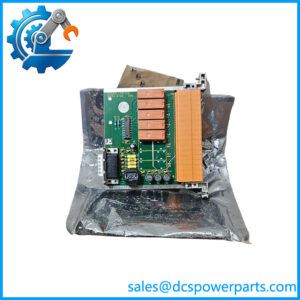
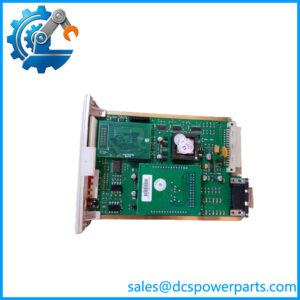
The Honeywell 10310/1/109701 is identified as a Safety High-Density Analog Input Module intended for industrial safety and monitoring applications. Its primary job is to acquire analog signals from field instrumentation and make those measurements available to the host safety/control architecture.
The important point is system compatibility. This is not a generic 4–20 mA analog input card that can be moved between PLC platforms. Channel configuration, signal conditioning, backplane interface, firmware, and safety certification all depend on the host Honeywell system.
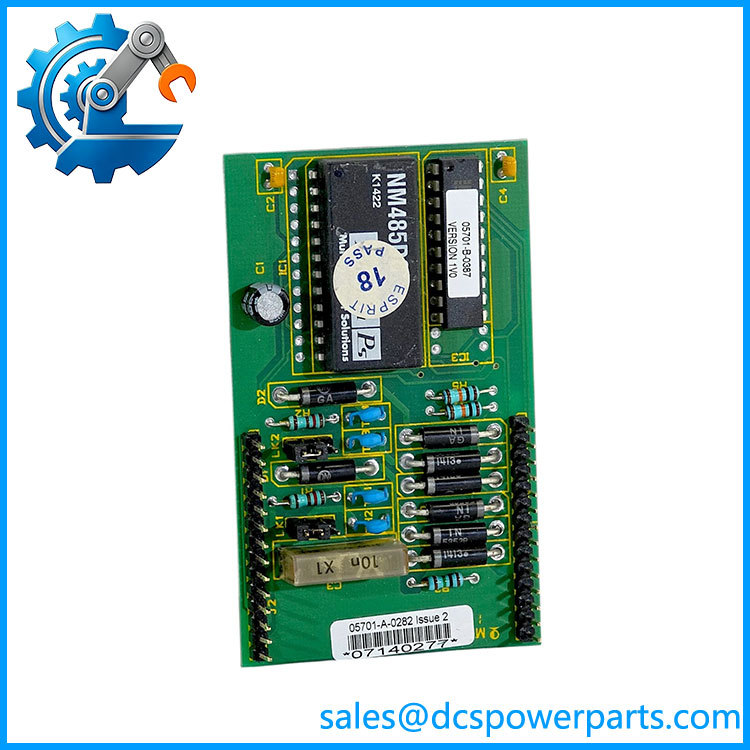
05701-A-0282
Application Scenarios & Field Pitfalls
Engineering Pain Point
A failed analog input card in a safety system can create a confusing situation: the field transmitter may be healthy, while the control system sees a bad, frozen, or implausible measurement. With a high-density safety input module, engineers need to distinguish between a failed field device, wiring problem, termination issue, channel fault, and module-level failure before changing hardware.
Typical Applications
- Oil & Gas — High-density acquisition of analog process and gas-detection signals in safety monitoring systems.
- Petrochemical Plants — Monitoring pressure, temperature, flow, and other analog process variables associated with protective functions.
- Chemical Processing — Safety-related analog measurement and abnormal-condition monitoring.
- Industrial Gas Detection — Concentration and detector signals integrated into centralized safety monitoring equipment.
Technical Pitfalls to Avoid
- Do not assume the exact channel count.
The available records establish the module as high-density analog input hardware, but I would verify the exact number of channels against the OEM manual before publishing a channel count. - Do not assume a standard 4–20 mA input.
The word “analog input” alone does not establish the supported current/voltage ranges. Confirm the exact input type and signal conditioning for the installed revision. - Check the host chassis.
This type of legacy Honeywell module is system-dependent. A physically similar card from another Honeywell platform is not automatically compatible. - Do not trust generic MODBUS claims.
Some secondary listings incorrectly describe 10310/1/109701 as a MODBUS device. That does not establish that MODBUS is the module’s field or backplane interface. - Verify the terminal assembly.
A module replacement does not necessarily resolve a termination or field-wiring fault. Inspect the associated terminal hardware, cable, shield connections, and signal reference. - Check channel scaling.
After replacement, verify raw input values against engineering units. A card can communicate correctly while the configured scaling remains wrong. - Check safety diagnostics.
Verify open-circuit, out-of-range, module fault, and communication diagnostics where supported by the host system. - Do not bypass a safety fault simply to restore a process value.
If the module participates in a safety function, follow the plant’s approved maintenance, bypass, proof-test, and return-to-service procedures. - Record the original configuration.
Before removing the card, document the module position, terminal assignments, channel mapping, configuration data, and any visible hardware revision. - Verify the replacement at system level.
A successful power-up is not sufficient. Perform channel-by-channel verification and confirm that the associated safety logic receives the correct values.
Related Products
- Honeywell 05701-A-0301 — System 57 single-channel control hardware. It belongs to Honeywell’s legacy gas-detection ecosystem but performs a different control function from the 10310/1/109701 analog-input module.
- Honeywell 05701-A-0325 — System 57 input/control hardware. Relevant when working on legacy Honeywell gas-detection installations, but it should not be treated as a substitute for the 10310/1/109701.
- Honeywell 05701-A-0326 — System 57 high-frequency industrial control module. It belongs to a different signal/interface function and is not a direct analog-input replacement.
- Honeywell 05701-A-0330 — System 57 processing/control module. It is complementary system hardware rather than a direct replacement for the high-density analog input function.
- Honeywell 05701-A-0351 — General System 57 module used within the same broader Honeywell gas-detection product family. Functional compatibility must be checked against the host rack.
- Honeywell 05704-A-0146 — Legacy Honeywell gas-detection/control module. It belongs to the same general industrial safety ecosystem but has a different hardware function.
- Honeywell 05701-A-0282 — System 57 MODBUS interface module for RS485/RS422. This provides external serial communications rather than analog signal acquisition and therefore complements rather than replaces an analog input module.
- Honeywell 05701-A-0287 — System 57 MODBUS interface module for RS232. Like the 05701-A-0282, it provides communications rather than analog acquisition.
- Honeywell System 57 Engineering Card — Host-system hardware used for System 57 control and communications functions. It provides a useful reference when determining whether a legacy Honeywell gas-detection module belongs to the System 57 architecture.
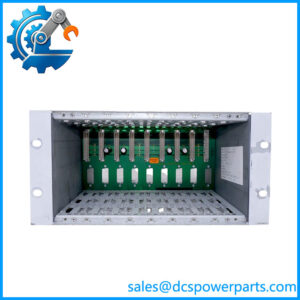
- Honeywell System 57 Rack — Legacy Honeywell gas-detection platform in which multiple detector, input, control, and communications modules can be integrated.