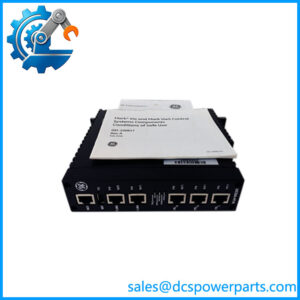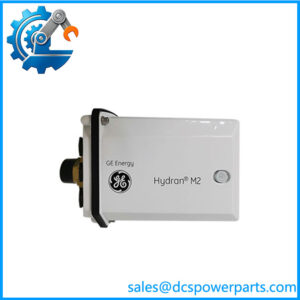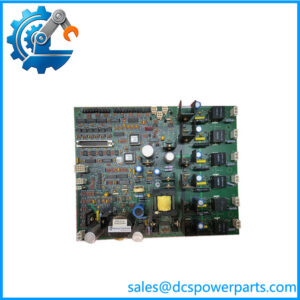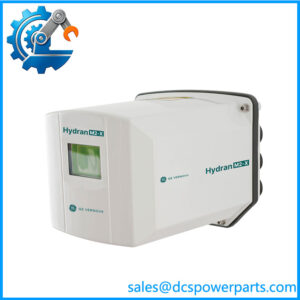
Description
GE UR9VH | Universal Relay CPU Module | GE Digital Protection Relay Processor
Key Technical Specifications
| Parameter | Specification |
|---|---|
| Product Model | UR9VH |
| Manufacturer | GE |
| Product Type | CPU / processor module |
| Product Family | GE Universal Relay platform |
| Primary Function | Digital relay processing and control |
| Application | Substation protection and control |
| Reported System Voltage | 220 V application; verify exact relay configuration |
| Installation | Internal relay assembly |
| Communication Interfaces | Configuration-dependent; verify installed hardware |
| Protection Functions | Determined by complete relay model and firmware |
| Operating Temperature | Verify against relay-specific documentation |
| Storage Temperature | Verify against relay-specific documentation |
| Auxiliary Supply | Verify against complete relay nameplate/order code |
| Hardware Revision | Must be verified before replacement |
Important specification note: UR9VH appears to identify a module rather than a complete GE protection relay. Publicly accessible records confirm the GE manufacturer and CPU-module description, but they do not establish a sufficiently reliable standalone datasheet for parameters such as CPU type, memory capacity, exact communication ports, input/output count, or temperature range. Those values should not be inferred from another UR-series module.
Product Introduction
The GE UR9VH is a CPU/processor module associated with GE digital protection relay equipment used in utility substation applications. Its role is fundamentally different from a discrete input board, analog acquisition board, or communications-only card: the processor module forms part of the relay’s internal computing and control architecture.
For an installed protection relay, the GE UR9VH should therefore be treated as a configuration-specific replacement component rather than a generic CPU board. The processor hardware, firmware, relay settings, communication configuration, and installed I/O architecture all affect compatibility. A visually similar GE Universal Relay module should not be considered interchangeable without checking the complete relay identification and hardware revision.
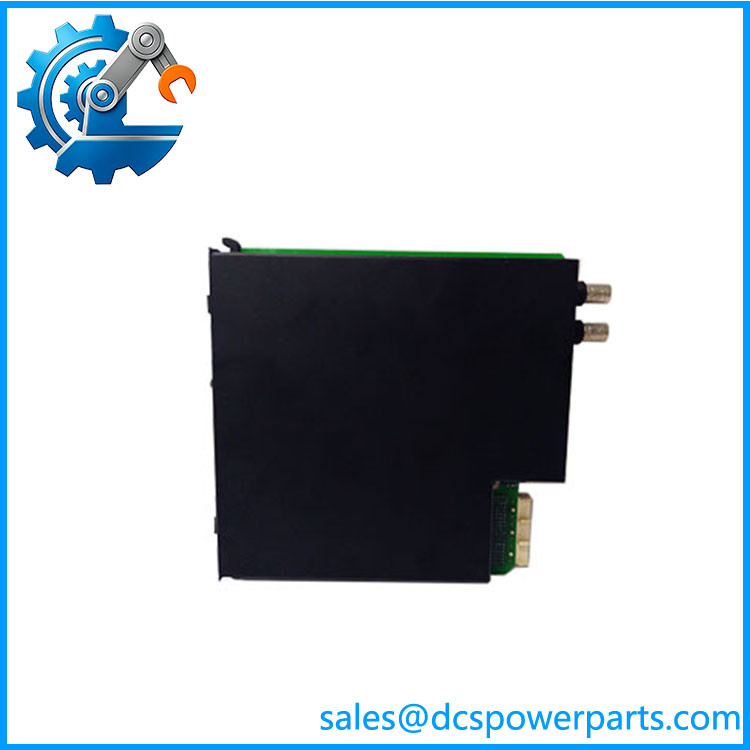
UR9EH
Engineering Pain Point
The primary replacement risk is module-level identification without complete relay-level information. GE Universal Relay equipment is highly configuration-dependent, and a CPU module can be tied to specific firmware, communication hardware, protection applications, and I/O arrangements. A replacement that physically fits the chassis may still produce configuration, firmware, or commissioning problems if its revision does not match the original installation.
Typical Applications
- High-voltage substation protection — Used within digital relay systems for utility transmission and distribution equipment.
- Transformer and feeder protection systems — Depending on the complete GE relay model and protection configuration.
- Switchgear protection and control — Supports the processing architecture of a modular digital protection relay.
- Legacy relay maintenance — Relevant where an installed GE Universal Relay system requires replacement of an internal processor module.
Technical Pitfalls to Avoid
- Do not purchase solely by “UR9VH.” Confirm the complete relay model, module position, hardware revision, and any additional identification printed on the board or chassis.
- Do not assume 220 V is the module’s direct supply rating. Trade records describe in a 220 V digital-relay application, but that does not establish that 220 V is applied directly to the CPU board.
- Check firmware compatibility. Protection-relay processors are closely tied to application firmware and configuration data. Hardware replacement may require firmware matching or configuration restoration.
- Preserve the relay settings. Before replacing a processor in an operating protection system, back up protection settings, logic, communication parameters, event records where required, and configuration files.
- Verify communications separately. Ethernet, serial, or other communication functions may reside on dedicated hardware rather than being inherent to every CPU module. Do not assume a particular port arrangement from the identifier alone.
- Treat the module as protection-system equipment. Functional testing after replacement should include relay self-tests, protection logic verification, I/O checks, communications checks, and the applicable secondary-injection or commissioning procedure.
Related Products
- GE UR9WH — Another GE Universal Relay module identifier appearing in the same digital-relay component records; it should not be treated as interchangeable with without hardware and firmware verification.
- GE UR8NH — Related GE digital-relay hardware identifier found in substation applications; exact function and compatibility depend on the complete relay configuration.
- GE Multilin 850 — GE digital feeder protection relay family; a complete relay platform rather than a direct equivalent to the processor module.
- GE Multilin 845 — GE transformer protection relay family; application and hardware architecture differ from a standalone module.
- GE F650 — GE feeder protection relay platform used in utility protection applications; do not substitute its processor hardware based only on nominal voltage or application.
- GE Universal Relay platform — The broader modular relay architecture in which processor, I/O, power, and communications functions may be divided among different hardware assemblies.
Procurement and Replacement Note
For a replacement, record the complete relay model, original module part number, hardware revision, firmware revision, serial number, chassis position, auxiliary supply arrangement, communication configuration, and protection settings before ordering.
The available evidence confirms as a GE digital-relay CPU module, including documented use in a 220 V / 110 kV-class substation context, but it does not justify assigning detailed processor or electrical specifications that are not published for this exact identifier.